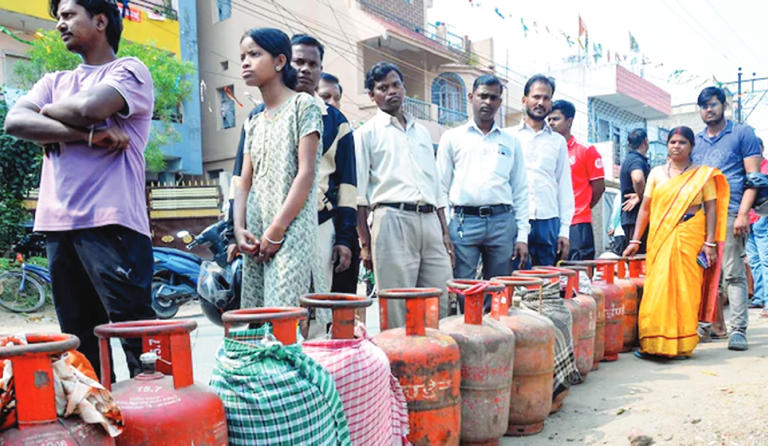
A surge in panic bookings for cooking gas cylinders across parts of Uttar Pradesh has temporarily strained digital booking platforms and distribution systems, even as authorities insist there is no actual shortage of LPG supplies in the state.
The spike in demand—particularly visible in Lucknow and surrounding districts—has been linked to a wave of consumer anxiety triggered by rumours of supply disruptions. The resulting rush has caused the state’s Uttar Pradesh LPG panic buying episode, where thousands of households attempted to book cylinder refills simultaneously, slowing down online booking systems and creating long queues outside gas agencies. Officials from oil marketing companies say adequate stocks of LPG remain available and that the pressure on supply channels is primarily a result of unusually high booking volumes rather than a shortage of fuel. In Uttar Pradesh alone, LPG distributors serve nearly 4.8 crore consumers, making the system highly sensitive to sudden demand spikes.
Gas distributors reported that daily booking volumes have multiplied several times over the past week as households attempt to secure additional cylinders. Some agencies that previously handled around ten refill bookings per day are now receiving as many as forty requests, overwhelming staff and digital processing systems. The rush has also been exacerbated by a recent regulatory adjustment intended to curb hoarding. Authorities have extended the mandatory waiting period between domestic LPG bookings from 21 days to 25 days, a move designed to discourage frequent refill requests and prevent speculative stockpiling.
However, the rule change has inadvertently amplified consumer concern, prompting many residents to try securing refills immediately rather than waiting for scheduled delivery cycles. District officials conducting inspections at gas agencies say several customers have also attempted to collect cylinders without completing the standard digital verification process, which requires a one-time password (OTP) confirmation before release. Beyond household consumption, the supply situation is also being watched closely by the commercial sector. Restaurants, street food vendors and catering businesses rely heavily on commercial LPG cylinders, and any disruption to supply chains could affect daily operations across urban markets.
Energy analysts note that the anxiety surrounding LPG availability has been partly influenced by global energy market volatility. Rising geopolitical tensions affecting oil and gas shipping routes in West Asia have raised concerns about possible supply disruptions across international energy markets, even though domestic distribution networks in India continue to function normally. Urban planners say such episodes highlight the importance of resilient energy supply chains in fast-growing cities. LPG remains the primary cooking fuel for millions of urban households and small businesses, making stable distribution systems essential to maintaining everyday economic activity.
Authorities are now urging residents to avoid unnecessary bookings and rely on regular refill schedules. With oil companies maintaining that supplies remain sufficient, officials expect distribution networks to stabilise once panic-driven demand subsides and booking patterns return to normal.