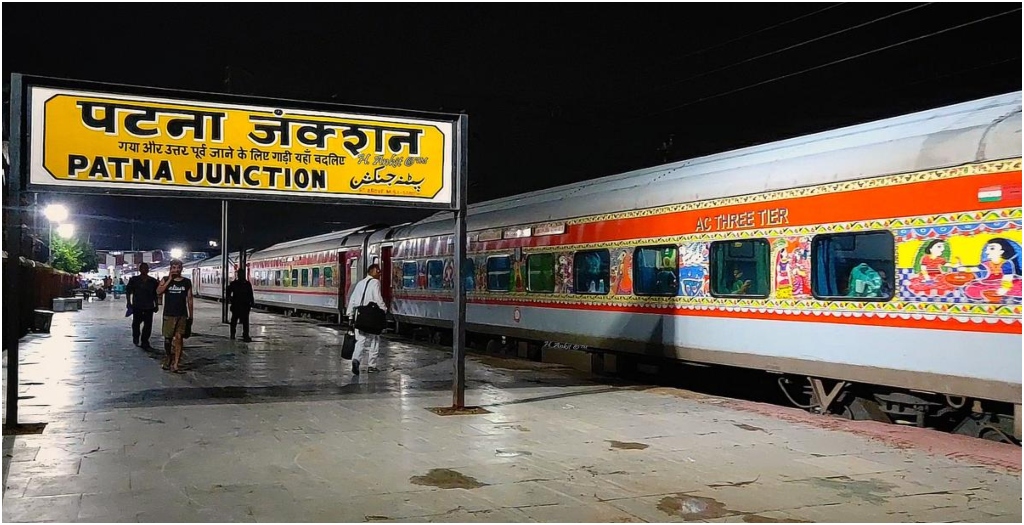
Patna Thawe Fast Passenger Train Boosts Regional Connectivity
A new Patna Thawe Fast Passenger Train service is set to begin operations later this week, strengthening rail connectivity between Bihar’s capital and the north-western districts of the state while expanding affordable mobility options for daily travellers.
Railway authorities have scheduled the passenger service to run between Patna Junction and Thawe Junction starting mid-March, offering a regular rail link across a corridor frequently used by workers, students and small traders. The train will depart Patna around midday and reach Thawe in the evening, covering roughly 165–175 kilometres in under seven hours. The route includes stops at intermediate locations such as Chhapra Gramin, linking key population centres in Saran and Gopalganj districts with the state capital. The daily service is expected to provide an economical travel option, particularly for passengers who depend on unreserved or low-fare train services to access jobs, markets and education hubs in Patna. Railway planners say the introduction of the Patna Thawe Fast Passenger Train reflects an effort to strengthen short-distance regional connectivity across Bihar’s expanding commuter network.
While long-distance express trains continue to serve inter-state travellers, passenger services like this one play a critical role in linking smaller towns to urban economic centres. For cities like Patna, improved rail links with surrounding districts are increasingly viewed as part of a broader urban mobility strategy. As the metropolitan area expands and employment opportunities cluster around the capital, reliable rail connections allow residents of nearby towns to participate in the urban economy without migrating permanently. Urban transport experts note that regional rail systems often function as the backbone of equitable urban growth in densely populated states. Affordable trains reduce pressure on highways, improve travel safety, and provide low-carbon mobility compared with road-based transport. In Bihar—where road congestion and long travel times can hinder economic activity—such passenger routes help maintain mobility for lower-income groups.
The Thawe corridor also carries cultural and religious significance. Thawe Junction serves as an important gateway to pilgrimage sites and local markets, meaning enhanced connectivity can stimulate tourism, small business activity and local commerce in surrounding districts. Infrastructure upgrades at railway stations in the region have also supported this expansion. In recent years, redevelopment efforts under national station modernisation programmes have improved passenger facilities and circulation areas at several stations, reflecting a broader push to modernise rail infrastructure across eastern India.
For policymakers and planners, the new service underscores the importance of balancing high-speed rail ambitions with investments in everyday commuter mobility. Passenger trains operating on regional routes remain essential for inclusive growth, ensuring that smaller towns remain connected to urban opportunities. As operations begin, officials and transport observers will watch whether the service can ease travel demand on existing routes while supporting a more integrated regional mobility network centred on Patna.