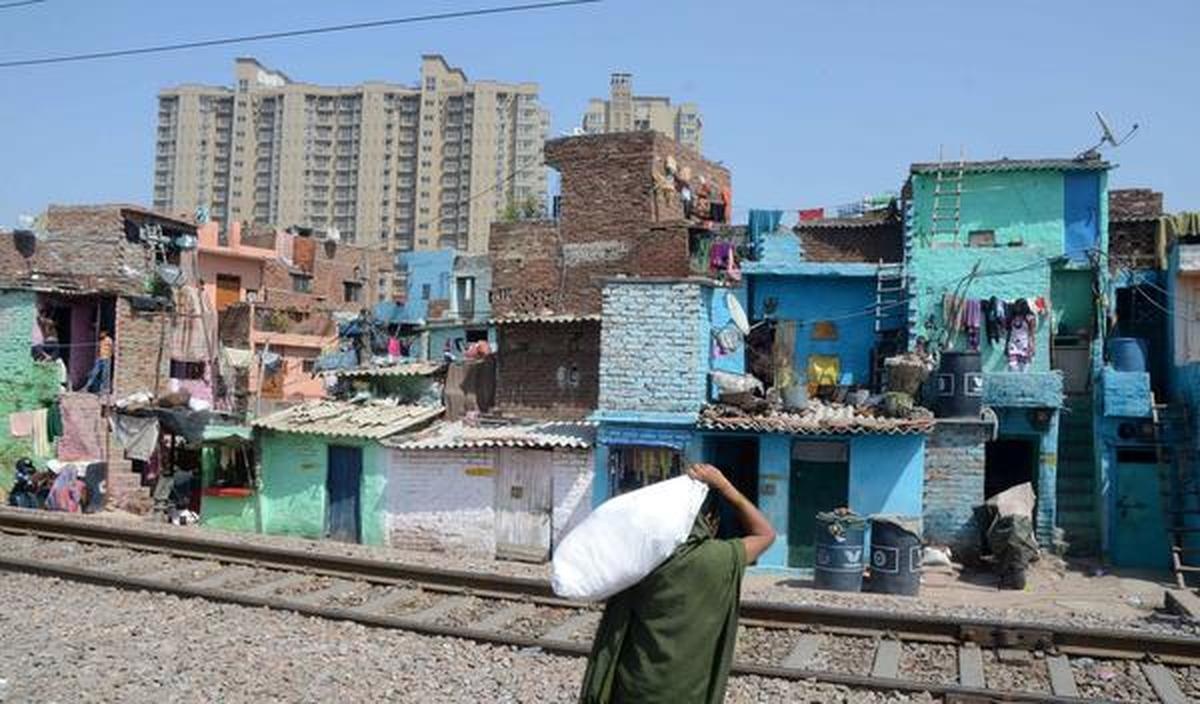
Delhi authorities are preparing a major revision to the city’s housing framework for informal settlements, with officials examining a proposal that could expand eligibility for resettlement under the Delhi slum rehabilitation policy. The change would update the cut-off year used to determine housing eligibility, potentially allowing a far larger number of residents living in informal settlements to qualify for permanent accommodation across the capital. Urban development officials indicate that the proposed amendment would extend the qualifying date for recognising dwellings in slum clusters by roughly a decade, bringing the eligibility window closer to the present day. The move is expected to address the reality that many informal settlements have expanded significantly over the past ten years as Delhi’s population and housing demand have grown.
The Delhi slum rehabilitation policy currently emphasises in-situ redevelopment, meaning families are ideally resettled on the same land where the settlement exists or within a limited distance from the original site. Urban planners argue that this approach reduces social disruption by keeping residents close to existing workplaces, schools and local support networks. Housing experts say the revision reflects a broader policy shift toward inclusive urban growth in rapidly expanding cities. With millions of residents in the capital living in informal housing conditions, access to safe and durable shelter remains a central challenge for municipal authorities and urban planners alike. Government estimates suggest that roughly one quarter of Delhi’s population resides in informal settlements spread across hundreds of clusters throughout the metropolitan region. These neighbourhoods vary widely in size and location, with many situated on land controlled by different public agencies. This fragmented land ownership structure has historically complicated the implementation of large-scale redevelopment programmes. Some settlements are located on land administered by central government agencies, while others fall under the jurisdiction of local urban authorities. As a result, housing projects often require coordination across multiple administrative bodies.
The Delhi slum rehabilitation policy also includes a cost-sharing model for beneficiaries. Eligible households are expected to contribute a subsidised payment for newly constructed housing units measuring around 25 square metres, along with a maintenance charge covering upkeep for the first several years. Urban housing specialists say such models are commonly used in government-supported affordable housing programmes to ensure long-term viability of residential complexes. Another factor influencing policy discussions is the existence of tens of thousands of government-built flats originally constructed to rehabilitate slum residents. Many of these units are located in peripheral parts of the city and were completed over the past decade. However, allocation delays and administrative disagreements had prevented their timely distribution, leaving a number of buildings underused and in need of repairs. Officials now say that renewed coordination between administrative authorities could help unlock these housing resources and integrate them into the broader Delhi slum rehabilitation policy framework. For urban policy analysts, the proposed expansion of eligibility could significantly reshape the scale of Delhi’s affordable housing programme. If implemented effectively, it may allow thousands of families currently living in precarious settlements to transition into planned residential developments.
As the city continues to expand, ensuring equitable access to housing remains central to building a more inclusive and resilient urban environment.