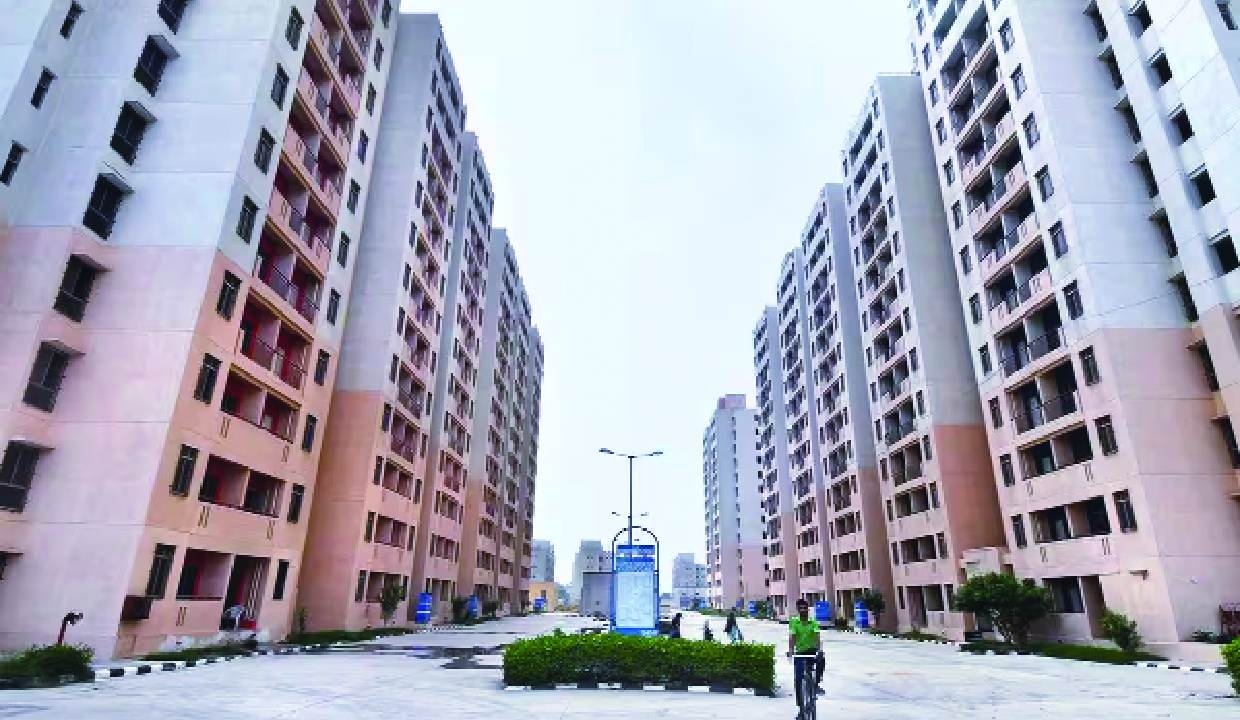
A sharp rise in DDA housing sales is reshaping the public housing landscape in Delhi, signalling renewed demand for government-built homes as administrative reforms streamline access for buyers. Over the past four years, the capital’s planning authority has sold close to 30,000 residential units, a dramatic increase compared with the previous four-year cycle, reflecting both procedural changes and rising urban housing demand.
Data reviewed by Urban Acres indicates that nearly 29,900 homes were allocated between the financial years 2022–23 and 2025–26. This marks a more than fourfold jump from the roughly 6,700 units sold during the earlier four-year period from 2018–19 to 2021–22. Officials familiar with the housing programmes say the surge underscores how policy shifts and digitalisation are reshaping how public housing is distributed in the national capital. The most significant reform has been the move away from the long-standing lottery-based allocation method towards a first-come, first-served model. Under the revised system, applicants are able to select available flats directly through an online interface rather than depending on random draws. Urban planners note that the approach introduces greater transparency and allows buyers to make informed decisions about location, unit size and pricing before committing to a purchase. Financial outcomes have mirrored the jump in allocations. Revenue generated from DDA housing sales during the recent four-year period has crossed ₹10,000 crore, representing a substantial increase over the revenue recorded in the preceding cycle. Officials say the improved inflow strengthens the authority’s capacity to finance future housing and infrastructure projects, including redevelopment initiatives and new residential clusters.
Another measure aimed at improving the quality of applicants has been the introduction of a mandatory token payment at the booking stage. Housing administrators suggest that this step has reduced speculative applications and ensured that prospective buyers entering the system have genuine purchase intent. Such filtering mechanisms, they argue, help prevent large numbers of unconfirmed bookings that previously slowed allotment processes. The authority has also expanded digital platforms for application submission, documentation and payments. According to urban governance experts, the digitisation of administrative procedures has cut processing time and reduced the bureaucratic bottlenecks that historically deterred applicants from participating in public housing schemes. For a city where housing affordability remains a persistent challenge, the rise in DDA housing sales carries wider implications. Analysts say increased uptake of publicly developed homes can relieve pressure on informal housing markets and provide relatively affordable options for middle-income families seeking legal, serviced housing within city limits.
Urban development observers add that the next phase of growth will depend on how effectively the authority integrates new housing supply with transport access, green infrastructure and climate-resilient urban planning. As Delhi expands and land becomes scarcer, the ability of public housing programmes to deliver well-connected, sustainable neighbourhoods could shape the city’s future residential landscape.