Pune Retirees Prioritise Function Over Size in Housing
As India’s urban retirees navigate rising living costs and market volatility, many are reassessing one of their largest lifetime investments: housing. Across Pune and other Tier-2 cities, there is a growing recognition that the most effective home for seniors is not necessarily the largest, but the one best suited to evolving lifestyles.
For decades, Indian middle-class aspirations equated a spacious 4 BHK apartment or a standalone bungalow with success and social prestige. Yet urban planners and industry experts note a marked shift among retirees and pre-retirees towards what they describe as “right-fitting” homes properties that align with both current needs and long-term manageability, rather than mere size. The misalignment becomes apparent as families shrink. Adult children often relocate for work or education, leaving empty, oversized homes that strain finances and upkeep capacities.
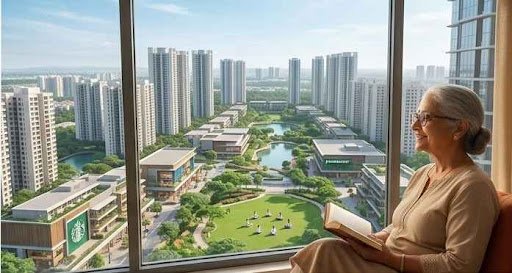
“Many retirees find themselves maintaining large residences that no longer serve their everyday life, turning what should be a haven into a source of stress,” observes a senior urban housing analyst. Such homes may also be poorly located relative to healthcare, community services, and social infrastructure, compounding isolation and inefficiency. Integrated townships are emerging as a preferred alternative. By offering smaller, manageable units within self-contained environments, they reduce maintenance burdens while providing shared amenities such as landscaped gardens, walking tracks, and community centres. These developments facilitate social interactions, allowing seniors to engage without dependence on personal transportation. Experts highlight that this model aligns with sustainable urban principles: optimised land use, lower per-capita resource consumption, and reduced environmental footprint.
Financially, right-fitting also preserves capital. Downsizing or selecting smaller homes frees resources for travel, healthcare, or lifestyle investments, while avoiding the hidden costs of oversized, underutilised properties. For families considering the return of adult children from abroad, townships offer optionality: two smaller units can maintain privacy and autonomy while accommodating multigenerational living without excessive space or management burdens. Analysts underscore that the trend signals broader implications for urban housing markets in India. As the population ages, demand is likely to rise for properties designed around usability, safety, and social connectivity rather than traditional markers of status. Developers and city planners who incorporate accessible, environmentally-conscious design will be better positioned to meet these needs. Ultimately, the right-fitted home is less about square footage and more about life efficiency, community integration, and sustainable resource management factors increasingly shaping urban real estate for India’s ageing population.