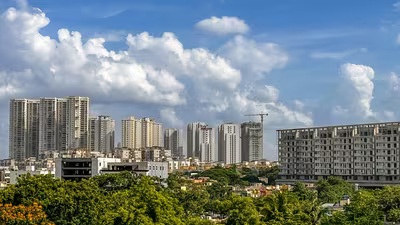
In a decisive move to enforce civic revenue collection, the Greater Bengaluru Authority (GBA) has auctioned two properties in the city’s East zone, targeting property tax arrears exceeding ₹2.8 crore. The actions, taken in Krishnarajapuram, underline the growing municipal efforts to address chronic tax defaults that strain the city’s ability to invest in sustainable infrastructure and essential services.
The two properties, one measuring 3,600 square feet near Hoodi Road and another spanning 1,950 square feet, were listed for competitive bidding after repeated notices to defaulters failed to secure payments. Authorities emphasised that recovery proceedings are governed under the Greater Bengaluru Governance Act 2025 and the Property Tax Assessment, Collection and Management Rules 2024, mandating annual property tax compliance across the city. Municipal officials highlighted that of the six initially targeted properties, four were withdrawn from the auction as owners settled their arrears during the process. The remaining two proceeded to auction, reflecting both the legal enforcement framework and the persistence of non-compliance in certain segments of the real estate market.
Urban planners and civic experts note that delayed property tax collections have broader implications for city management. Municipalities rely on these revenues to fund local infrastructure, waste management, water distribution, and climate-resilient urban projects. Persistent arrears can slow investments in green building initiatives, public transport upgrades, and other projects aligned with zero-carbon city strategies. This East Bengaluru auction follows previous municipal actions, including a postponed auction of 81 properties in the northern zones due to a lack of bidder participation. In contrast, a February auction of seven properties across East and North zones drew competitive bids worth over ₹7 crore, signalling that market engagement varies based on location and property characteristics.
The cumulative property tax arrears across Bengaluru remain significant, with nearly 7,000 properties collectively owing ₹437 crore, underscoring a structural challenge for urban governance. A senior municipal official indicated that the city plans to continue targeted enforcement actions, combining legal measures with public reminders, to reduce the backlog and ensure equitable civic contributions. For residents and investors, these developments signal a tightening of regulatory oversight. Experts suggest that timely compliance with municipal dues not only avoids legal complications but also contributes to more resilient, inclusive urban growth. As Bengaluru expands rapidly, integrating revenue enforcement with sustainable planning remains essential for balanced development and infrastructure resilience.