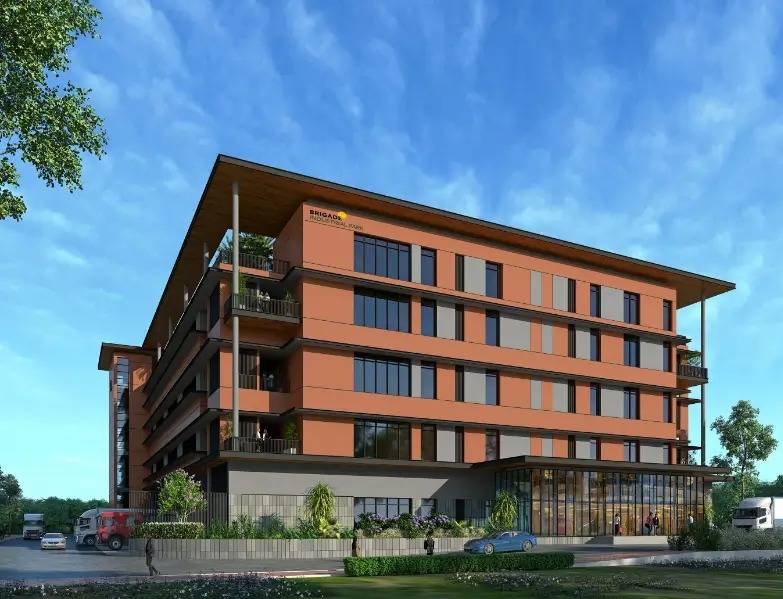
Bengaluru is set to see a significant expansion in its industrial real estate landscape as a leading developer launched a 25-acre industrial park in Devanahalli, near the city’s international airport. The project, positioned within a dedicated aerospace and defence hub, is designed to provide over 2 million square feet of leasable space tailored for technology-intensive sectors including IT, data centres, and specialised manufacturing.
Urban planners note that the development represents a broader trend of real estate diversification in India, where residential and commercial developers are now entering industrial infrastructure to meet rising demand from high-tech and knowledge-driven industries. “The integration of technology-enabled facilities and scalable design makes these projects more resilient and future-ready,” said a senior urban infrastructure analyst. The industrial park is being designed with flexible leasing and customised built-to-suit spaces, signalling a shift towards adaptive industrial planning that can respond to rapidly evolving operational needs.
Experts highlight that such models not only attract multinational corporations but also support domestic companies seeking modern, efficient, and compliant facilities. This aligns with Bengaluru’s ambition to consolidate its position as a hub for aerospace, defence, and digital enterprises.Sustainability is another cornerstone of the development. Industry specialists point out that energy-efficient construction, smart operational systems, and environmental considerations are increasingly becoming standard expectations for industrial projects in India. “Long-term viability of industrial zones now depends on both operational efficiency and environmental footprint,” said an independent sustainability consultant. With integrated design focused on energy optimisation, security, and operational reliability, the park could serve as a template for climate-conscious industrial expansion in emerging urban regions. The move also has wider implications for Bengaluru’s urban ecosystem.
By situating industrial clusters close to transportation nodes like the international airport, the city can reduce logistics bottlenecks and encourage a more balanced distribution of commercial activity across peripheral zones. Economists suggest that such infrastructure can generate local employment, attract ancillary services, and potentially ease pressure on traditional business districts. The entry of established real estate players into industrial space also reflects confidence in long-term economic growth, despite short-term market volatility. Analysts indicate that demand for specialised industrial infrastructure is likely to rise as India strengthens its domestic manufacturing, IT services, and data centre capacities. While the project is still in its initial phases, it signals a shift towards inclusive, technology-enabled, and environmentally responsible urban-industrial planning.