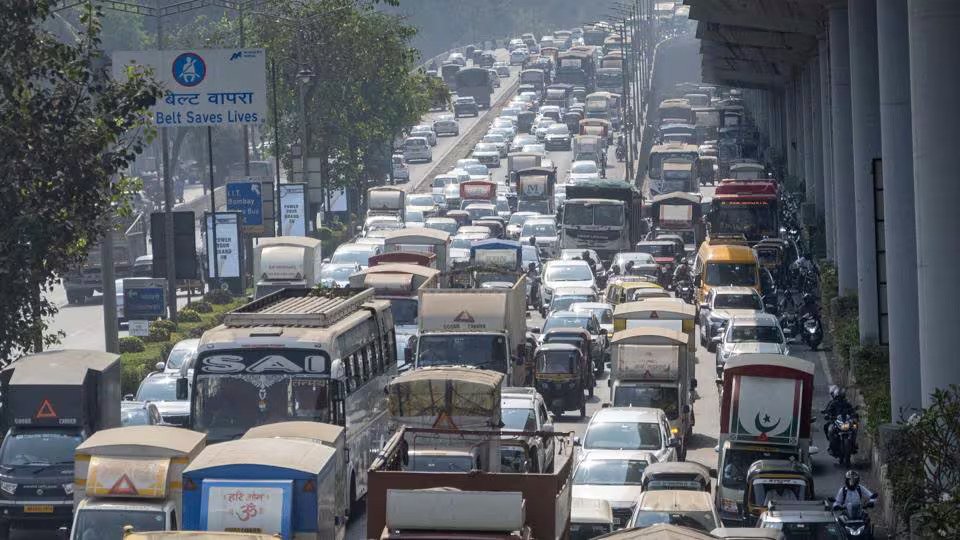
Traffic authorities in Mumbai have introduced a temporary Dahisar odd even parking rule on a key suburban road to address congestion and improve road safety in a densely populated residential area. The measure, announced by the city’s traffic department, will regulate roadside parking patterns on a narrow corridor frequently used by both local commuters and heavy vehicles accessing nearby logistics facilities.
The order has been implemented along a north–south road segment connecting a residential housing cluster and a storage facility operated by the Food Corporation of India in Dahisar. According to traffic officials, the stretch experiences daily bottlenecks due to its limited width, two-way vehicle movement, and regular entry of freight vehicles transporting grain and other supplies. Under the newly introduced Dahisar odd even parking rule, motorists will be allowed to park vehicles only on one side of the road depending on the calendar date. On even-numbered dates, parking will be permitted exclusively on the eastern side of the street, while vehicles must avoid stopping on the western edge. The arrangement reverses on odd-numbered dates, when parking shifts to the western side and the eastern side becomes a no-parking zone.
Authorities say the trial regulation will remain in force for a three-month period, during which the traffic department will monitor its impact on vehicle flow and accident risk. The order has been issued using provisions under national motor vehicle legislation that allow local administrations to regulate road usage in the interest of safety and traffic management. Urban transport planners note that narrow residential streets across suburban Mumbai often face intense pressure from a mix of parked vehicles, delivery vans, and through traffic. In areas where formal parking infrastructure is limited, roadside parking can significantly reduce carriageway width, forcing moving vehicles into tighter lanes and increasing the likelihood of collisions.
Officials believe the Dahisar odd even parking rule could offer a practical interim solution for such corridors by ensuring that at least one side of the roadway remains unobstructed at all times. Traffic management experts say similar rotating parking systems are used in several international cities where road space must be shared efficiently between residents and transit vehicles. The measure is part of a broader traffic management push in the western suburbs. In nearby neighbourhoods, authorities have also begun restricting the entry of heavy vehicles and private water tankers on certain narrow roads during daytime hours to reduce congestion and improve safety for pedestrians.
For residents and commuters in Dahisar, the success of the pilot regulation will depend largely on public compliance and consistent enforcement. If the system improves traffic movement without significantly disrupting neighbourhood parking patterns, transport planners say the model could potentially be extended to other suburban streets facing similar challenges. As Mumbai continues to grow, city agencies are increasingly experimenting with localised traffic solutions that prioritise safety, accessibility, and efficient use of limited road infrastructure in dense urban neighbourhoods.
Mumbai Police Test Odd Even Parking Rule In Dahisar