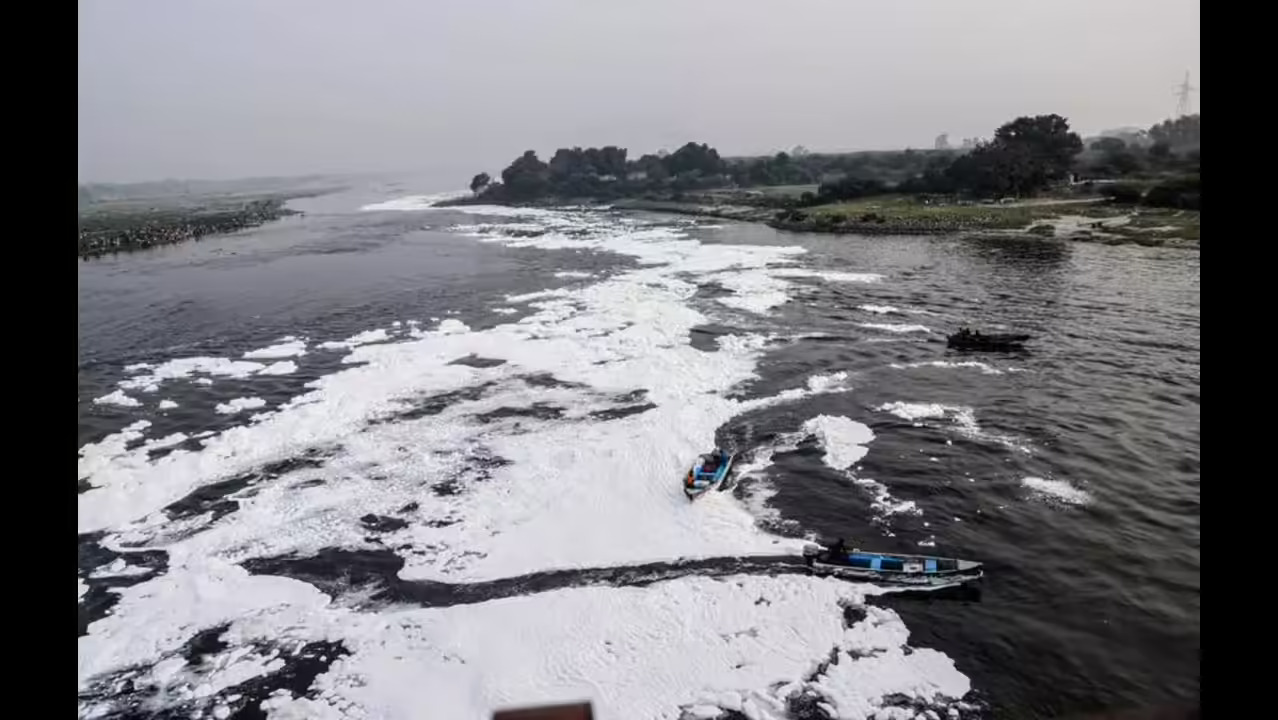
Delhi’s urban planning authority has initiated steps to reclaim and rehabilitate a stretch of land along the Yamuna’s western edge near the inter-state bus terminal at Sarai Kale Khan, signalling a renewed push toward Yamuna floodplain restoration in the capital. The move involves gradually clearing a government department’s operational yard from the site and preparing the land for ecological recovery and public access, reflecting broader efforts to revive degraded riverfront landscapes in dense metropolitan regions.
Officials associated with the project said the land is being vacated in phases, allowing restoration work to begin immediately on sections that have already been handed over. Preliminary ground preparation has started along the edge adjoining the Ring Road, where levelling activity is underway to stabilise the terrain before ecological improvements begin. The intervention forms part of a larger plan covering approximately 163 hectares of floodplain between a national highway corridor and a landmark structure near the Barapullah drainage channel. Urban planners involved in the initiative describe the effort as an attempt to restore natural floodplain functions while also opening controlled public spaces along the river’s edge — an increasingly important strategy for cities grappling with climate risks, shrinking green areas and rising urban temperatures. Funding of about ₹28 crore has been earmarked for the project, with authorities targeting completion of core works within six months. Initial phases include clearing debris and construction remnants left from earlier temporary industrial activities, followed by soil replenishment and landscape stabilisation. Subsequent stages will introduce pathways, lighting infrastructure and horticultural development designed to blend public use with ecological protection.
Urban development experts note that reclaiming river floodplains has become a critical policy priority for Indian cities. Historically, large parts of the Yamuna’s natural buffer zones were occupied by temporary infrastructure, storage yards and informal developments, reducing the river’s ability to absorb floodwaters and support biodiversity. Reversing this pattern, planners say, could improve urban climate resilience while expanding accessible green spaces for residents. The site lies close to a rapidly growing transport hub linking bus networks, rail corridors and arterial roads. Urban planners believe integrating floodplain landscapes with surrounding mobility infrastructure could also reshape how citizens interact with the riverfront. Carefully designed access points, shaded public areas and restored vegetation could transform underutilised land into a climate-sensitive urban commons. Environmental specialists stress that successful Yamuna floodplain restoration will depend on maintaining ecological integrity rather than converting the area into heavily built recreational infrastructure. The emphasis, they say, should remain on native vegetation, water retention zones and limited construction that respects flood dynamics.
As cities across India face more intense heatwaves and erratic rainfall, restoring natural river corridors is increasingly viewed as both an environmental and urban planning necessity. The redevelopment underway near Sarai Kale Khan may therefore serve as a test case for how metropolitan regions can repair damaged ecosystems while creating inclusive and climate-responsive public spaces.