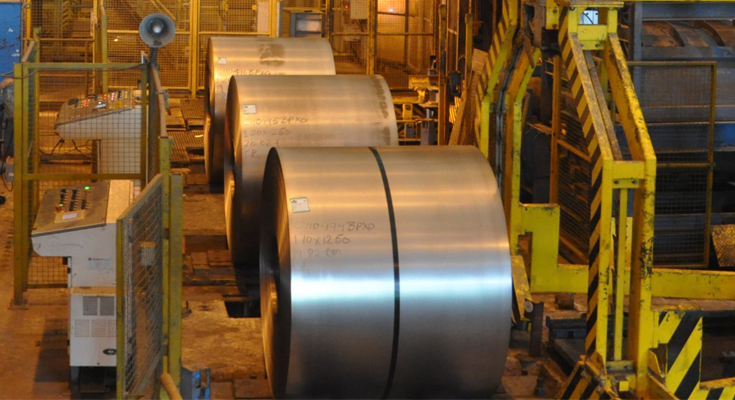
India’s push toward advanced domestic manufacturing received a boost after the Bokaro Steel Plant in Jharkhand secured regulatory approval to produce a new range of high-performance steel grades designed for critical industrial applications.
The public-sector facility, operated by the Steel Authority of India Limited (SAIL), has received certification from the Bureau of Indian Standards (BIS) allowing it to manufacture additional high strength steel grades under the IS 513 (Part 2) standard. The approval expands the plant’s licence beyond existing specifications and enables the production of four new High Strength Low Alloy (HSLA) grades — ISC 440 LA, ISC 470 LA, ISC 510 LA and ISC 550 LA.The new certification represents an important step in the standardisation of high strength steel grades produced at the facility. By bringing these grades under nationally recognised quality benchmarks, the plant’s products can now be supplied more widely across sectors that require advanced structural materials.
High strength low alloy steel is widely used in industries where strength, durability and weight optimisation are critical. These materials offer higher tensile strength along with improved weldability and formability, making them suitable for automotive manufacturing, heavy engineering and infrastructure equipment.Industry analysts note that the availability of domestically certified advanced steel could help reduce dependence on imported specialised materials. As India expands its manufacturing base and invests heavily in transport infrastructure, industrial equipment and energy systems, demand for advanced steel grades is rising steadily.
Located in Jharkhand’s Bokaro district, the integrated steel complex has long been a central pillar of eastern India’s industrial ecosystem. Established in the 1960s and later incorporated into the SAIL network, the facility produces a wide range of flat steel products used in automobiles, pipes, LPG cylinders, and engineering equipment.The addition of these high strength steel grades is expected to strengthen the plant’s portfolio of value-added steel products. Value-added steel typically commands higher margins and serves sectors that require specialised metallurgical properties, including mobility systems, advanced engineering equipment and industrial fabrication.
Urban infrastructure projects increasingly depend on such advanced materials. High-strength steel enables lighter yet stronger structures, which can improve the efficiency of bridges, transport systems, renewable energy installations and industrial buildings. Engineers say these materials can help optimise resource use while supporting the structural demands of large infrastructure projects.From a broader policy perspective, expanding domestic capacity for advanced steel aligns with India’s efforts to strengthen local manufacturing supply chains. Government initiatives aimed at boosting industrial self-reliance have placed greater emphasis on producing higher-grade materials within the country rather than relying on imports.
For India’s rapidly urbanising economy, developments in steel production remain closely tied to how cities grow. As infrastructure networks, transport systems and manufacturing hubs expand, demand for specialised materials such as high strength steel grades is likely to rise — making innovations in domestic steel production increasingly important for long-term industrial resilience.