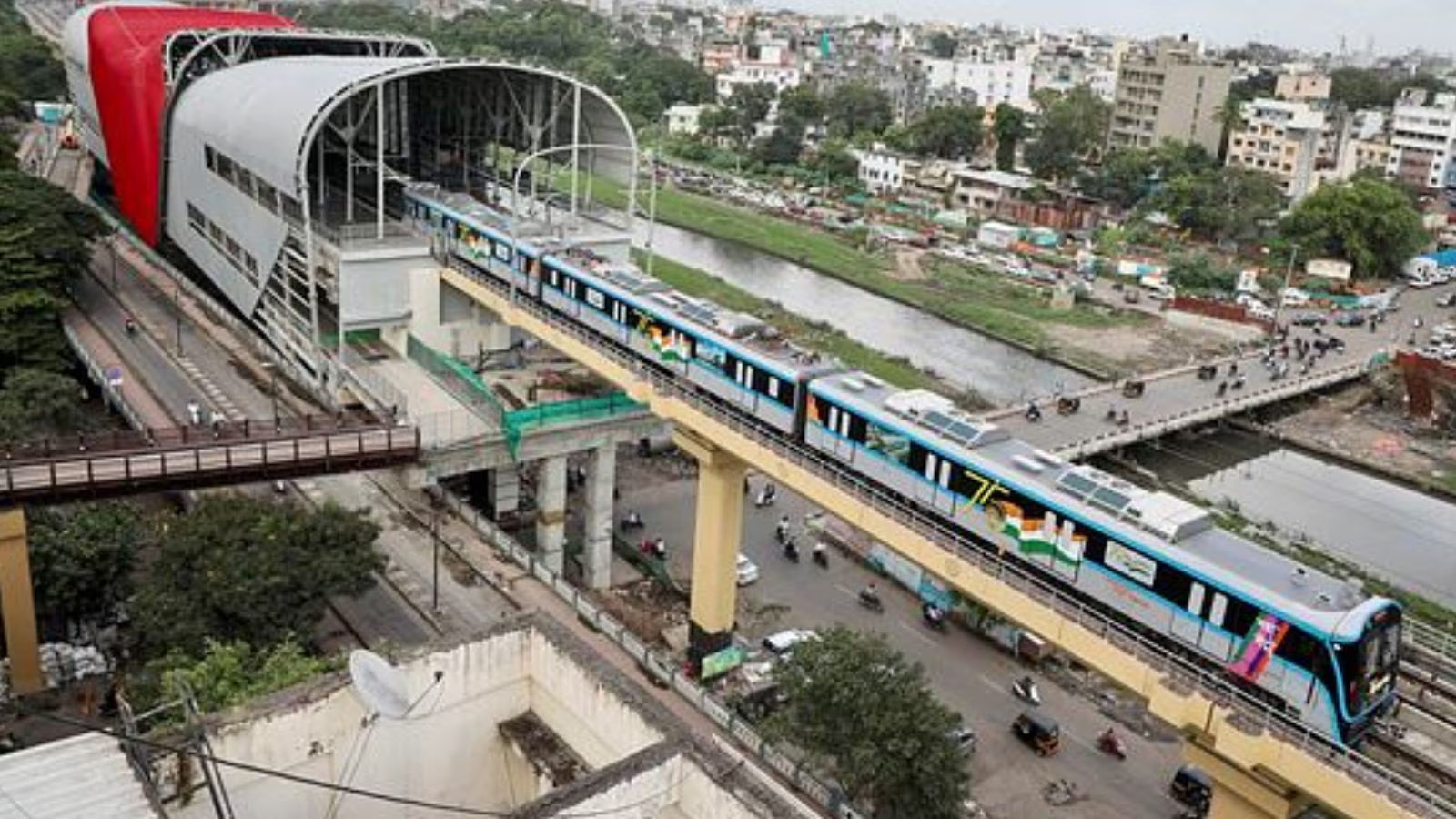
Pune’s expanding mass transit network is approaching another milestone as construction on the Hinjewadi Shivajinagar Metro line enters its final stages. Authorities overseeing the project say nearly the entire corridor has been built, with several stations already meeting operational standards. Once regulatory clearances are completed, the line is expected to transform daily travel between the city’s western technology district and its central transport hub.
Stretching roughly 23 kilometres across some of Pune’s busiest urban corridors, the Hinjewadi Shivajinagar Metro line is designed to connect employment centres, residential neighbourhoods and major transit interchanges. The route links the large IT campus cluster in Hinjewadi with Shivajinagar, a key transport node where suburban rail, bus and metro systems intersect. Infrastructure officials involved in the project indicate that most of the corridor’s civil works are now complete. Several stations along the route have already reached full operational readiness after meeting structural and technical benchmarks required for passenger services. Construction work at other stations is in advanced stages, with finishing and system installation currently under way.
Metro engineers are also conducting test operations across the alignment. Trial runs are a critical stage in railway infrastructure projects, allowing operators to verify track performance, signalling systems, power supply and emergency response mechanisms before public services begin. Urban mobility specialists say the corridor has the potential to significantly alter commuting patterns in Pune. Hinjewadi hosts one of the largest technology employment zones in western India, attracting tens of thousands of daily workers from different parts of the metropolitan region. At present, the majority of these journeys rely on private vehicles or bus services navigating heavily congested roads.
The Hinjewadi Shivajinagar Metro line is expected to offer a faster and more predictable travel alternative, potentially reducing dependence on road transport along key corridors such as the Mumbai–Bengaluru highway and Baner Road. By shifting a portion of commuters to rail-based transport, planners believe the system could help ease traffic pressure and lower urban emissions. Integration with the broader metro network is another significant feature of the project. Shivajinagar station will function as a major interchange, enabling passengers to transfer between different metro corridors and reach multiple parts of the city without relying on private vehicles.
Urban development experts note that transport infrastructure of this scale often reshapes land use patterns around stations. Metro corridors tend to stimulate mixed-use development, encourage transit-oriented housing and increase accessibility to employment clusters. For Pune, the corridor forms part of a wider push to develop climate-conscious urban mobility solutions. Rapid transit systems are considered essential in growing cities where population expansion and rising car ownership threaten to overwhelm road capacity.
Before commercial services begin, authorities will complete final inspections and obtain operational approvals from the relevant concessionaire and regulatory agencies. Officials say decisions on whether to open the full route or introduce phased passenger operations will depend on the outcome of these evaluations. If launched as planned, the Hinjewadi Shivajinagar Metro line could become one of the most important additions to Pune’s public transport network, offering faster travel across the city’s rapidly developing western corridor while supporting a shift toward more sustainable urban mobility.
Pune Hinjewadi Shivajinagar Metro Nears Operational Readiness