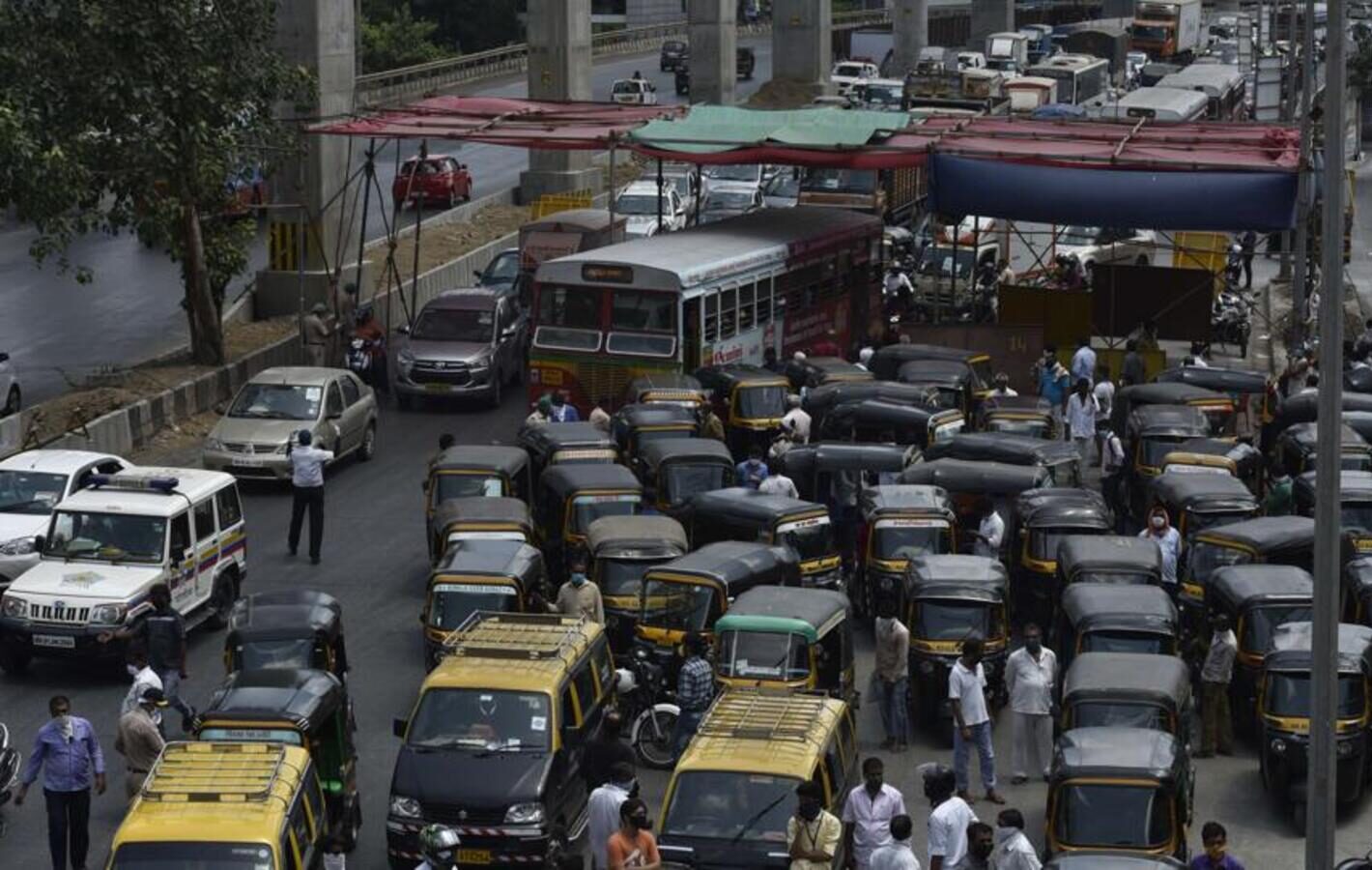
Authorities in Maharashtra have decided to stop issuing new autorickshaw licences in Mumbai, a move that reflects growing concern over congestion, air pollution and regulatory gaps in the city’s informal transport sector. The Mumbai autorickshaw permit freeze takes effect immediately and is expected to remain in place while the state government redesigns the system that governs vehicle permits across the metropolitan region.
Officials involved in the transport policy review say the decision follows mounting pressure on road infrastructure in the Mumbai Metropolitan Region. With hundreds of thousands of three-wheelers already operating across suburban corridors, regulators believe that adding more vehicles could worsen congestion on already crowded arterial roads and neighbourhood streets. Transport department data indicates that autorickshaws form a critical layer of the city’s mobility ecosystem, particularly in areas beyond the reach of suburban rail and metro networks. However, planners argue that the rapid expansion of permits in previous years has outpaced road capacity in several districts. As a result, the Mumbai autorickshaw permit freeze is being framed as a temporary measure aimed at stabilising the sector before new rules are introduced.
Beyond traffic conditions, authorities are also examining how permits have been issued in the past. Government officials have acknowledged irregularities in the allocation process, including cases where multiple licences were reportedly linked to a single household. Investigations are now under way to verify permit ownership records and identify any violations of existing regulations. Industry observers note that the current market dynamics have also affected drivers’ livelihoods. With a large number of vehicles competing for passengers, many operators report declining daily earnings and difficulties servicing loans used to purchase their vehicles. Transport economists say limiting further permit expansion may help balance supply and demand within the sector while policymakers work on structural reforms.
The state administration is preparing a revised regulatory framework that could determine how permits are issued in the future. According to officials familiar with the discussions, the upcoming guidelines may introduce eligibility criteria linked to employment status, economic need and city-level transport demand. Urban planners involved in the consultations say the revised approach could move away from blanket permit allocations and instead adopt location-specific planning. This would allow cities such as Mumbai to calibrate the number of vehicles based on population density, road capacity and integration with public transport systems.
Experts emphasise that autorickshaws remain vital for last-mile connectivity in large metropolitan regions. They frequently bridge the gap between residential neighbourhoods and mass transit systems such as suburban rail stations and metro corridors. In that sense, transport specialists say the challenge is not eliminating the sector but ensuring that it operates efficiently within the broader urban mobility network. Environmental considerations are also influencing the debate. Although most rickshaws in Mumbai run on compressed natural gas, policymakers are increasingly examining how transport emissions and traffic congestion interact in dense urban areas. A more carefully regulated permit system, experts argue, could support cleaner mobility while preventing excessive vehicle growth. For now, the Mumbai autorickshaw permit freeze signals a pause in expansion as policymakers attempt to rebalance a transport mode that remains essential to everyday urban life. The next phase will depend on how effectively the revised permit framework aligns livelihoods, mobility demand and the city’s long-term sustainability goals.
Mumbai Autorickshaw Permit Freeze Signals Transport Reset