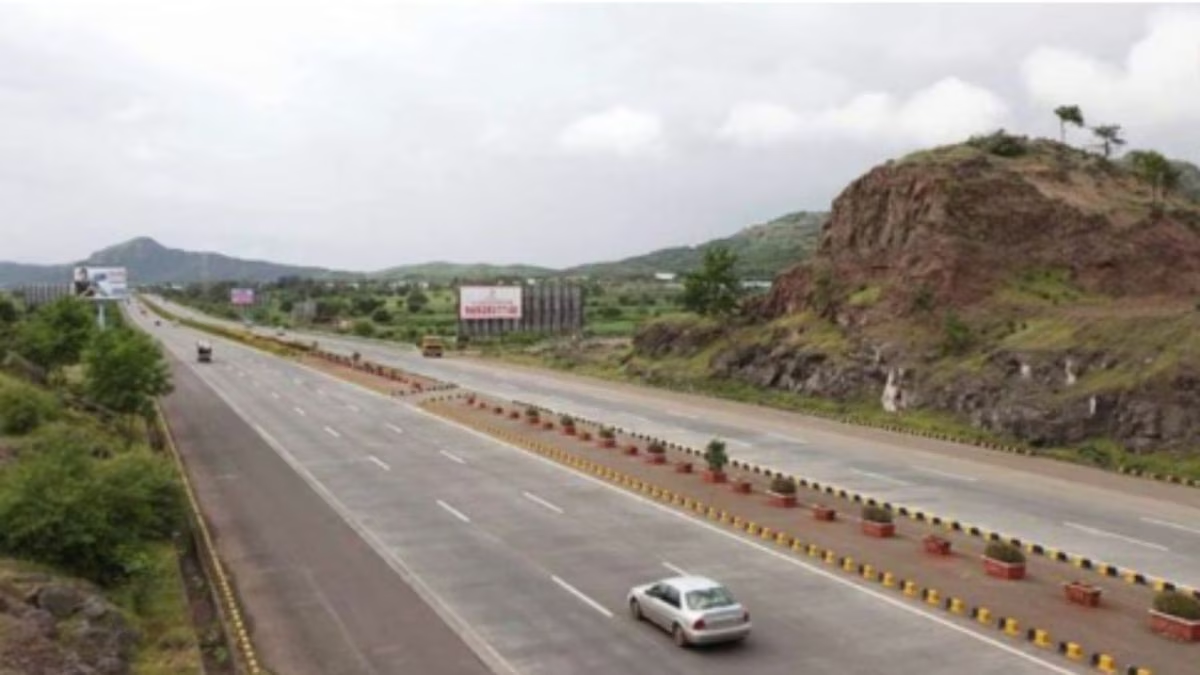
A crucial infrastructure upgrade on the Mumbai–Pune corridor is approaching completion, with authorities preparing to open a new alignment designed to bypass the steep hill section between Khopoli and Kusgaon. Developed by the state road development agency, the Mumbai Pune Expressway missing link project is nearing the final stage of construction and could become operational around the start of May, marking a significant change in how vehicles move across one of India’s busiest intercity routes.
Stretching roughly 13 kilometres through the Sahyadri mountain range, the newly built alignment introduces a combination of tunnels, elevated structures and bridges engineered to maintain smoother gradients compared to the existing ghat section. Transport planners say the upgrade could shorten the current hill route by more than six kilometres and reduce travel time between the two cities by up to half an hour under normal traffic conditions. The Mumbai Pune Expressway missing link project has involved complex construction work across rugged terrain, where steep slopes, unstable rock formations and seasonal rainfall posed major engineering challenges. Two long tunnels form the backbone of the new corridor, allowing vehicles to pass directly through the mountains rather than navigating the winding roads that currently slow traffic between Lonavala and Khandala.
One of the tunnels is among the longest road tunnels built in India, extending for nearly nine kilometres. A second tunnel of shorter length connects additional sections of the alignment. These underground passages are designed with advanced safety systems including mechanical ventilation, surveillance networks and emergency evacuation routes—features considered essential for long tunnel operations in high-traffic corridors. Alongside the tunnels, the project incorporates multiple large bridges and viaducts to span valleys and maintain consistent road gradients. A prominent elevated structure near Khopoli carries the roadway across a deep valley, while a cable-supported bridge has been constructed at Tiger Valley to navigate challenging topography without disrupting the surrounding landscape.
Officials overseeing the project say finishing works are currently under way. These include asphalt surfacing, installation of tunnel monitoring systems, and the testing of safety equipment before public use begins. Trial runs are expected before full commissioning to assess ventilation, lighting, traffic control and emergency response systems. Transport analysts say the upgrade could play an important role in reducing congestion along the existing ghat stretch, particularly during weekends and holiday periods when tourist traffic to hill stations increases sharply. By offering a more direct route, the project may also lower accident risks associated with steep curves and heavy braking zones on the older road.
The corridor’s strategic importance extends beyond tourism. The expressway links the country’s financial capital with one of its fastest-growing industrial and technology regions. Faster travel between the two cities is expected to benefit logistics networks, daily commuters and business travel while strengthening economic integration across western Maharashtra. Urban infrastructure experts also note that improved intercity mobility often influences real estate development patterns along major corridors, particularly in emerging townships and logistics hubs. However, they caution that infrastructure expansion must be balanced with environmental protection in sensitive hill ecosystems. As the new section prepares to open, transport planners say the focus will shift to managing traffic distribution between the old and new routes, ensuring safety inside long tunnels and maintaining ecological safeguards in the Sahyadri region.
Maharashtra Mumbai Pune Expressway Missing Link Nears Opening