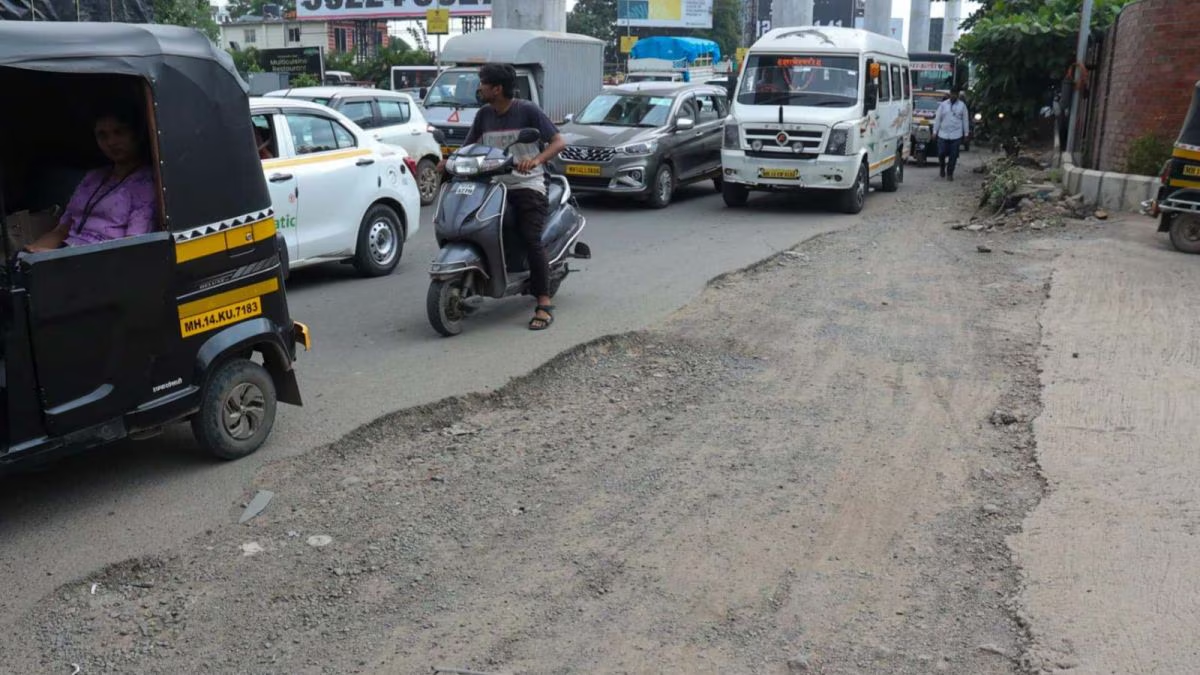
Pune’s civic administration is preparing a significant expansion of road infrastructure as part of a broader effort to tackle rising congestion across the rapidly growing city. The municipal budget has earmarked roughly ₹740 crore for mobility improvements, with several bridges, flyovers and corridor projects expected to move forward over the coming year. The Pune traffic infrastructure push reflects mounting pressure on the city’s road network as suburban growth and commuter traffic accelerate.
Officials involved in the planning process say three bridge projects are expected to be completed before the onset of the monsoon, a timeline considered crucial for easing traffic bottlenecks during the rainy season when road capacity typically shrinks. The projects include a railway bridge in the Ghorpadi area and two river crossings connecting neighbourhoods in Karvenagar and the eastern parts of the city. Urban planners say these connections could significantly reduce detours currently faced by motorists navigating across rail corridors and water bodies. For commuters, shorter routes may translate into reduced travel time and lower fuel consumption—an issue increasingly linked to urban emissions and air quality in fast-growing metropolitan regions.
Beyond these near-term completions, the Pune traffic infrastructure strategy includes multiple proposals intended to address congestion at key junctions and transport corridors. Authorities are preparing to begin work on new flyovers and river bridges, including projects near Mundhwa and in the northern fringe connecting developing residential districts. Transport experts note that several of these areas have witnessed rapid housing growth over the past decade, particularly in suburban zones where employment clusters, IT parks and logistics hubs have expanded. As a result, road networks designed for smaller populations now face daily peak-hour stress.
Additional interventions are being considered around railway crossings and transport bottlenecks. Plans include a flyover near a major administrative complex and a new underpass in the Khadki area to allow smoother movement across rail lines—an upgrade expected to reduce delays for both commuters and freight vehicles. Parking management is also emerging as a priority. Civic authorities are exploring pilot pay-and-park systems in busy commercial districts where informal roadside parking often narrows traffic lanes. At the same time, new parking facilities are being proposed around metro stations to encourage commuters to shift from private vehicles to public transport for part of their journeys.
Large-scale connectivity projects are also in the pipeline for the wider metropolitan region. Elevated corridors linking industrial and residential belts around Kharadi, Shirur, Yavat and the Talegaon–Chakan manufacturing zone are expected to progress through the tendering and early construction phases. Urban development analysts say these investments highlight the challenge facing cities like Pune: balancing expanding economic activity with sustainable mobility. While road capacity remains essential for logistics and regional connectivity, long-term congestion relief will likely depend on integrating these upgrades with public transport systems, transit-oriented development and more walkable neighbourhood planning.
Pune Traffic Infrastructure Push Targets Congestion Relief