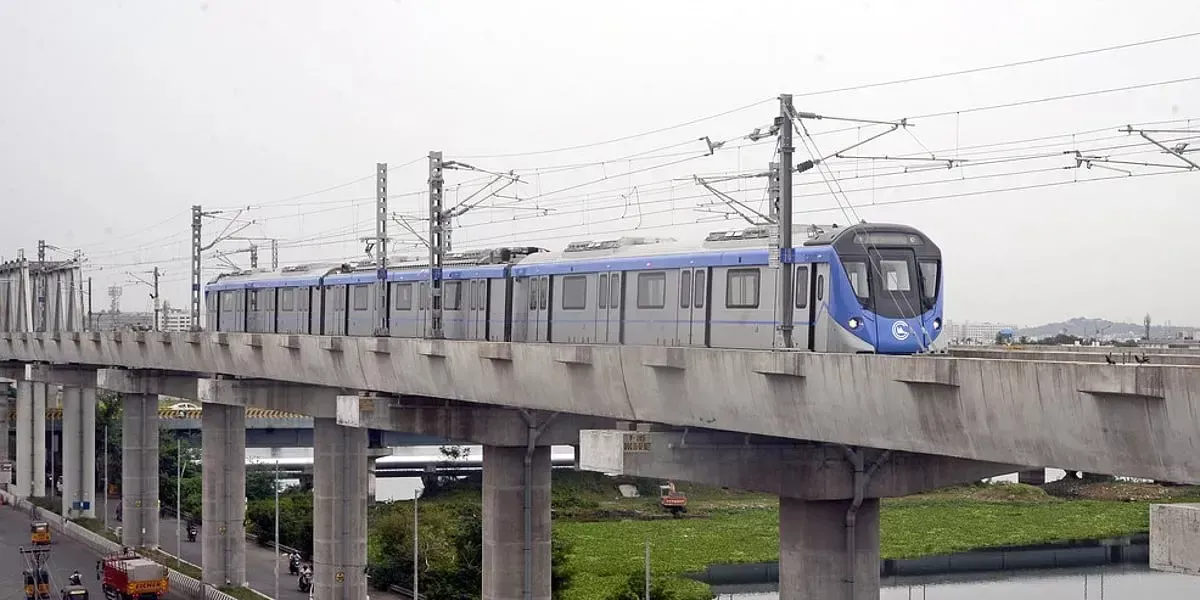
Chennai’s urban mobility network is set to receive a targeted infrastructure upgrade as transport authorities move forward with plans to replace an ageing canal bridge connecting two densely populated neighborhoods in the city’s western corridor.
The project is expected to improve traffic circulation, strengthen local connectivity and support smoother daily commuting for residents and businesses in the area.Urban transport planners say the existing bridge located near a key local street linking Virugambakkam and Arumbakkam has become insufficient to handle growing traffic demand. As both neighborhoods continue to expand with residential developments, commercial establishments and educational institutions, the narrow structure has increasingly contributed to congestion and safety concerns for motorists and pedestrians.To address these challenges, authorities have approved construction of a new four-lane structure that will replace the older bridge across the canal. The project is estimated to cost around ₹12.31 crore and is expected to be completed within roughly six months once construction begins. Officials overseeing the initiative say the development forms part of broader efforts to upgrade Chennai urban bridge infrastructure in rapidly growing city zones.
Urban infrastructure experts note that localized connectivity improvements often play a critical role in easing pressure on larger arterial roads. By widening the bridge and improving approach roads, planners expect smoother traffic movement between Virugambakkam and Arumbakkam, two neighbourhoods that serve as important residential and commercial hubs in the western part of the city.The new structure will also help reduce traffic bottlenecks that occur during peak commuting hours when residents travel toward major employment corridors and metro transit points. Transport analysts say improved connectivity between neighborhood roads and public transport systems is essential for creating a more integrated urban mobility network.In recent years, city planners have increasingly emphasized infrastructure upgrades that support safer and more efficient travel within expanding urban districts. Investments in projects such as bridges, flyovers and road widening are seen as complementary to mass transit initiatives, particularly in rapidly urbanizing cities like Chennai where residential growth is reshaping travel patterns.Urban planners also highlight that modern bridge construction standards incorporate improved drainage systems, stronger structural design and safer pedestrian access. These elements contribute to long-term resilience of Chennai urban bridge infrastructure, particularly in a coastal city where seasonal rainfall and water flow through canals can affect older structures.Officials involved in the project indicate that replacing ageing infrastructure with wider and safer structures is part of an ongoing strategy to improve everyday mobility conditions across Chennai’s neighborhoods. Such developments are expected to support local economic activity by enabling smoother movement of people, goods and services.
As Chennai continues to grow as a major metropolitan center, transport planners believe smaller but strategic infrastructure upgrades can significantly improve the overall efficiency of the city’s road network. Once completed, the new bridge is expected to ease daily travel for thousands of commuters while strengthening connectivity between two rapidly developing urban communities.
Chennai Infrastructure Upgrade Targets Traffic Bottlenecks.