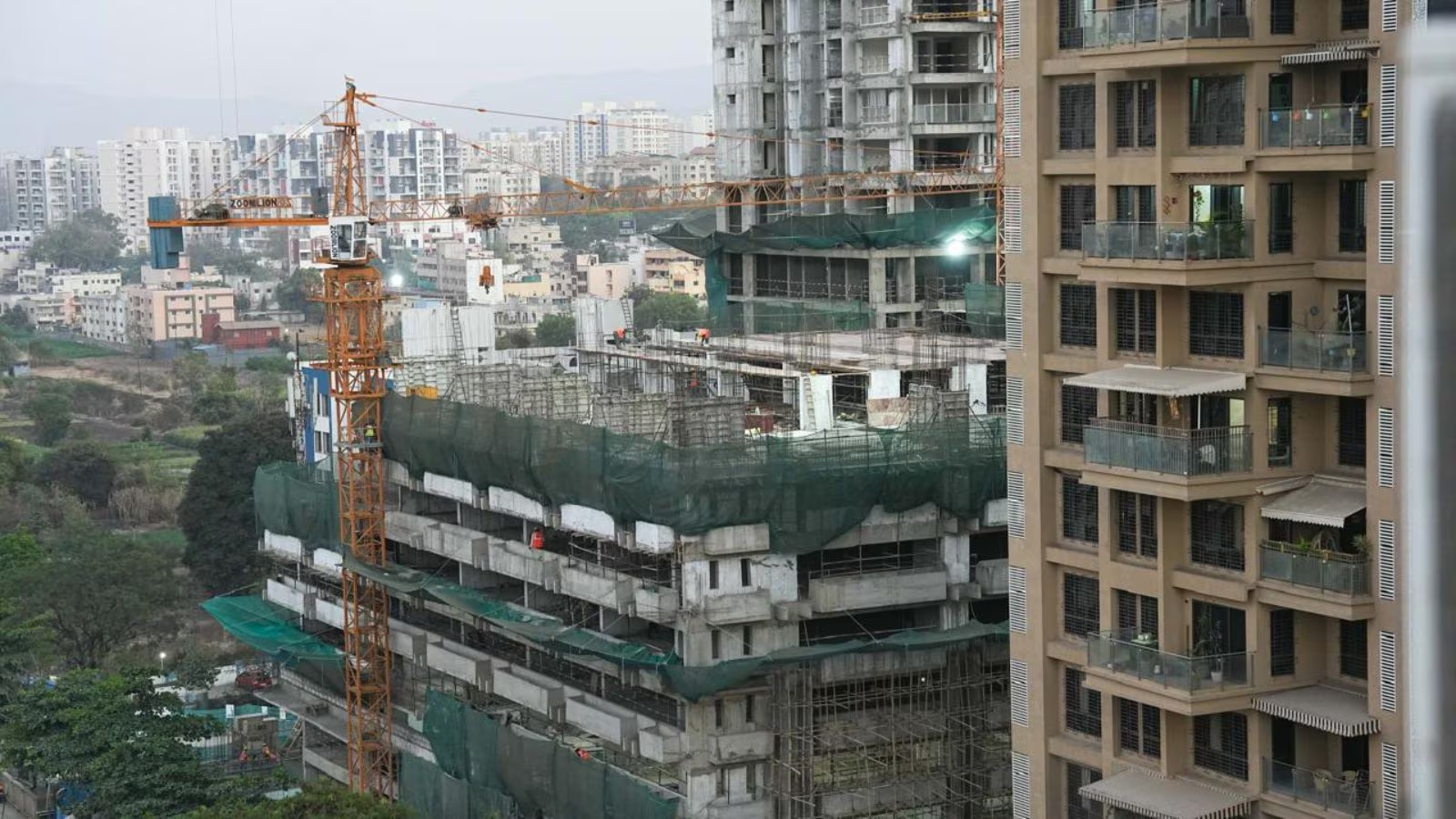
Pune Night Construction Violations Raise Pollution Concerns
Reports of construction activity continuing late into the night across several neighbourhoods have drawn attention to enforcement challenges around the Pimpri Chinchwad construction ban, a rule meant to curb noise and dust pollution in one of the fastest-growing urban corridors in the Pune metropolitan region. Residents say ongoing work at building sites after permitted hours is affecting sleep, local air quality, and neighbourhood liveability.
Municipal regulations prohibit construction activity between 10 pm and 7 am across the city limits. The restriction was introduced to manage noise pollution and reduce particulate emissions associated with large construction sites. However, complaints from multiple housing clusters suggest that some developers continue operations through the night, particularly in rapidly developing suburbs where high-rise residential projects are expanding.For a region witnessing intense real-estate growth, compliance with the Pimpri Chinchwad construction ban has become a critical urban governance issue. Pimpri-Chinchwad’s population has grown rapidly alongside industrial expansion and new housing demand linked to nearby IT hubs and manufacturing clusters. With dozens of residential towers under construction, local communities argue that extended construction hours amplify the environmental burden already faced by dense neighbourhoods.
Urban planners note that construction sites contribute significantly to urban particulate pollution through dust from excavation, concrete mixing, and transportation of building materials. Night-time work may also bypass monitoring mechanisms typically active during daytime enforcement rounds. Civic officials acknowledge that regulatory teams periodically inspect sites, but the scale of development across the municipal jurisdiction makes continuous monitoring challenging.Residents’ groups in several neighbourhoods have raised concerns that heavy machinery, drilling, and vehicle movement at night undermine the purpose of the rule. Apart from disturbing sleep cycles, they say such activity increases dust levels and traffic movement in otherwise quiet residential streets. In dense urban environments where residential towers are built close to existing housing societies, the impact of construction activity can extend far beyond the project boundary.
Municipal authorities have indicated that violations can attract penalties and notices under environmental and civic regulations. In earlier enforcement drives, teams documented violations through inspections and recovered fines from developers found breaching pollution and construction norms. Urban governance experts say such measures are necessary but must be accompanied by consistent monitoring, transparent complaint mechanisms, and stronger accountability frameworks.The issue also highlights a broader challenge facing rapidly urbanising Indian cities: balancing infrastructure growth with environmental safeguards and citizen wellbeing. As housing demand rises, construction activity inevitably expands. Yet planners argue that sustainable urban growth requires stricter adherence to pollution controls, noise regulations, and time-bound work schedules.
For Pimpri-Chinchwad, where new housing corridors are transforming peri-urban landscapes into dense residential zones, enforcing the Pimpri Chinchwad construction ban could become a key test of how the city manages growth while protecting everyday urban quality of life.