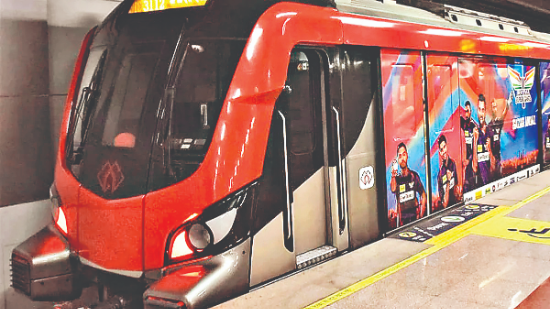
Lucknow Metro Under Scrutiny After CAG Audit Flags Multiple Irregularities
A recent audit by the Comptroller and Auditor General (CAG) of India has flagged several safety, technical and financial irregularities in the operations of the Lucknow Metro, raising concerns about passenger safety and compliance with project standards.
The audit report, which examined the functioning of the Uttar Pradesh Metro Rail Corporation (UPMRC) between 2017 and 2022, was recently tabled in the Uttar Pradesh Assembly by Finance Minister Suresh Khanna. It highlighted multiple lapses related to infrastructure quality, safety certifications and project execution. One of the major issues identified in the report relates to the quality of metro rails used on the corridor. Tests conducted by the Indian Institute of Technology (IIT) Kanpur revealed that the hardness of the tracks was below the standards prescribed by Indian Railways.
According to the audit findings, rail hardness in the depot ranged between 229 and 242 Brinell Hardness Number (BHN), while on the main line it ranged between 291 and 308 BHN. These values are lower than the required standards, which could lead to faster wear and tear of both rails and train wheels. Experts warn that weaker tracks may increase long-term maintenance costs and could affect operational stability if the mismatch between rail and wheel hardness leads to deformation over time.
The report also noted that the interim speed certificate issued in March 2017—used to determine the safe operating speed of metro trains—was not renewed after its five-year validity expired. Failure to renew this certification means periodic verification of safe operating conditions was not carried out as required, potentially exposing passengers to avoidable safety risks.
In addition, the audit found that noise levels inside metro coaches exceeded permissible limits. While international guidelines recommend about 65 decibels inside stationary trains, measurements at some stations such as Munshipulia recorded levels above 76 decibels, rising to 83 decibels during operation on certain stretches. The report further pointed out deviations from the approved Detailed Project Report (DPR). Phase-1 of the Lucknow Metro was originally planned to include 22 stations across a 22.88-km corridor, but only 21 stations were constructed, with the Mahanagar station dropped without required central government approval.
The CAG also identified irregularities in contract management and procurement. These included irregular payments to contractors, missing performance guarantees, and security contracts awarded without open competitive bidding. Additionally, the audit found that groundwater extraction used during construction did not obtain mandatory clearances from regulatory authorities.
Lucknow Metro was among the first metro rail systems built in a Tier-2 Indian city, and it has played a key role in improving urban mobility in the state capital. However, the audit findings highlight the importance of strict adherence to technical standards, safety certification and transparent procurement processes in large infrastructure projects. Experts say that addressing these compliance gaps promptly will be essential to maintaining passenger safety and sustaining public confidence in the metro system.