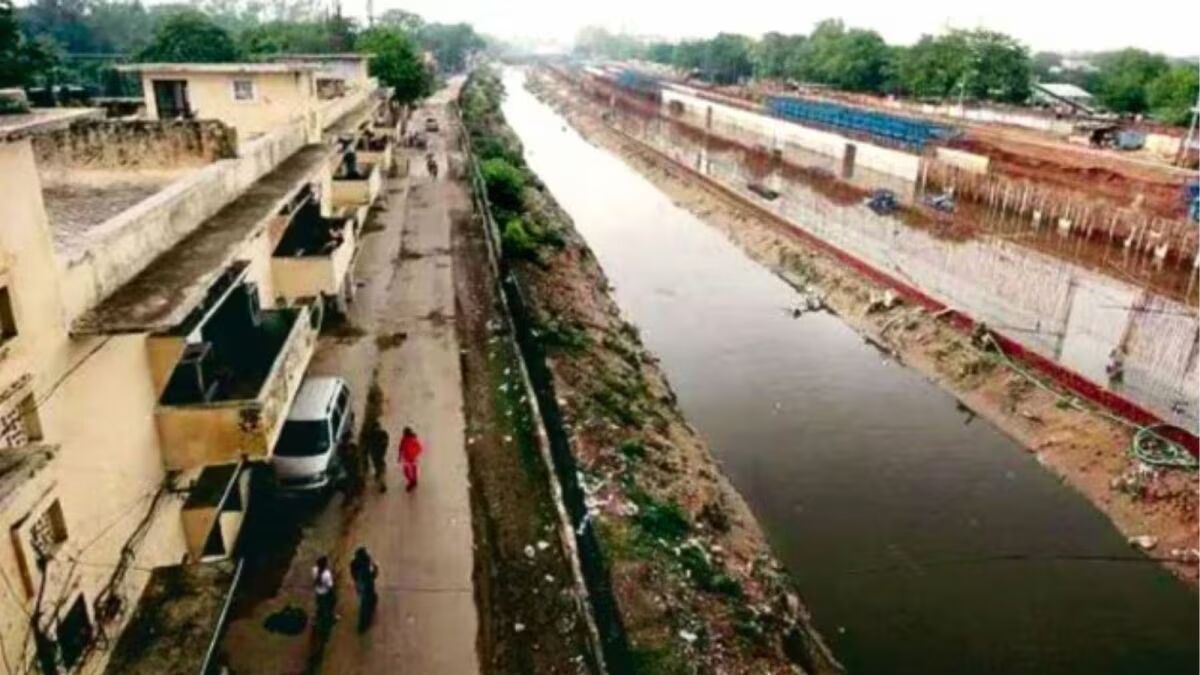
India’s massive push to upgrade urban drainage infrastructure—estimated at ₹561 billion (about ₹56,100 crore)—must adopt a more integrated design linking street drains, natural channels (nallahs), and urban lakes, according to a recent commentary on urban flood management.
The analysis argues that many Indian cities treat drainage primarily as an engineering challenge focused on pipes and stormwater drains. However, without reconnecting these systems to natural water bodies and catchment networks, such investments may fail to significantly reduce urban flooding. Urban flooding has become increasingly frequent in India as rapid urbanisation replaces natural drainage paths with roads, buildings and paved surfaces. When heavy rainfall occurs, stormwater has fewer natural outlets, causing water to accumulate quickly on city streets.
Experts say that instead of relying solely on underground drains, cities should adopt a “street–nallah–lake” network approach. In this system, rainwater first flows from streets into small drains, then into larger natural channels such as nallahs, and finally into lakes or wetlands that act as storage reservoirs during heavy rainfall. Historically, many Indian cities were built around such interconnected water systems. Over time, however, urban expansion has disrupted these networks by filling wetlands, encroaching on lakes and converting natural streams into concrete drains. This has weakened cities’ ability to absorb or store excess rainwater.
Examples across the country illustrate how altering natural waterways can create long-term environmental consequences. In some places, channelised drains replaced natural lakes or wetlands, which reduced water retention capacity and affected groundwater recharge. For instance, the historic Najafgarh lake in Delhi was drained after its natural overflow channel was widened into the Najafgarh drain, changing the region’s hydrology and reducing groundwater recharge. Urban planners now warn that similar mistakes should not be repeated as cities invest billions in drainage infrastructure.
The commentary emphasises that nature-based solutions should be integrated into urban drainage planning. These could include restoring lakes and wetlands, protecting floodplains, creating green corridors along drains, and allowing rivers or canals to function as natural water buffers during extreme rainfall. Such approaches can also deliver additional benefits, including groundwater recharge, biodiversity protection and improved urban microclimates. In contrast, purely engineered drainage systems often move stormwater quickly out of cities but fail to manage overall water balance.
Experts also highlight the need for better coordination among city planning agencies, water departments and environmental authorities. Currently, urban drainage planning is often fragmented across multiple agencies, leading to incomplete or disconnected systems. With climate change expected to intensify extreme rainfall events, the need for resilient urban water management is becoming more urgent. Cities such as Mumbai, Bengaluru and Chennai have already experienced severe flooding in recent years despite major investments in drainage infrastructure.
The commentary concludes that India’s large financial investment in drainage upgrades presents an opportunity to rethink urban water systems. By integrating streets, natural channels and lakes into a connected network, cities could transform stormwater from a flooding threat into a managed resource.