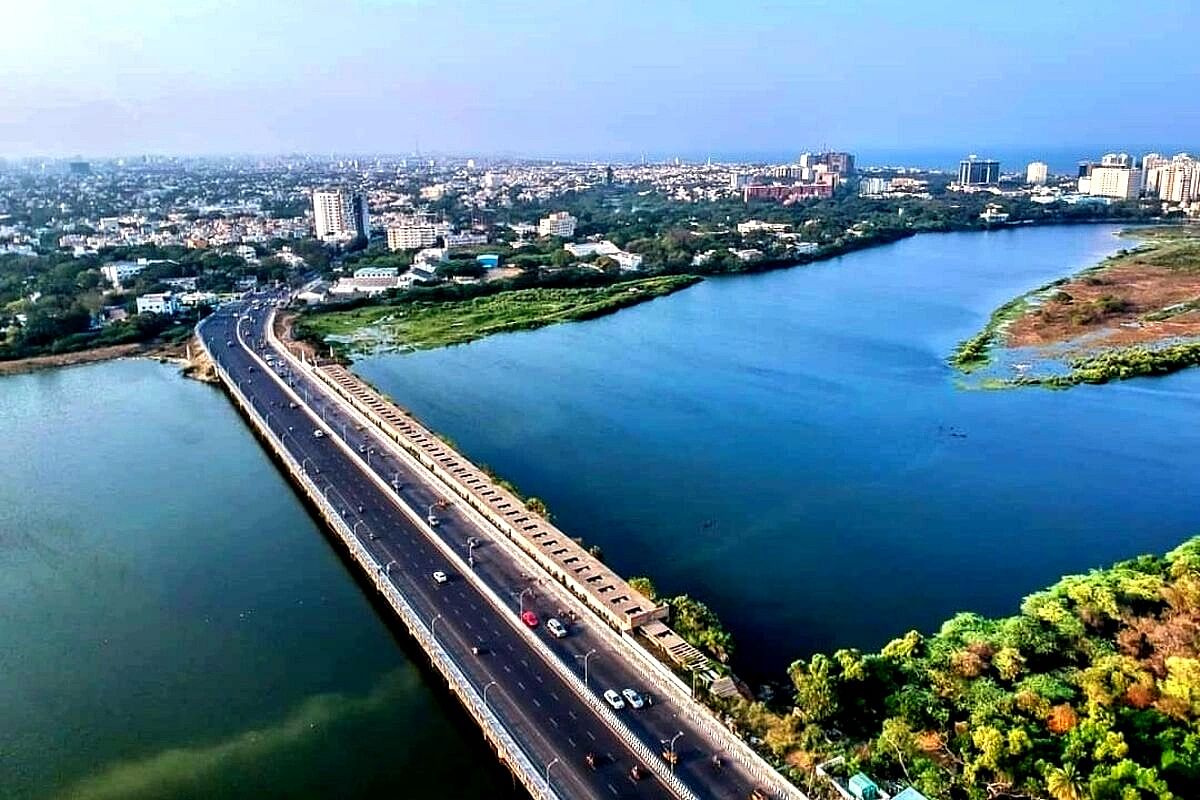
A critical Adyar River bridge project in Chennai’s Manapakkam area is approaching completion, offering long-awaited relief to neighbourhoods that have faced repeated flooding during heavy monsoon flows. State water authorities indicate that most structural work on the new crossing has been finished and the bridge could be operational within months, potentially improving both river flow and flood resilience in parts of the city’s western corridor.
The structure replaces a low-lying causeway that has long spanned the Adyar near Manapakkam, connecting institutional campuses on either side of the river. During periods of high discharge, the causeway restricted the natural movement of water, raising upstream water levels and contributing to inundation in nearby residential areas. Urban planners say removing such bottlenecks is essential for cities like Chennai that sit within sensitive river basins. Flood events in the past decade, particularly the catastrophic rainfall in 2015, exposed how infrastructure built without sufficient hydrological clearance can intensify urban flooding.According to officials overseeing the Adyar River bridge project, construction teams have completed roughly four-fifths of the work on the new crossing, which stretches about 175 metres and will carry two lanes of traffic. Current efforts are focused on installing prefabricated concrete girders that will form the superstructure of the bridge.
The project has been financed through institutional contributions and executed by the state’s water resources authority. Engineers say the design prioritises an unobstructed channel beneath the bridge so that floodwaters can move freely during periods of intense rainfall. Once operational, the old causeway is expected to be dismantled.Communities along the river, including neighbourhoods in Manapakkam and adjoining localities, have historically experienced waterlogging during heavy monsoon spells. Residents report that while earlier river restoration measures widened certain stretches of the channel and reinforced embankments after the 2015 disaster, the persistence of the causeway continued to pose a risk. Environmental planners note that even relatively small hydraulic barriers can trigger what is known as “afflux” a rise in upstream water levels during peak flows. In extreme conditions, such effects can extend flooding further inland, affecting residential colonies, transport corridors and critical infrastructure.
The new bridge is therefore expected to serve a dual function: restoring river hydraulics and improving local connectivity. Transport engineers suggest that replacing causeways with elevated crossings is becoming a common strategy in flood-prone cities seeking to balance mobility needs with climate adaptation. With Chennai increasingly investing in river restoration, stormwater networks and resilient infrastructure, the completion of the Adyar River bridge project may offer a template for upgrading older river crossings that were built before contemporary flood-management standards.If finished before the upcoming northeast monsoon season, the bridge could significantly reduce flood vulnerability for thousands of residents living along this stretch of the Adyar basin while reinforcing the city’s broader push toward climate-resilient urban infrastructure.