


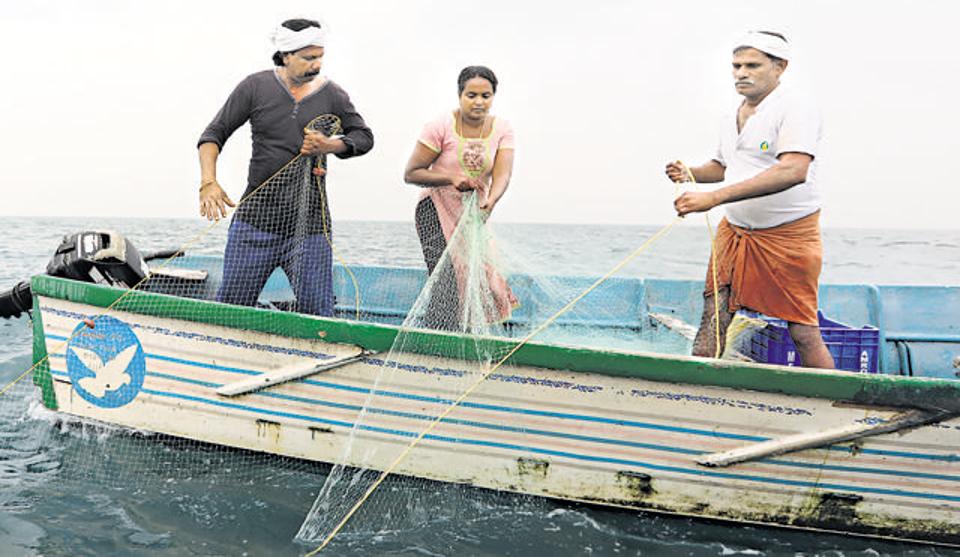
In Kerala’s coastal districts, women entrepreneurs are emerging as catalysts for economic resilience and community development in the fisheries sector. Supported by government-backed science and innovation initiatives, these women are converting traditional fishing practices into sustainable, commercially viable enterprises, demonstrating a model of inclusive growth for coastal livelihoods.
The Central Marine Fisheries Research Institute (CMFRI), through its Science, Technology and Innovation (STI) Hub project, has been instrumental in enabling this shift. The initiative provides technical training, capacity-building, and entrepreneurial guidance, equipping women with the tools to scale small-scale ventures into structured enterprises. A senior institute official noted that these programmes are designed not just to increase income, but also to enhance climate resilience and sustainability in fisheries.One such success story is from Ashtamudi Lake in Kollam district, where a local entrepreneur has developed a thriving mussel and oyster farming operation. What began as a modest home-based initiative has grown into a reliable livelihood, generating nearly Rs 1 lakh per crop from ten sacks of mussel seeds. Beyond supporting her own family, she has extended her expertise to local self-help groups, creating an ecosystem of women-led aquaculture units and increasing community income streams.Similarly, in Ernakulam district, a woman entrepreneur has expanded ornamental fish farming from a hobby into a full-scale business. By partnering with state-run Kerala Aqua Ventures International Limited (KAVIL) and selling directly to consumers, she now generates consistent weekly revenue while establishing a sustainable supply chain. Experts highlight that such ventures not only empower women economically but also encourage diversification in fisheries, reducing overreliance on traditional catch-based livelihoods.
Urban planners and coastal development specialists point out that women-led fisheries enterprises can contribute to broader socio-economic stability in coastal regions. They provide employment opportunities, foster entrepreneurship, and promote environmentally responsible aquaculture practices, aligning with long-term climate-resilient development goals. The focus on training, market access, and cooperative engagement ensures that growth is inclusive and community-centered.As Kerala marks International Women’s Day, the recognition of women entrepreneurs in fisheries underscores the intersection of gender, technology, and sustainable economic development. These ventures demonstrate how targeted support and capacity-building can transform micro-enterprises into scalable, resilient models that benefit both households and wider communities.Looking ahead, experts suggest that expanding similar programmes across India’s coastal belts could strengthen food security, promote sustainable aquaculture, and create equitable opportunities for women, fostering a new generation of climate-resilient, community-focused fisheries enterprises.
Kerala Women Entrepreneurs Transform Coastal Fisheries
