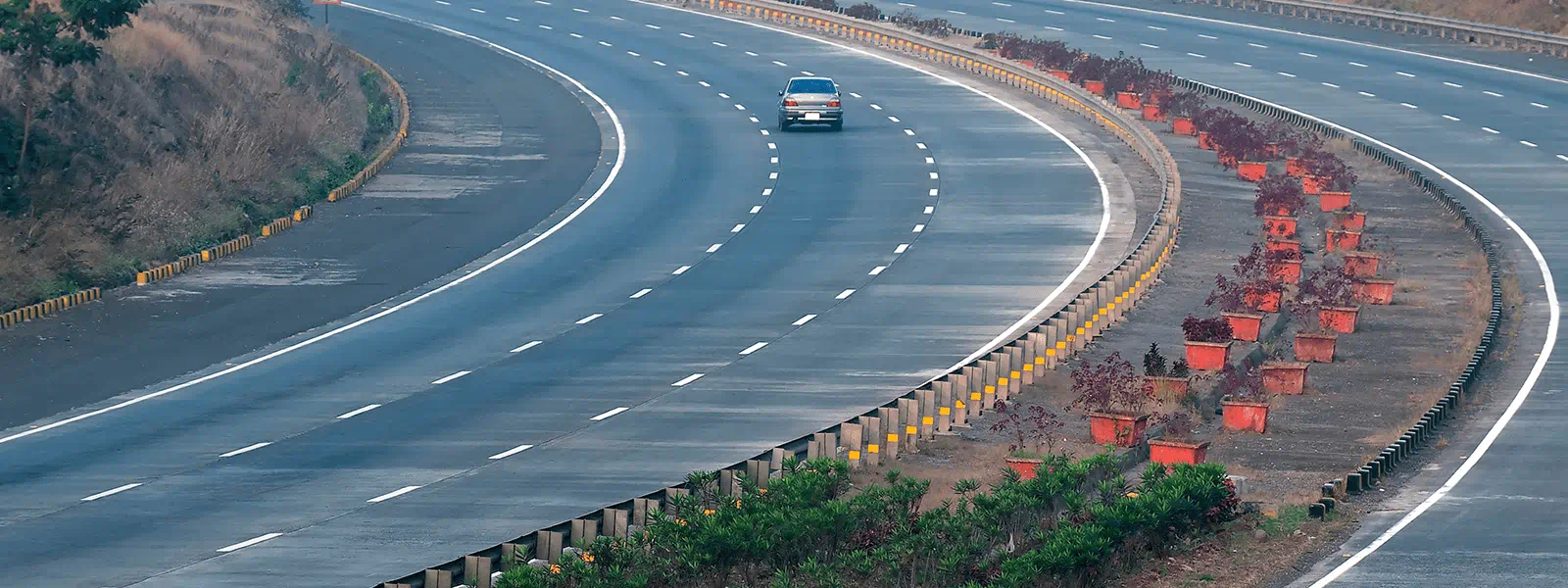
Work on the western section of the Pune outer ring road has entered a more active construction phase, with large infrastructure components such as tunnels, bridges and elevated structures advancing simultaneously across several sites. The ₹55,000-crore highway project is expected to reshape long-distance mobility around Pune by diverting intercity traffic away from urban roads and creating a faster corridor linking the Mumbai region with southern Maharashtra and Karnataka.
The 168-kilometre Pune outer ring road, planned as a high-speed access-controlled highway encircling the metropolitan area, is designed to handle through-traffic that currently passes through city roads and the Pune bypass. Authorities expect the project to reduce congestion within the city while improving travel efficiency for freight movement and regional passenger traffic.
Infrastructure planners say the western corridor is particularly complex because it passes through a landscape of hills, reservoirs and valleys on Pune’s outskirts. As a result, the alignment requires extensive engineering structures including twin tunnels, viaducts and multiple grade-separated crossings to maintain uninterrupted traffic flow.
Across the western stretch alone, the project includes eight tunnels, several major bridges and numerous underpasses and flyovers intended to prevent traffic signals or intersections along the route. These structures are critical for maintaining consistent vehicle speeds, which are planned to reach up to 120 kilometres per hour on the highway. The western alignment forms the first phase of the Pune outer ring road, stretching from the Mumbai–Pune Expressway junction near Urse to the Pune–Bengaluru highway near Shivare. Once operational, it will create a bypass for vehicles travelling between Mumbai and southern Maharashtra districts such as Satara, Sangli and Kolhapur, as well as traffic heading towards Bengaluru.
Transport planners note that a direct bypass outside the urban boundary could significantly reduce travel time along this route. Currently, vehicles must navigate through busy stretches of Pune’s bypass roads where urban traffic slows movement. The new corridor is expected to cut the journey between these junctions substantially, improving both logistics efficiency and commuter travel.
Land acquisition has progressed rapidly in several villages along the alignment, enabling contractors to expand construction activities across multiple packages of the project. Officials involved in project supervision indicate that the majority of land required for the western section has already been secured, allowing tunnelling, bridge construction and earthwork to advance simultaneously.
Beyond traffic management, the ring road is also expected to influence development patterns around Pune. Urban economists believe large orbital highways often trigger new logistics hubs, industrial clusters and residential growth in peripheral areas. Planning authorities are therefore studying land-use strategies to manage development responsibly while protecting ecological zones and water bodies.
Environmental planners have also proposed landscape measures such as roadside tree plantations and carefully designed drainage systems to reduce ecological disruption along the corridor. When complete, the Pune outer ring road is expected to function not only as a traffic diversion route but also as a strategic mobility backbone for the rapidly expanding metropolitan region. As Pune continues to grow as a manufacturing and technology hub, such infrastructure will likely play a key role in balancing economic expansion with more efficient regional transport networks.
Pune Outer Ring Road Project Reshaping Regional Mobility