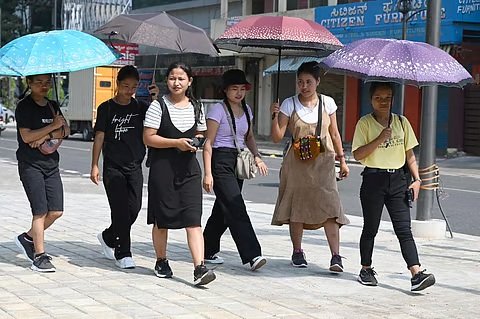
Bengaluru is experiencing an early surge in temperatures and ultraviolet radiation, raising concerns for urban health, infrastructure resilience, and public safety. With daytime highs approaching 33°C and the UV Index reaching an extreme level of 13, the city faces increased risks of sunburn, eye damage, and heat-related illnesses, highlighting the vulnerability of dense urban environments to climate stressors.
Meteorological assessments indicate that several districts across Karnataka have already crossed 40°C, signaling the onset of a hotter-than-average summer. While Bengaluru’s maximum temperatures remain moderate compared to interior districts, the city’s sharp rise in UV exposure is notable. Urban planners and public health specialists warn that the combination of reflective glass buildings, concrete-heavy surfaces, and declining tree cover amplifies local UV intensity, placing residents at higher health risk even under nominal shade.
Experts emphasise that the current pattern is consistent with a broader climate trend of early-season heatwaves affecting peninsular India. Such spikes exacerbate existing challenges for cities, including energy demand for cooling, strain on water supply, and public health preparedness. High UV levels particularly threaten outdoor workers, schoolchildren, and older adults, stressing the need for adaptive urban design measures such as expanded green cover, shaded walkways, and reflective building materials to mitigate heat accumulation. From an economic perspective, rising UV radiation and early heatwaves carry implications for productivity, retail footfall, and real estate planning. Residential and commercial buildings without adequate sun-protection measures may face increased cooling costs and reduced occupant comfort. Urban infrastructure investments that prioritise climate resilience such as heat-reflective pavements and high-albedo materials can moderate surface temperatures while improving long-term sustainability.
Authorities recommend that citizens adopt sun safety practices, including light, full-sleeved clothing, wide-brimmed hats, UV-protective eyewear, and high-SPF sunscreens. Concurrently, city administrations are being urged to accelerate tree planting drives, enforce urban shading norms, and incorporate climate-smart building guidelines into planning regulations. As Bengaluru prepares for peak summer, the extreme UV warning underscores the interconnected challenges of climate adaptation, urban planning, and citizen health. Forward-looking strategies that integrate heat mitigation with sustainable development can protect residents while enhancing the city’s resilience to recurring climate extremes.