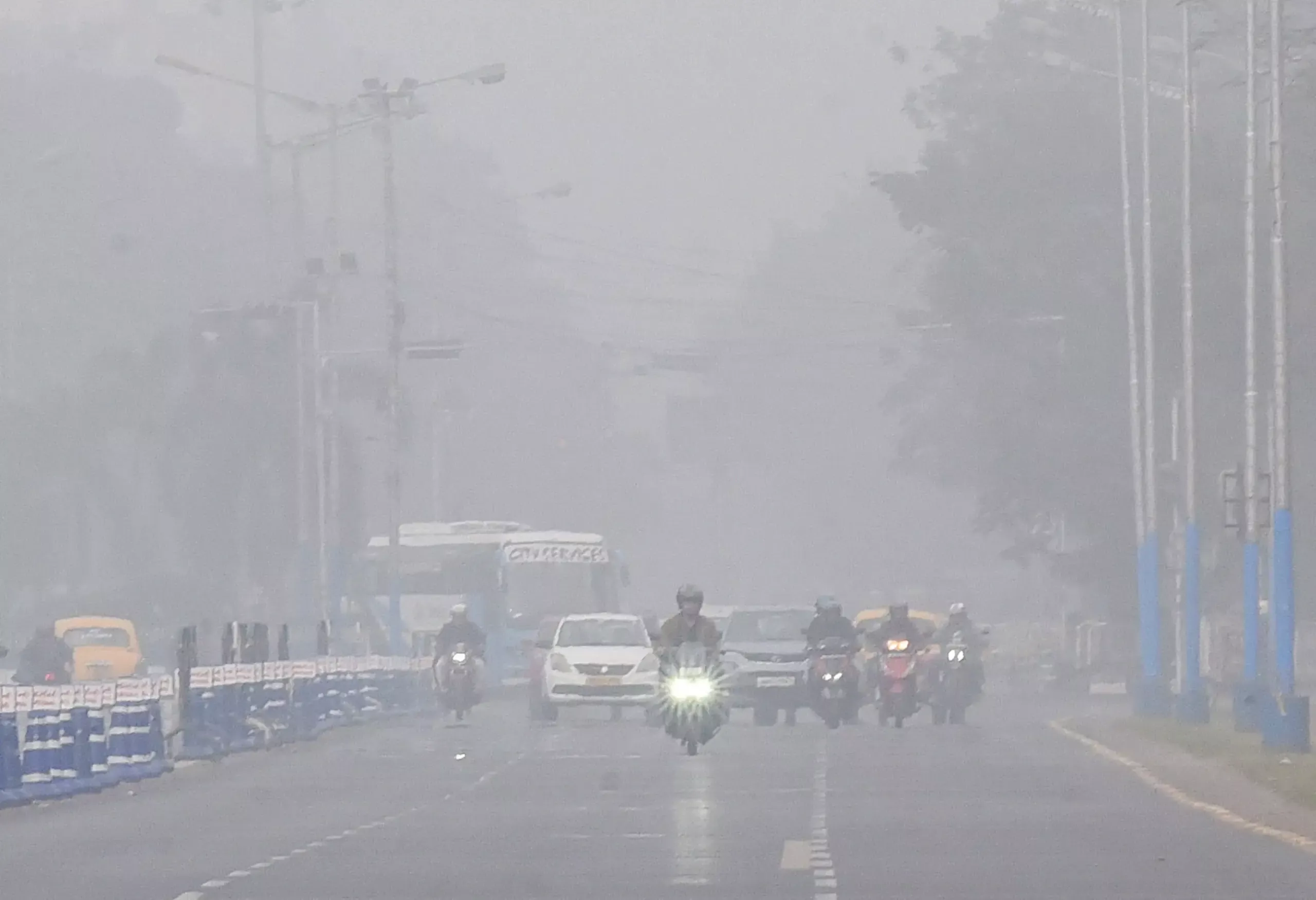
Kolkata and much of South Bengal continue to experience pronounced winter conditions, with frosty mornings and dense fog disrupting daily life and urban mobility. The sustained cold wave, driven by persistent northerly winds, has kept temperatures well below seasonal averages, raising concerns for energy use, transportation efficiency, and public health across densely populated urban centres. Data from the regional meteorological office indicates that Kolkata’s minimum temperature has fallen significantly below normal, while maximum daytime readings remain unusually low. Peripheral districts, including North and South 24 Parganas, Bankura, Purulia, Bardhaman, Birbhum, and Nadia, are witnessing similar patterns, underlining a regional winter intensity that could affect both residential comfort and urban energy demand.
While a low-pressure system has formed over the South Bay of Bengal, meteorologists confirm that its trajectory will largely bypass West Bengal, leaving the state exposed to ongoing cold northerly winds. Urban planners note that extended exposure to such conditions can strain city infrastructure, particularly for heating, water supply, and road safety. “Cold waves of this intensity require pre-emptive urban management measures to maintain citizen wellbeing and service continuity,” said a senior official in the state’s urban affairs department.In North Bengal, popular hill stations continue to experience sub-5°C temperatures, drawing tourists attracted to the region’s winter landscape.
From an economic perspective, prolonged cold periods can influence tourism patterns, local commerce, and transportation logistics, particularly in cities dependent on seasonal visitors. Hotel operators and transport service providers are reportedly adapting to increased heating costs and modified travel schedules. Environmental analysts suggest that these winter trends underscore the need for climate-resilient urban strategies. Cities with higher energy efficiency, improved green building practices, and robust public transport networks are better positioned to cope with temperature extremes. Additionally, planners stress the importance of inclusive solutions, such as accessible heating facilities and safe pedestrian pathways, to ensure vulnerable populations elderly residents, street vendors, and daily wage workers remain protected during prolonged cold spells.
Forecasts indicate that while winter intensity will persist until Saturday, temperatures could gradually rise from Sunday onwards. However, the incremental warming is unlikely to eliminate the winter chill entirely, highlighting the ongoing need for city administrations to prepare for both short-term human impacts and longer-term urban infrastructure challenges. As West Bengal navigates these conditions, the episode provides an opportunity for municipal authorities, real estate developers, and infrastructure planners to reinforce climate-adaptive measures, ensuring urban resilience while maintaining equitable, sustainable living standards across the region.