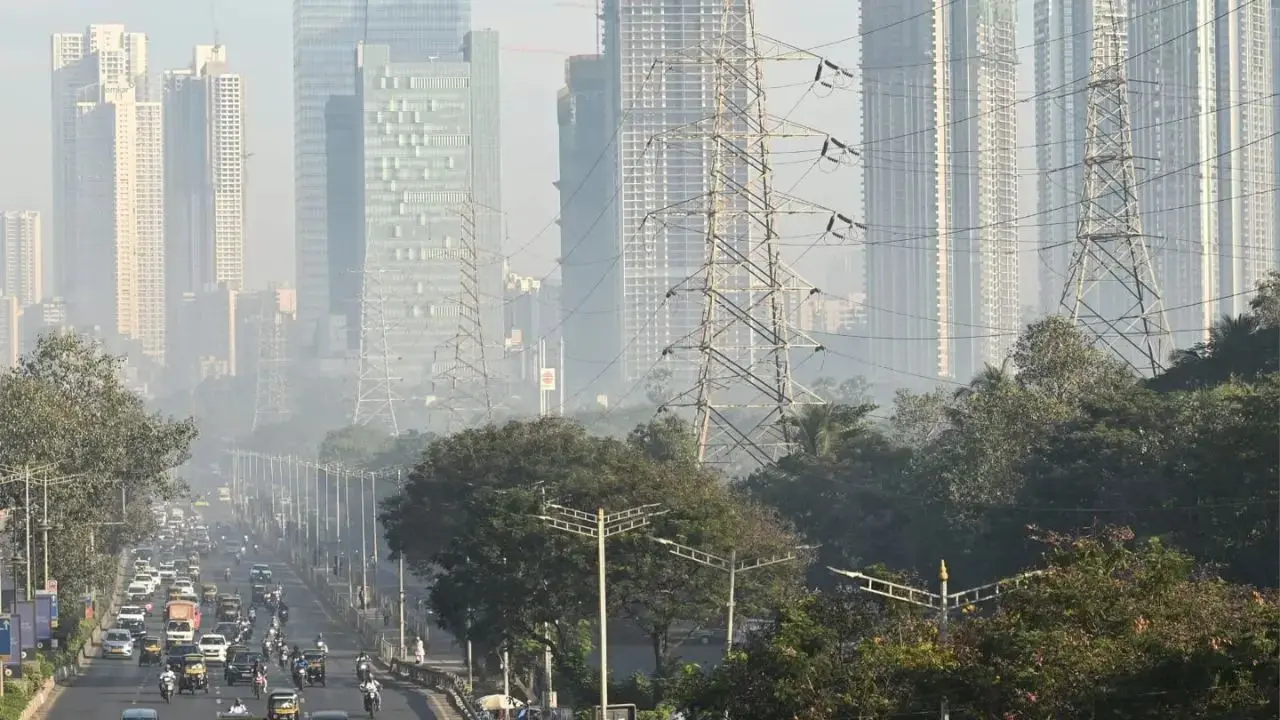
Mumbai air quality showed a noticeable improvement on March 5, 2026, offering residents a brief environmental respite after several days of elevated pollution levels. Monitoring data indicated a sharp drop in the city’s Air Quality Index within a 24-hour period, while weather conditions remained clear and warm across the metropolitan region.
According to meteorological officials, Mumbai began the day with largely cloud-free skies and temperatures ranging between approximately 24°C and 36°C. Stable weather conditions combined with improved atmospheric dispersion appear to have contributed to the fall in pollution levels observed across multiple air monitoring stations. Environmental monitoring platforms recorded the citywide Mumbai air quality reading at around 109 during the morning hours of March 5. While this level still falls within the “poor” category under national air quality standards, it represents a considerable improvement compared with readings that had crossed the 200 mark earlier in the week.
Air quality data reviewed by urban environment analysts shows that pollution levels declined gradually through the previous day before stabilising overnight. Experts suggest that shifting wind patterns and improved atmospheric circulation may have helped disperse particulate matter that had accumulated across the city during earlier stagnant conditions. Across several monitoring locations in south and suburban Mumbai, readings moved into the “moderate” range. Environmental data from stations in Gamdevi, Mount Mary, Mahavir Nagar, Malad and Vidya Nagari recorded AQI values largely between the 60s and low 70s, indicating better air conditions than those recorded during recent pollution spikes.
Urban sustainability specialists caution that the improvement in Mumbai air quality should be viewed as temporary rather than structural progress. Pollution levels in coastal megacities like Mumbai often fluctuate depending on wind direction, humidity levels, vehicular traffic, and construction activity. Transport emissions remain one of the largest contributors to urban air pollution in the Mumbai Metropolitan Region, particularly along high-traffic corridors linking residential suburbs with commercial districts. Construction dust from infrastructure projects and real estate development can also contribute to short-term spikes in particulate matter.
Environmental planners say improving urban air quality requires a combination of policy measures, including cleaner transport systems, better dust management at construction sites, and expansion of green urban infrastructure. The ongoing expansion of metro rail networks, electrified bus fleets and transit-oriented development models are increasingly viewed as essential tools for reducing dependence on private vehicles in dense metropolitan areas. Climate researchers also note that seasonal atmospheric patterns play a major role in how pollution behaves across coastal cities. Periods of stagnant air can trap pollutants close to the ground, while stronger sea breezes often help disperse airborne particles.
For residents, the temporary improvement observed on March 5 offers a short break from the recent stretch of poor air conditions. However, urban policy experts emphasise that sustained progress in Mumbai air quality will depend on long-term shifts toward cleaner mobility, climate-resilient urban planning, and stricter pollution control across transport, construction and industrial sectors.
Mumbai Air Quality Improves On March 5th As Pollution Levels Ease