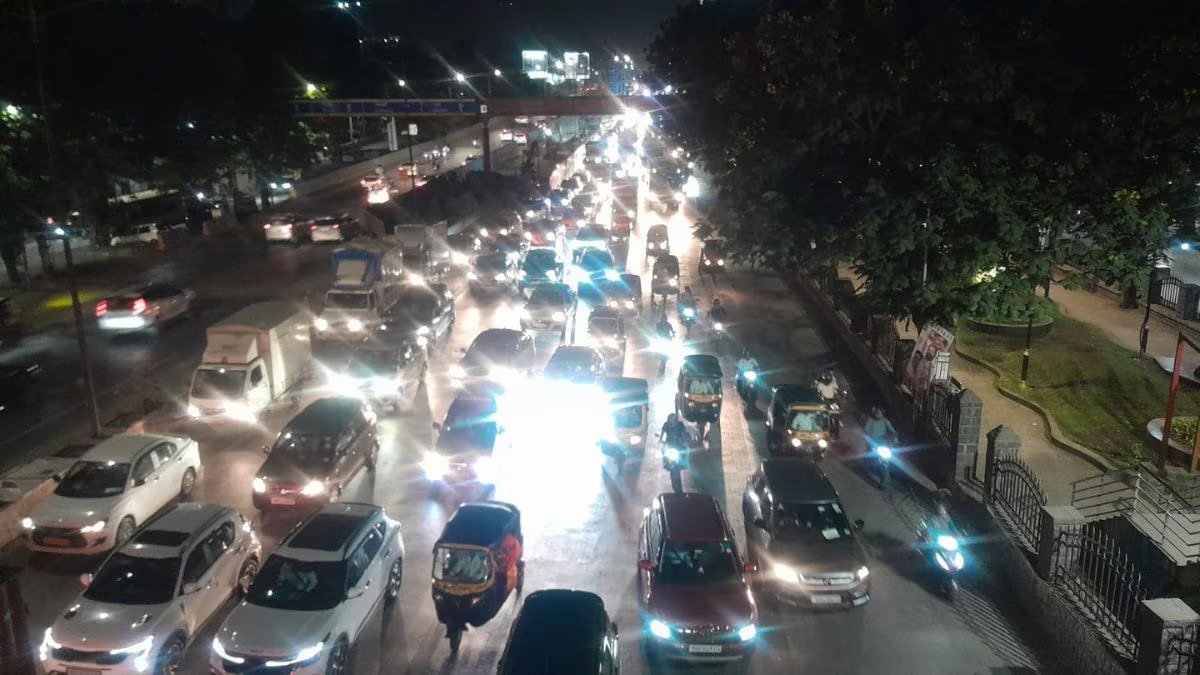
Major Thane traffic jams have begun to affect daily travel across the city’s northern gateway as ongoing construction for Mumbai Metro Line 4 constricts road capacity along Ghodbunder Road and the Eastern Express Highway. The bottlenecks are disrupting peak-hour movement between Thane and Mumbai, highlighting the short-term mobility strain often associated with large-scale urban transport projects aimed at long-term connectivity gains.
On-ground assessments indicate that construction activity linked to an elevated metro viaduct and supporting infrastructure has reduced usable carriageway space across critical sections of the corridor. Barricaded construction zones, heavy machinery, and temporary lane diversions have narrowed vehicle movement, leading to extended queues during the morning and evening rush. Ghodbunder Road functions as one of the most important east–west arterial routes connecting Thane with western suburbs and the Mumbai Metropolitan Region’s rapidly expanding residential clusters. Simultaneously, the Eastern Express Highway remains a principal north–south mobility spine linking Thane to central Mumbai. Urban mobility planners note that disruptions across both corridors simultaneously can ripple across multiple neighbourhoods and logistics routes.
Transport observers say the current Thane traffic jams underline the difficult balancing act faced by rapidly growing metropolitan regions. While the Metro Line 4 corridor is expected to significantly enhance mass transit connectivity across the eastern suburbs and Thane in the coming years, construction phases inevitably place pressure on existing road-based transport systems that remain the primary commuting mode. Public transport vehicles, private commuters, school buses, and freight operators have all reported slower travel times through the affected zones. Logistics operators have also raised concerns about delivery delays, particularly during peak freight movement windows when arterial roads are already operating close to capacity.
Urban planning experts point out that such congestion episodes highlight the need for stronger traffic management strategies around infrastructure construction zones. Temporary signal adjustments, real-time traffic monitoring, and improved communication with commuters are often used in global cities to mitigate disruption while major projects are underway. Authorities involved in the metro development maintain that the current construction phase is essential to completing the elevated transit corridor designed to reduce long-term dependence on private vehicles. Once operational, the metro route is expected to provide faster connections between densely populated residential districts and employment centres across the Mumbai Metropolitan Region.
Infrastructure specialists argue that the success of such projects ultimately depends not only on engineering completion but also on how effectively cities manage the transition period during construction. In rapidly urbanising corridors like Thane, the ability to maintain mobility while building future transport capacity has become a defining challenge of sustainable metropolitan planning. As work on the metro alignment progresses, officials are expected to review traffic diversion plans and construction sequencing to reduce commuter disruption. For residents and businesses along these corridors, the coming months will test how well the region can navigate temporary disruption in pursuit of more resilient, transit-oriented urban mobility.
Thane Metro Work Triggers Ghodbunder Traffic Jams