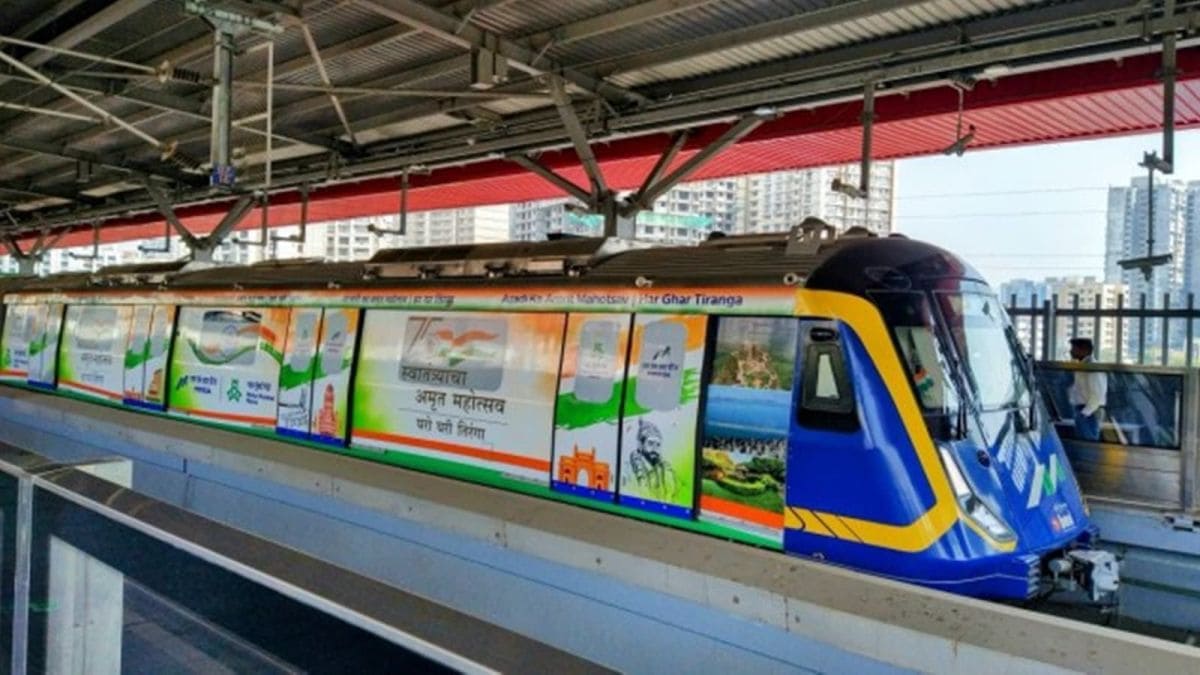
Urban transport planners in the Mumbai Metropolitan Region are examining a significant Mumbai metro expansion that could extend rapid transit connectivity to several rapidly growing towns in Thane district, including Kalyan, Ulhasnagar, Ambernath and Badlapur. The proposals were discussed during a recent infrastructure review focused on strengthening public transport networks across the eastern suburban belt.
Officials overseeing regional mobility projects assessed both the progress of ongoing metro construction and potential route extensions aimed at improving connectivity in areas currently dependent on suburban rail and road networks. The discussion signals a broader effort to align transport infrastructure with population growth in emerging residential corridors beyond the traditional Mumbai urban core. One of the key corridors under review is Metro Line 5, which is currently being built between Thane, Bhiwandi and Kalyan. Transport planners are evaluating the possibility of extending this line deeper into the eastern suburbs to connect dense residential zones and industrial clusters. Preliminary proposals include a route passing through urban centres such as Ulhasnagar and Ambernath before linking with new railway infrastructure planned in the region. Another option under consideration involves extending the corridor further east towards Badlapur.
Urban mobility experts say that such a Mumbai metro expansion could provide an alternative to the heavily used Central Railway suburban system, which remains one of the most crowded commuter networks in the country. Expanding metro connectivity in these corridors could help reduce travel times while easing pressure on long-distance local trains that carry daily commuters to Mumbai and Thane. A second corridor receiving attention is Metro Line 12, currently under development between Kalyan and Taloja. Construction activities including pillar erection and station development are progressing along sections of the alignment. Authorities are studying the feasibility of extending this route westwards from Shilphata to connect areas such as Mumbra and Kalwa, creating a direct link with Thane city.
Transport planners note that stronger metro connectivity across Thane district could reshape commuting patterns by linking residential neighbourhoods, employment zones and logistics hubs more efficiently. Improved access to mass transit is also likely to influence future real estate development, particularly in suburban townships where population growth has accelerated in recent years. Another long-term proposal discussed during the review relates to Metro Line 14, a planned corridor expected to connect Kanjurmarg in eastern Mumbai with Badlapur. The project remains in the planning phase, but authorities have indicated that early groundwork and feasibility assessments are being encouraged so the corridor can move towards implementation in the coming years.
In addition to metro corridors, planners explored the idea of integrated transport infrastructure using multi-layered corridors. The concept involves building a road at ground level, an elevated flyover above it and metro tracks on the top tier an approach designed to optimise land use in densely built urban environments. Urban planners believe the ongoing Mumbai metro expansion will play a crucial role in supporting sustainable mobility across the metropolitan region. As suburban populations continue to grow, expanding reliable public transport networks is expected to remain central to reducing congestion, improving air quality and shaping more balanced urban development across the MMR.