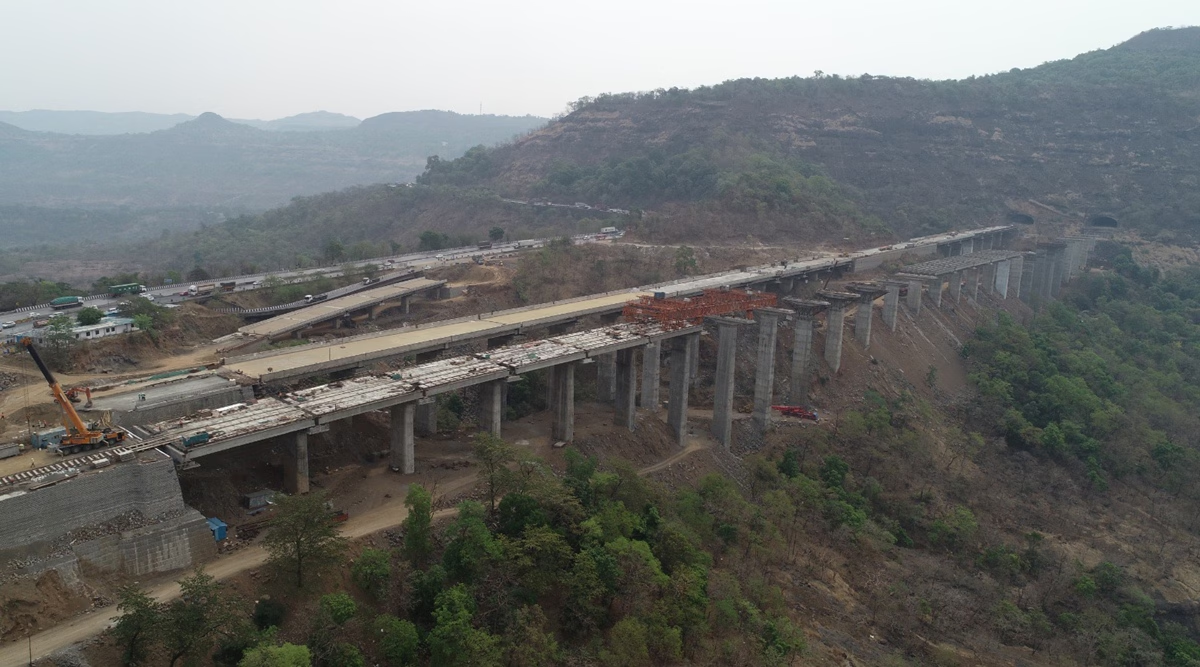
A long-awaited infrastructure upgrade on the Mumbai–Pune corridor is nearing completion, with authorities indicating that the Mumbai Pune Expressway missing link could become operational around Maharashtra Day in early May. The strategic stretch, developed by the state’s road infrastructure agency, is in its final construction phase and is expected to significantly ease congestion along the steep ghat section between the two cities.
Officials overseeing the project say more than 95 percent of the engineering work has already been completed, leaving only limited finishing work on one side of the carriageway. Once trial runs and safety inspections conclude later this month, the new alignment is expected to be opened to traffic, subject to structural certification and load testing protocols. The Mumbai Pune Expressway missing link project forms a key intervention in one of India’s busiest intercity highways, which carries thousands of passenger vehicles and freight trucks every day between the country’s financial capital and its major manufacturing hub. The existing stretch through the Lonavala–Khandala hills has long been considered a bottleneck due to sharp gradients and heavy vehicle movement, particularly during peak travel seasons and holiday weekends.
Infrastructure planners note that the new alignment bypasses this challenging section by using a combination of tunnels, elevated viaducts and a high-span cable-supported bridge. The route begins near Khopoli and reconnects with the expressway near Kusgaon on the Pune side, shortening the existing distance through the ghat region by several kilometres. The project, valued at over ₹6,000 crore, is among the most technically complex road developments undertaken in Maharashtra in recent years. It includes long mountain tunnels and an elevated bridge crossing the Tiger Valley landscape, supported by tall pylons designed to accommodate the region’s steep terrain. Engineers say such infrastructure solutions are intended to improve safety while maintaining the ecological sensitivity of the Western Ghats corridor.
Transport authorities expect the Mumbai Pune Expressway missing link to cut travel time between the two metropolitan regions by up to half an hour during normal traffic conditions. The additional lane capacity on the new alignment is also likely to reduce vehicle bunching on the older ghat route, particularly where heavy trucks slow down on uphill stretches. The urgency to complete the project gained attention earlier this year when a tanker accident near the ghat section led to prolonged traffic disruption and kilometres-long vehicle queues. Such incidents highlight the vulnerability of the corridor when a single route handles both freight and passenger movement.
Highway officials anticipate that once operational, a large share of light vehicles will shift to the new alignment, helping distribute traffic flows more evenly across the corridor. Beyond commuter convenience, the improved route will also serve as a critical diversion path during emergencies or maintenance closures on the existing expressway. Urban mobility experts believe the project reflects the growing need for resilient transport infrastructure linking India’s major economic regions. With trade, logistics and daily commuting steadily rising between Mumbai and Pune, the Mumbai Pune Expressway missing link is expected to play an important role in improving regional connectivity while strengthening one of western India’s most vital transport lifelines.
Mumbai Pune Expressway Missing Link Ready Soon