


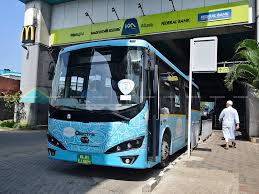
As Kochi’s metro rail and water metro networks expand, questions are being raised about how well the city’s conventional bus systems align with emerging mobility corridors. A senior citizens’ collective has now called for an overhaul of existing bus routes to ensure seamless connectivity with metro and water metro stations.
The representation has been submitted to Kochi Metro Rail Ltd and the Ernakulam Regional Transport Office, urging coordinated action between agencies overseeing urban transport. The group argues that legacy routes operated by the Kerala State Road Transport Corporation, private buses and metro feeder services were designed around older traffic flows and do not adequately reflect the city’s shifting commuter patterns.Over the past few years, Kochi has invested heavily in rail-based public transport, including the metro and water metro systems, positioning them as low-emission alternatives to road travel. However, transport planners note that the success of such networks depends significantly on last-mile integration. Without rationalised feeder services and route synchronisation, commuters often revert to private vehicles for convenience.
Members of the Senior Citizen Friends Welfare Association met in Elamakkara to highlight practical concerns faced by elderly residents. Many find it difficult to access stations due to indirect or poorly timed bus services. The association has initiated a signature campaign, calling for a comprehensive mobility plan that links buses, metro rail and water metro services into a unified system rather than parallel operations.Urban mobility experts say the demand reflects a broader structural issue in Indian cities: fragmented governance across multiple transport authorities. While metro rail corporations focus on fixed corridors, bus networks typically remain under separate state agencies, leading to gaps in scheduling, ticketing and route planning.
Fuel price volatility and rising household expenses further amplify the urgency of integrated public transport. With higher fuel and food costs affecting disposable incomes, affordable and reliable mobility becomes critical for working families and pensioners alike. Rationalised bus routes that feed directly into metro and ferry terminals could reduce travel time and overall commuting costs.Transport economists suggest that route optimisation studies, data-driven passenger flow mapping and integrated ticketing platforms are necessary next steps. Cities such as Kochi, which are transitioning toward multimodal transport ecosystems, must prioritise system-wide efficiency over individual network expansion.As Kochi’s infrastructure evolves, the debate is shifting from building new assets to making existing ones work better together. Whether authorities respond with a coordinated mobility blueprint could determine how inclusive and climate-resilient the city’s transport future becomes.
Kochi Seeks Bus Metro Route Integration
