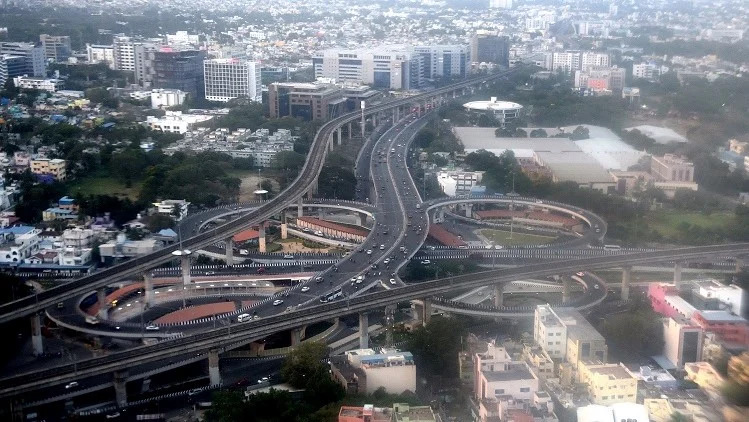
Chennai’s recently inaugurated L-shaped flyover connecting Central Institute of Plastics to Rajiv Gandhi Salai is under scrutiny after reports highlighted structural inconsistencies and commuter safety concerns. The 652-metre bridge, designed to alleviate congestion in a key arterial corridor, is reportedly experiencing underutilisation, with daily traffic diverting to surface roads due to perceived hazards. Urban planners and transport officials warn that such challenges can undermine the intended benefits of high-investment infrastructure projects.
Local civic representatives and transport analysts have raised alarms about the quality of construction, citing uneven surfacing, sharp curves, and frequent bumps that could compromise vehicle stability, particularly for two-wheelers. Preliminary assessments suggest that material standards may not meet original specifications, with concrete grade and reinforcing steel potentially falling short of design requirements. These observations have triggered calls for a formal audit of project procurement, execution, and oversight processes.
Experts note that when newly commissioned infrastructure is bypassed by commuters, it represents not only a traffic management failure but also a significant economic and environmental cost. The underutilisation of the flyover increases congestion on adjacent roads, contributes to higher fuel consumption, and raises urban emissions, counteracting city-wide climate resilience goals. For a rapidly growing metropolis like Chennai, poorly performing transport assets can strain urban mobility, reduce economic efficiency, and compromise citizen safety. Urban development specialists highlight that transparency in public infrastructure projects is critical to ensure both quality and long-term functionality. Independent audits, structural testing, and monitoring of post-construction performance are essential to detect deficiencies early and implement corrective measures. Incorporating citizen feedback into ongoing infrastructure planning can also enhance safety outcomes and public trust.
The flyover case underscores the broader challenge of sustainable and resilient urban transport in Indian cities. Investment in high-capacity corridors must be coupled with stringent quality assurance, lifecycle maintenance planning, and inclusive safety audits. Without these safeguards, expensive urban interventions risk becoming underutilised assets, impacting economic growth, commuter convenience, and environmental targets. Moving forward, municipal authorities and transport planners are expected to initiate detailed structural assessments and engage independent engineers to verify compliance with design and safety standards. Corrective actions could include resurfacing, reinforcement, or redesign of critical sections, alongside improved traffic management strategies to encourage safe utilisation.