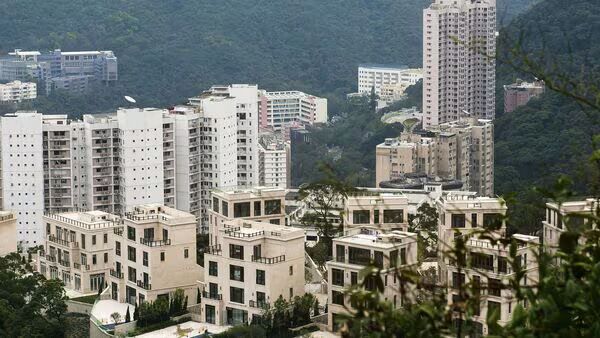
Premium Home Demand Drives Real Estate Sector Sales
New Delhi — India’s leading publicly traded real estate companies collectively registered property sales bookings of about ₹1.33 lakh crore in the first nine months of the 2025-26 financial year, underlining resilient demand in the housing market and solidifying the sector’s role in the broader urban economy.
The performance reflects sustained buyer confidence — particularly in branded developers offering premium and luxury residential products — even as volume growth remains mixed across segments. Data compiled from regulatory filings indicates that the combined pre-sales — a forward indicator of future revenue recognition — of 28 listed realty firms reached ₹1,32,569 crore between April and December 2025. Top performers such as Godrej Properties dominated the rankings, with several firms achieving substantial bookings that cumulatively influence urban housing trends in major markets.
At the top of the leaderboard, Godrej Properties led with sales bookings of approximately ₹24,008 crore, followed by Prestige Estates Projects at ₹22,327 crore and DLF Ltd — the country’s largest realty firm by market capitalisation — with about ₹16,176 crore in pre-sales. Lodha Developers also reported strong figures, completing around ₹14,640 crore in bookings during the period. The aggregated performance highlights that the top five companies accounted for roughly 63 per cent of total sales value, pointing to significant market concentration among major listed players. This centralisation is increasingly notable as branded developers benefit from stronger balance sheets, better execution track records and higher buyer trust compared with smaller or unlisted competitors.
The strong pre-sale figures come at a time when residential property prices have appreciated across many urban centres, especially in premium and luxury segments, even as unit volumes have seen mixed momentum. Analysts attribute this pattern to lifestyle shifts post-pandemic, with homebuyers prioritising larger living spaces, branded project quality and integrated neighbourhood amenities. Real estate consultants highlight that while annual housing demand remains supported by urban demographic expansion, employment growth and credit availability, the weight of sales bookings emphasizes value over sheer unit volumes. In some markets, such as the National Capital Region and major metros, luxury and premium housing have outperformed mid-segment sales, reflecting deeper liquidity among higher-income segments.
From a sectoral perspective, robust pre-sales among listed companies also buttress their financial stability, strengthening cash flows and reducing project funding risk — a key factor as developers navigate tighter credit conditions and a competitive land acquisition market. Many listed firms are leveraging these sales to secure better financing terms and accelerate project deliveries, a trend that can increase investor confidence. However, not all segments are equally buoyant. Some analysts point to early signs of demand softening in specific pockets of mid-tier housing, where affordability constraints and cautious buyer sentiment have tempered volume growth. In this context, the strong performance of premium developers may partly reflect an ongoing shift in market composition rather than uniform sector strength.
For urban policymakers and planners, these sales trends have wider implications. Sustained property demand influences infrastructure planning, housing affordability strategies and urban land use patterns — especially as cities contend with the twin goals of inclusive growth and sustainable density. Monitoring shifts between mass-market and premium housing will be crucial for ensuring that housing policies balance aspirational demand with broader access to affordable homes across India’s expanding urban corridors.