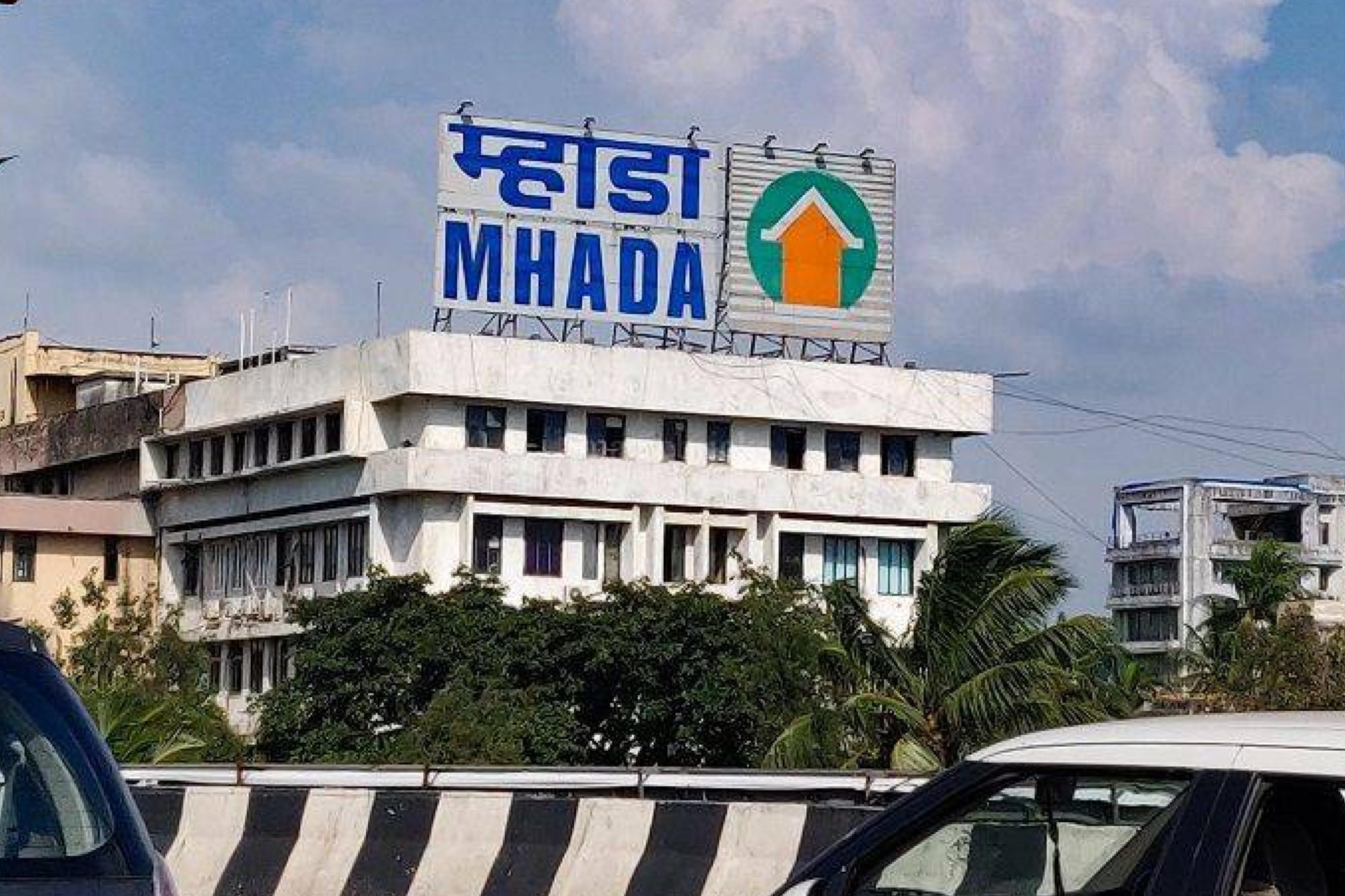
MHADA Backs Cluster Redevelopment To Ease Mumbai Housing Crisis
Mumbai’s enduring housing affordability challenge has prompted a strategic rethink by the Maharashtra Housing and Area Development Authority (MHADA), which is championing cluster redevelopment and targeted policy reform as critical pathways to deliver housing at scale across the Mumbai Metropolitan Region (MMR). With the city’s land scarcity and high property prices exerting sustained pressure on middle- and lower-income households, MHADA’s leadership is pushing for integrated urban renewal as part of a broader housing infrastructure push.
At a recent real estate conclave, the Vice-President and CEO of MHADA outlined a multi-pronged strategy focused on leveraging under-utilised land parcels through cluster redevelopment — a coordinated renewal of entire neighbourhoods ranging from 60 to 100 acres — rather than the traditional single-building approach. With approximately 90 per cent of developable land already consumed in central Mumbai, such large-scale redevelopment is seen as essential for boosting supply without expanding the city’s footprint.Cluster redevelopment enables planners to deliver holistic neighbourhoods with integrated infrastructure — including transport links, public amenities and open spaces — while significantly increasing housing stock. MHADA intends to open up between 800 and 1,000 acres for such projects, which can function effectively as small urban townships within the larger metropolitan fabric. These schemes are also designed to facilitate the construction of 2.8 million homes by 2030 across the region, with MHADA contributing approximately 800,000 units through its initiatives and partnerships.
Such restructuring responds directly to Mumbai’s affordability index, where a typical middle-income family may need nearly half of its annual earnings to service a mortgage, a ratio that significantly limits market access for large segments of the population. By rationalising land use and broadening the scale of redevelopment, the authority aims to reduce pricing pressures and deliver housing more affordably.Policy reform is core to MHADA’s vision. Officials emphasise that regulatory changes — such as rationalising development charges, premiums and other levies — could cut the cost of affordable projects by up to 25 per cent, making them more attractive to private developers and lowering end-user pricing. This aligns with ongoing calls to streamline regulatory frameworks governing redevelopment approvals, especially under Development Control and Promotion Regulations (DCPR) 2034, which have been updated to incentivise larger-scale, integrated projects.
The shift toward cluster redevelopment also reflects broader urban planning principles that prioritise densification and infrastructure synergy. Integrated projects can leverage economies of scale by co-locating transit nodes, water and sanitation networks, and community facilities — generating efficiencies unlikely to emerge in isolated redevelopment schemes. This is particularly important in MMR’s peripheral zones, where infrastructure deficits have historically slowed housing delivery.MHADA’s strategy includes expanding the conceptual definition of housing beyond ownership models. With rising demand for diversified forms of accommodation — including rental housing, student dormitories, women’s hostels and workforce housing near major employment hubs — the authority is signalling a more inclusive housing ecosystem that reflects demographic shifts and market needs.
Despite these ambitions, challenges remain: legal disputes over land titles, the financial viability of redevelopment projects, and the need to secure developer interest for large-scale clusters could shape implementation timelines. Yet, by harnessing integrated planning and regulatory reform, MHADA’s approach aims to bridge the gap between policy intent and on-the-ground delivery, potentially setting a precedent for other high-density urban regions grappling with affordability constraints.