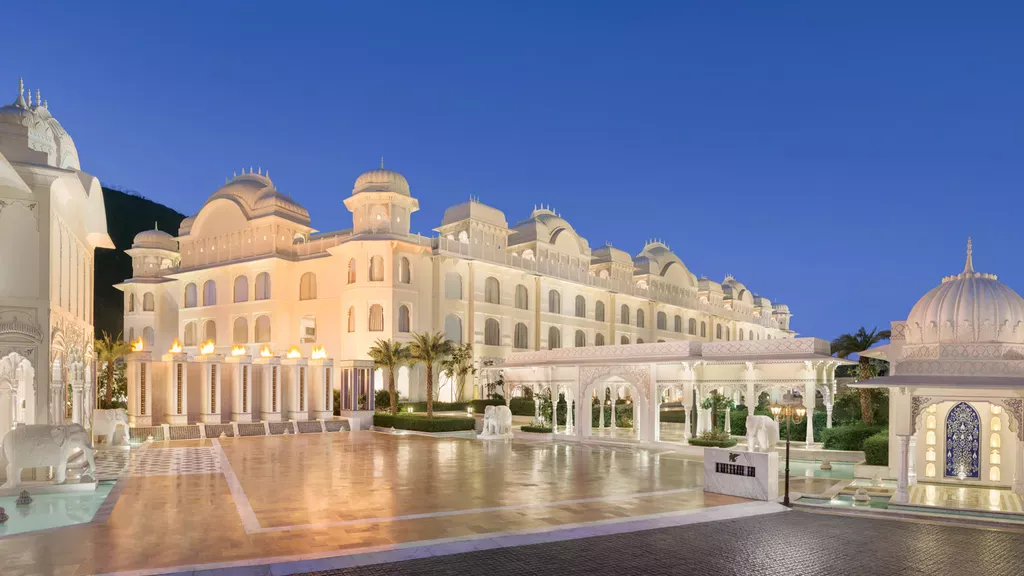
Jaipur Urban Tourism Gets Boost With New Resort Opening
JAIPUR — The hospitality landscape in Jaipur is set for a fresh infusion of inventory and investment appeal with the opening of a new luxury resort by a prominent national hotel group, signalling renewed confidence in tourism-led urban economic growth.
The resort, positioned to attract both leisure and business travellers, reflects broader trends in Jaipur’s transformation into a multi-faceted urban destination that blends heritage tourism, cultural experiences and lifestyle amenities with expanding service-sector opportunities. Located on the outskirts of Jaipur’s ring road, the resort offers high-end accommodation, curated dining spaces, event and conferencing facilities, and wellness-oriented amenities — components increasingly sought by travellers who combine cultural exploration with comfort and convenience. The project is the latest addition to the city’s hospitality ecosystem, which has seen steady demand growth from domestic and international tourists alike, buoyed by Jaipur’s brand as a historic and cosmopolitan capital of Rajasthan. Urban economists and tourism analysts note that new hotel inventory can act as a catalyst for economic multipliers, particularly in cities where visitor numbers are rising. Higher-end properties often create backward linkages with local suppliers, artisans and service providers, while also expanding employment opportunities in operations, food and beverage, housekeeping and guest services.
For Jaipur — where the tourism sector contributes significantly to the urban economy — such expansions can reinforce employment growth and improve the city’s competitiveness in the national leisure and meetings, incentives, conferences and exhibitions (MICE) circuits. The new resort’s integration with local cultural and ecological assets aligns with a strategic shift in Jaipur’s tourism planning toward diversified experiences. While traditional attractions like the City Palace, Hawa Mahal and Amer Fort continue to draw crowds, newer offerings — from curated culinary trails and craft tours to wellness retreats and boutique shopping precincts — are broadening the city’s appeal across demographic cohorts. This diversification supports longer stays and higher per-visitor expenditure, which in turn benefits ancillary urban sectors such as transport, retail and hospitality services. From a real estate perspective, luxury hotel development often signals increased investor confidence in peripheral urban zones. The resort’s location near the ring road — a corridor earmarked for future transit upgrades and road connectivity improvements — positions it to benefit from anticipated infrastructure enhancements that improve access and reduce travel friction from the city centre and the airport.
Transport planners emphasise that better connectivity not only supports tourism growth but also improves overall urban mobility for residents, linking employment hubs with emerging economic nodes. The resort opening also arrives at a time when sustainable tourism practices are becoming integral to hospitality investment decisions. Guests increasingly expect energy-efficient buildings, water-conservation systems, waste-management strategies and locally sourced experiences that minimise environmental footprints. Integrating such practices can enhance a property’s market appeal while contributing to Jaipur’s broader efforts to balance tourism growth with environmental stewardship and quality of life considerations. Local entrepreneurs and planners are watching how the new resort influences competitive dynamics in the hospitality market. Smaller boutique hotels and guest houses, many of which emphasise personalised service and cultural authenticity, may face pressure to elevate amenities or differentiate through niche offerings. The resulting competitive environment could spur innovation in service delivery, guest engagement and community-centric tourism collaborations.
As the new property settles into Jaipur’s hospitality ecosystem, its performance will be an early indicator of investor sentiment and consumer demand patterns in mid-2026 and beyond. Tourism recovery trends post-pandemic have shown resilience in key Indian heritage cities, and Jaipur’s ability to integrate new inventory with existing assets — while advancing infrastructure and service quality — will determine its trajectory as both a cultural magnet and a dynamic urban economy.