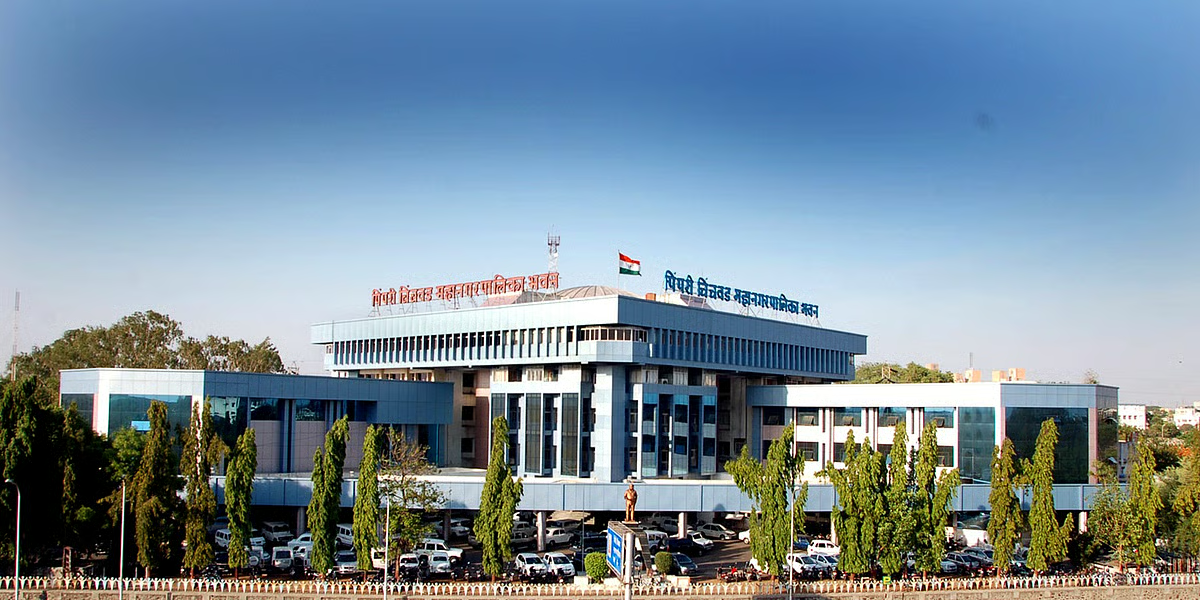
The Pimpri Chinchwad Municipal Corporation has introduced a month-long property tax penalty waiver scheme aimed at accelerating revenue recovery before the close of the financial year. Branded as an amnesty initiative, the programme will run from 1 March to 31 March 2026 and offers a 90 per cent waiver on accumulated penalties for property owners who clear their entire outstanding dues in a single payment.
For a fast-growing industrial and residential hub on Pune’s periphery, property tax remains a primary source of municipal income. Officials say the property tax penalty waiver is designed to ease the burden on defaulters while strengthening the civic body’s fiscal position to fund infrastructure and essential services.
More than five lakh property holders have already paid their dues this year, contributing roughly ₹747 crore to municipal revenues. However, civic records indicate that over 2.1 lakh properties continue to have pending arrears.
Administrators have deployed recovery teams across 18 ward offices to contact defaulters and facilitate payments through both online and offline channels.
The scheme applies across residential, commercial, industrial properties and open plots. While the principal tax amount remains payable in full, the property tax penalty waiver reduces interest and late fees by 90 per cent, provided the total outstanding amount including arrears up to 2025–26 is settled during the specified window. Partial payments will not qualify for the benefit.
Urban finance experts note that amnesty schemes can provide short-term liquidity to municipalities, especially when timed before budget finalisation. Increased collections may support road upgrades, water supply expansion, drainage works and solid waste management services that are critical in high-density urban regions like Pimpri-Chinchwad. At the same time, policy analysts caution that repeated waivers can create moral hazard if taxpayers delay payments in anticipation of future concessions. Civic officials indicate that regular recovery measures, including enforcement action, will resume after 31 March for those who fail to avail themselves of the opportunity.
From a governance perspective, predictable property tax compliance is essential for long-term planning. Stable revenues enable investment in climate-resilient infrastructure, including flood mitigation, decentralised waste systems and energy-efficient public facilities. In rapidly urbanising corridors, municipal finances directly influence the quality and pace of development. Real estate consultants observe that clarity in tax administration also benefits property markets. Transparent billing, digital records and structured recovery frameworks improve investor confidence and reduce disputes.
As the March deadline approaches, the effectiveness of the property tax penalty waiver will be measured not only in immediate revenue gains but also in whether it strengthens compliance culture. For PCMC, the coming weeks will test how fiscal incentives can align citizen participation with the financial sustainability of one of Maharashtra’s fastest-expanding urban economies.
Pimpri Chinchwad Offers Property Tax Penalty Waiver