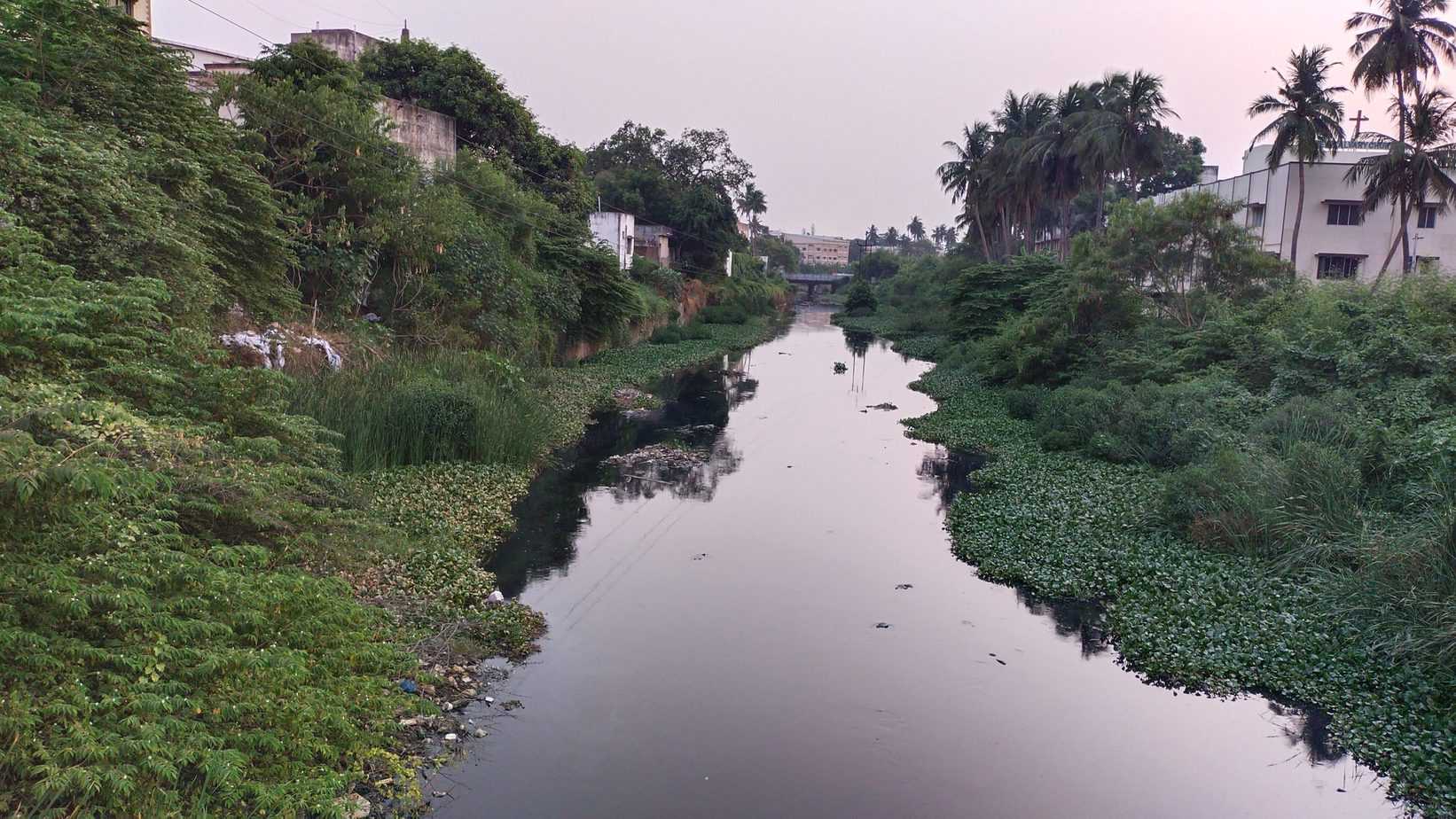
Fresh concerns are surfacing in north-central Chennai as untreated effluents continue to enter the Otteri Nullah, despite recent public investments aimed at restoring the historic stormwater canal. The persistence of sewage discharge into the waterway raises questions about enforcement, flood preparedness and neighbourhood health in a city increasingly vulnerable to climate shocks.
The Otteri Nullah, a critical drainage artery cutting through dense residential and commercial clusters, was earmarked for rejuvenation works in 2025 with an allocation exceeding ₹60 crore. The project included sludge removal and desilting to improve carrying capacity ahead of the northeast monsoon. Yet residents along stretches in the Anna Nagar zone report that wastewater and grey water continue to flow into the channel from informal and commercial connections. Urban planners note that stormwater canals are designed to carry rainwater, not sewage. When such systems are misused, the consequences go beyond foul odour. Reduced hydraulic efficiency increases the risk of localised flooding during intense rainfall events. In Chennai’s low-lying neighbourhoods, even marginal obstructions can compound inundation risks, particularly as rainfall patterns grow more erratic due to climate change.
Public health implications are also mounting. Residents living adjacent to the canal describe rising mosquito density and deteriorating air quality. Health experts warn that stagnant, nutrient-rich water can become a breeding ground for vector-borne diseases, posing risks to children and elderly populations. In compact urban settings, environmental neglect often translates quickly into health expenditure and productivity losses. Officials overseeing civic infrastructure maintain that inspections are being conducted to identify illegal connections. Engineering works are reportedly underway to elevate canal embankments and introduce protective barriers to deter unauthorised discharge. However, infrastructure specialists argue that physical upgrades alone will not resolve systemic leakage unless accompanied by stricter monitoring, decentralised wastewater treatment and transparent penalty mechanisms.
The Otteri Nullah sewage inflow problem also underscores a deeper governance challenge: the disconnect between capital expenditure and long-term maintenance. Chennai has invested heavily in flood mitigation following successive extreme weather events. Yet without coordinated sewerage expansion and enforcement across mixed-use corridors, stormwater assets risk reverting to polluted channels. For a city positioning itself as a hub for real estate growth and climate-resilient infrastructure, the credibility of such restoration projects matters. Clean and functional waterways are not only environmental assets but also urban risk buffers that protect property values and public investment. As the next monsoon cycle approaches, the effectiveness of corrective measures along the Otteri Nullah will serve as a test case for Chennai’s broader transition toward sustainable and accountable urban water management.