


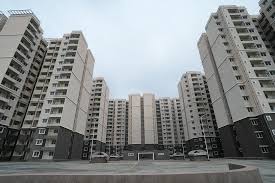
The Bangalore Development Authority is carrying nearly 1,910 unsold homes across several recently completed projects in Bengaluru, even as officials maintain that overall demand for public housing remains stable. The emerging inventory overhang particularly in villas and small-format flats offers a revealing snapshot of how buyer preferences are shifting in India’s technology capital.
Data reviewed by Urban Acres shows that of 6,738 units constructed in the latest development cycle, about 4,358 have been allotted. A further 470 flats are currently undergoing repairs, temporarily shrinking active saleable supply. The remaining stock forms the current BDA housing inventory, spread across multiple layouts on the city’s periphery. Officials attribute the rise in unsold homes to simultaneous project launches entering the market over the past year. According to a senior authority representative, absorption remains within expected timelines for public-sector developments, with cumulative sales historically crossing 80 per cent of completed stock. At Hunnigere, roughly 30 km from the city centre, 4BHK villas priced between Rs 80 lakh and Rs 1.2 crore have seen slower uptake. Of 322 units launched within a gated complex featuring recreational amenities, fewer than half have been allotted. Villas typically require higher upfront capital and cater to a narrower segment of buyers, limiting velocity in a price-sensitive market. In contrast, mid-income apartment clusters in Kaniminike and Aluru have recorded allotment levels above 75 per cent. However, 470 Economically Weaker Section flats in Aluru are undergoing rectification after quality concerns surfaced, underlining execution challenges in affordable housing delivery. Kommaghatta presents another stress point, with over 800 flats yet to find buyers despite substantial construction. Meanwhile, 1BHK units in Hunnigere have witnessed minimal traction, suggesting that compact configurations may not align with the aspirations of households upgrading from independent homes or larger rentals.
Property consultants say competition from private developers is intensifying pressure on the BDA housing inventory. In several micro-markets, private projects offer upgraded finishes, integrated community infrastructure and perceived lifestyle advantages factors increasingly influencing purchase decisions beyond base pricing. Urban planners note that public agencies face a delicate balancing act. Affordable housing must remain cost-effective, yet construction standards, location connectivity and liveability features determine long-term sustainability. Peripheral layouts without robust public transport links risk slower absorption and higher carrying costs. For Bengaluru, where housing demand is structurally supported by a strong employment base, the issue may be less about weak demand and more about product-market alignment.
As the city expands outward, coordinated infrastructure roads, transit, schools and healthcare will shape whether public housing stock translates into thriving, climate-resilient neighbourhoods rather than dormant inventory. How the authority recalibrates pricing, phasing and quality control in the coming quarters will determine whether current supply converts into inclusive, long-term urban growth.
Also Read: Bengaluru Property Prices Spark Jayanagar Debate
Bangalore housing inventory builds as villas slow
