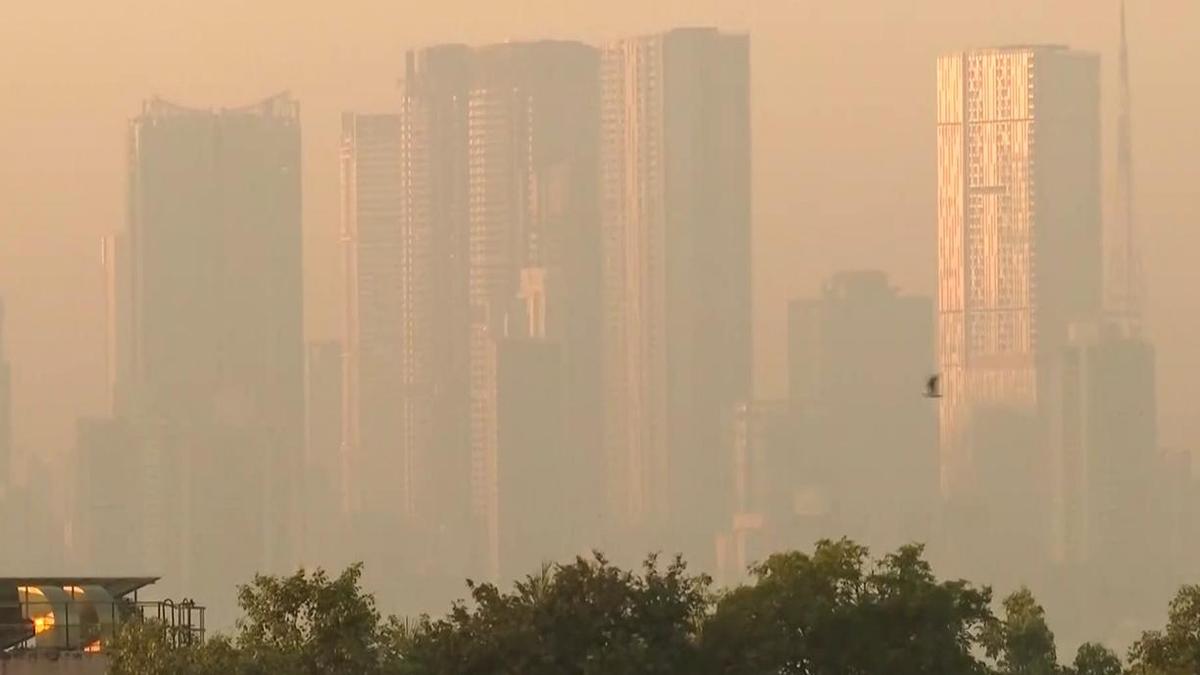
A court-mandated oversight mechanism to address worsening air quality across Mumbai and its metropolitan region has formally moved into action, marking a shift from fragmented civic responses to structured, accountable enforcement. A High Power Committee constituted under the directions of the Bombay High Court has held its first coordination meeting, signalling a new phase in the region’s long-running struggle with air pollution.
The committee, formed amid judicial concern over persistently poor air quality indicators, has been tasked with monitoring compliance, reviewing institutional performance and accelerating corrective measures across Mumbai and the wider Mumbai Metropolitan Region. Its inaugural meeting took place at the headquarters of the Brihanmumbai Municipal Corporation, bringing together senior representatives from civic bodies, transport authorities, planning agencies and pollution regulators. Officials involved in the discussions said the focus was on identifying immediate interventions that can be implemented ahead of seasonal pollution spikes, particularly those linked to construction dust, traffic congestion and fuel choices in small commercial units. The committee is expected to supervise adherence to earlier court directions and assess progress reports submitted by multiple agencies, including regional municipal corporations and state pollution control authorities.
Mumbai’s air pollution challenge is structurally complex. Civic officials have acknowledged that only a limited share of contributing factors fall directly under municipal control. While meteorological conditions such as low wind speeds and temperature inversions play a significant role, local sources—including vehicular emissions, construction activity and legacy fuel use—remain critical levers for policy action. Data shared during recent budget discussions indicated that transport-related emissions and traditional fuel use in neighbourhood bakeries continue to add to the pollution load, though targeted conversion programmes have reduced reliance on wood-fired systems in parts of the city. The renewed institutional focus coincides with a notable increase in environmental spending. In its latest budget, the municipal administration earmarked a substantially higher allocation for its Environment and Climate Change functions, positioning air quality management alongside wastewater treatment, climate adaptation and urban resilience as priority areas. Officials said a dedicated climate budget and an updated Climate Action Plan are scheduled for finalisation within the first quarter of the financial year, with public release expected by mid-year.
Urban planners view the High Power Committee as a corrective to governance gaps that have historically undermined air pollution mitigation in India’s largest cities. By placing multiple agencies under judicial supervision, the framework aims to improve coordination, reduce duplication and ensure that enforcement keeps pace with rapid urban development and infrastructure expansion. Encouragingly, Mumbai’s air quality index recently dipped into the ‘satisfactory’ category after weeks of elevated readings, offering a brief respite. However, experts caution that episodic improvements driven by favourable weather cannot substitute for structural change. The success of the committee will ultimately be measured by whether cleaner air becomes a sustained outcome rather than an occasional anomaly—an outcome that carries significant implications for public health, productivity and the city’s long-term climate resilience.
Mumbai Pollution Control Moves Under High Power Panel