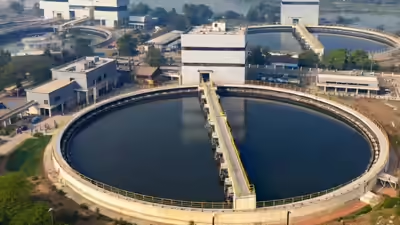
Mumbai Plans Major Upgrade To Panjrapur Water Plant
In a significant stride towards more reliable urban water services, city authorities have earmarked ₹3,145 crore for a next-generation water treatment facility at Panjrapur, part of a broader push to ensure cleaner, safer and more energy-efficient water supply for Mumbaikars over the next decade. The project forms a central pillar of the Brihanmumbai Municipal Corporation’s (BMC) infrastructure development plan to address capacity constraints and urban growth pressures.
The Panjrapur plant — one of two major treatment sites including the larger Bhandup facility — is expected to become operational by 2029-30, incorporating advanced treatment technologies that reduce energy consumption while boosting overall output. Officials say modernisation will improve water quality, reduce disease risk, enhance taste, and move the city closer to round-the-clock potable water supply for residents across its sprawling wards.For decades, the Panjrapur complex has been a backbone of Mumbai’s water infrastructure, historically processing more than half of the city’s potable water throughput sourced from Bhatsa and other reservoirs. Scheduled upgrades are likely to augment this capacity and improve resilience amid rising demand and climate variability.Urban infrastructure analysts point out that this investment aligns with the BMC’s broader strategy to expand water supply by roughly 800 million litres per day over the next five years, addressing both current shortages and longer-term needs as populations and commercial activity grow. Additional high-impact initiatives in the current civic budget also include desalination and reservoir projects intended to fortify supplies against seasonal swings in rainfall.
The choice to embed energy-saving systems into the plant is notable: water treatment and pumping traditionally represent some of the most energy-intensive segments of urban utilities. By integrating more efficient processes, Mumbai’s water network could both lower operating costs and shrink its carbon footprint — a growing priority for climate-adapted cities seeking to balance utility performance with environmental responsibility.However, water planners caution that technical upgrades must be paired with effective demand management and equitable distribution systems. Parts of the metropolis continue to grapple with intermittent supply and uneven pressure, particularly at peak hours or in peri-urban localities. Stakeholders urge complementary investments in leak reduction, metering, and communications to ensure that infrastructure gains translate into real quality-of-life improvements.
Integration with Mumbai’s broader urban development agenda will be key. A resilient water treatment framework supports public health, economic activity and urban competitiveness — fundamentals for a megacity navigating growth and environmental risks. As timelines for construction and commissioning solidify, authorities are expected to release detailed performance targets, phase-wise deployment plans and community engagement frameworks to maximise impact.