


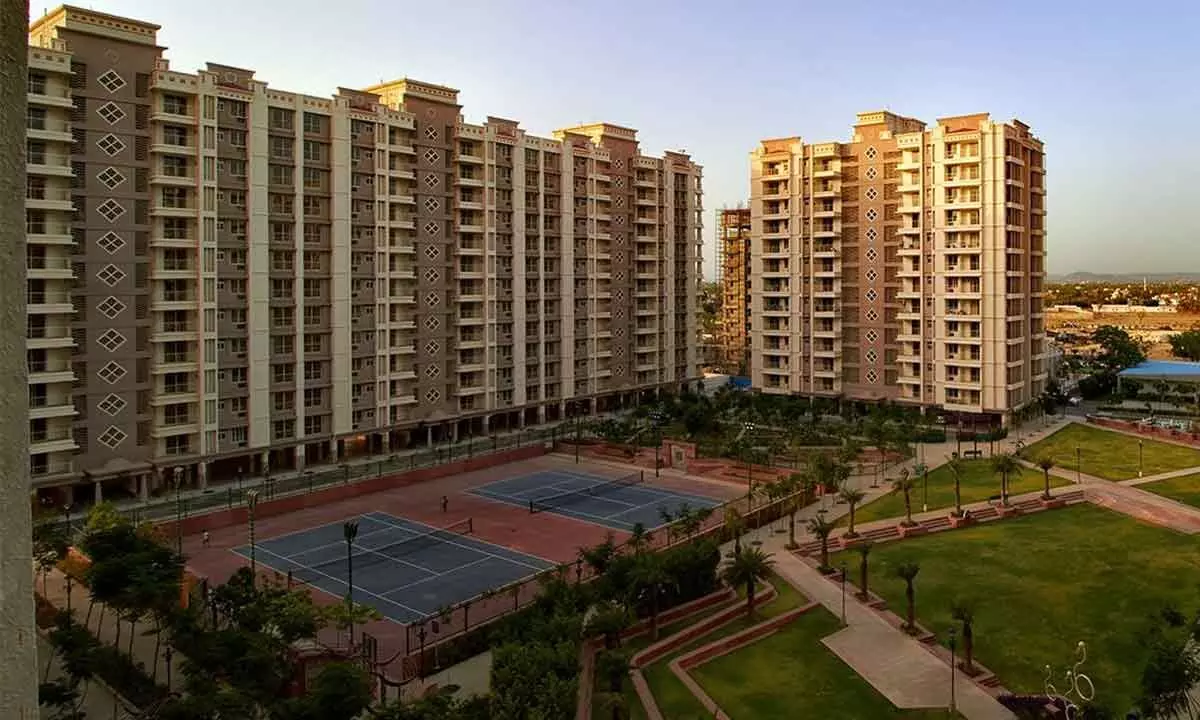
North Hyderabad is witnessing a decisive shift in its residential identity, with improved transport infrastructure and expanding employment corridors driving demand for larger, premium housing formats. Long associated with industrial clusters and peripheral growth, the northern arc of the city is now drawing attention from developers and homebuyers seeking lower-density living within reach of Hyderabad’s economic core.
Strategically positioned along the Outer Ring Road and National Highway 44, the region benefits from signal-free connectivity to the international airport and major commercial districts. Planned mobility upgrades — including Metro Phase II extensions and the proposed Regional Ring Road — are expected to further integrate northern neighbourhoods with the metropolitan grid.Urban economists note that infrastructure certainty often precedes real estate re-rating. In North Hyderabad, arterial road expansions, logistics hubs and new industrial parks have begun reshaping land-use patterns. Employment nodes are gradually moving closer to residential catchments, reducing commute pressures that typically burden central districts.
Localities such as Medchal, Gowdavalli and Pudur are emerging as micro-markets for gated communities and plotted developments. Developers are marketing projects with wider internal roads, landscaped buffers and integrated social amenities, responding to post-pandemic preferences for open space and lower density.Market data from 2025 indicates steady annual price appreciation in the range of high single digits across select northern pockets, with average residential values hovering between ₹5,800 and ₹7,200 per square foot depending on configuration and proximity to major corridors. Analysts suggest that the upward movement reflects end-user demand rather than speculative spikes, particularly from professionals working in IT, logistics and manufacturing clusters along the ORR belt.
The appeal is also extending to non-resident Indian buyers, many of whom prioritise airport access and long-term capital stability. Rental absorption is rising as tenants priced out of saturated IT corridors explore northern alternatives offering larger homes at relatively competitive rates.Urban planners caution, however, that sustained growth will depend on balanced civic provisioning. Water supply, sewage networks, public transport frequency and school-healthcare infrastructure must keep pace with private development to avoid replicating congestion challenges seen in older premium districts.
From a sustainability standpoint, the availability of larger land parcels presents an opportunity for climate-responsive layouts — including green cover retention, rainwater harvesting and solar-ready rooftops. If implemented systematically, such features could position North Hyderabad as a model for lower-carbon suburban expansion rather than unchecked sprawl.As Hyderabad’s urban footprint continues to stretch outward, North Hyderabad’s trajectory reflects a broader metropolitan shift: premium housing is no longer confined to legacy enclaves. Instead, it is increasingly shaped by connectivity, employment proximity and the promise of planned growth anchored in infrastructure depth.
North Hyderabad emerges as luxury hub
