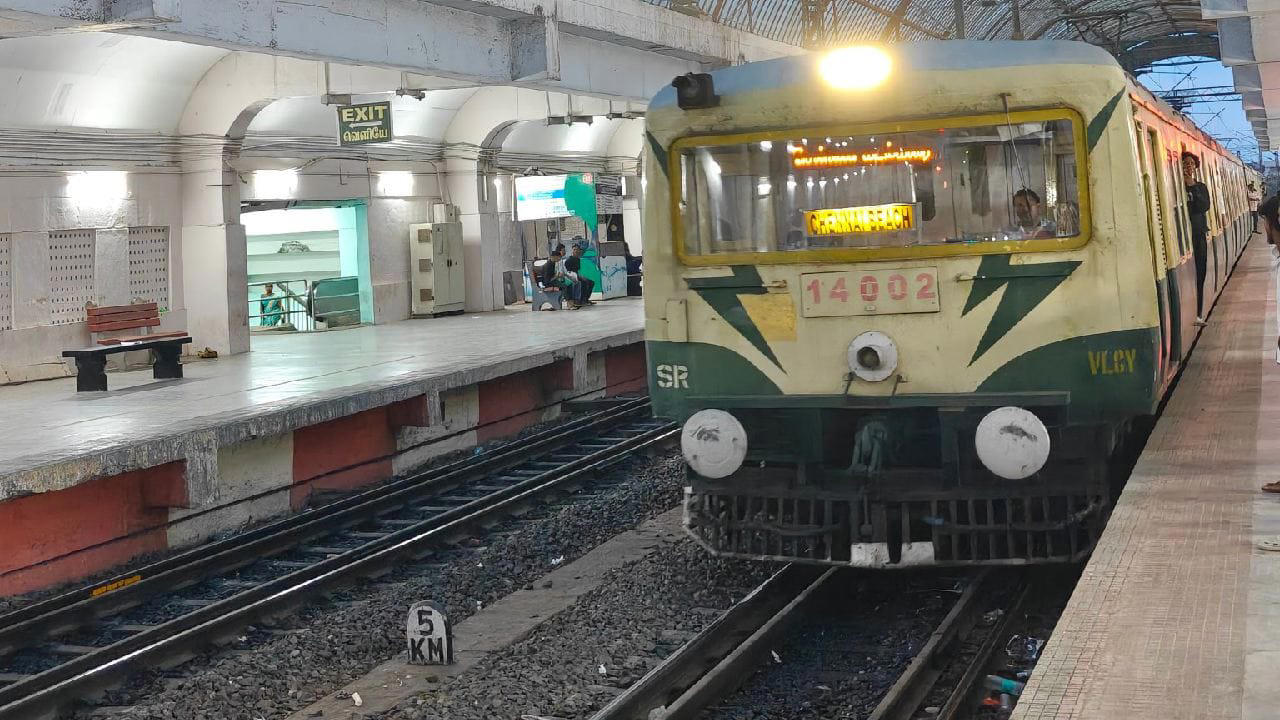
Chennai Adjusts Train Operations To Ease Suburban Delays
Chennai’s suburban rail network is seeing operational changes aimed at improving commuter efficiency and reducing bottlenecks at key interchange points. Southern Railway has adjusted schedules for three express trains at Chennai Egmore station, a strategic move to minimise track congestion and shorten halting times for suburban services between Chennai Beach and Kodambakkam.
The adjustments, effective until early April, reflect broader efforts to streamline Chennai’s ageing rail infrastructure while maintenance work continues. The measures include temporary rerouting, short termination points, and revised departure timings to ensure smoother transitions between slow and express lines, which have historically contributed to commuter delays during peak periods. From March 2 to 16, the Chennai Egmore–Sengottai Pothigai Express will originate from Tambaram instead of Egmore, departing at 8.05 pm. Concurrently, the Tirunelveli–Chennai Egmore Nellai Express will short-terminate at Tambaram from March 1 to 15, with an arrival time of 6.25 am. Additionally, the Chennai Egmore–Tiruchchirappalli Cholan Express, previously scheduled for an 8 am departure, will leave Egmore at 10.15 am between February 28 and March 15.
Urban planners highlight that even minor changes in express train operations can significantly influence suburban line efficiency. Reduced dwell time at Egmore not only accelerates commuter trains but also mitigates cascading delays across the network. In a city where suburban rail serves as a lifeline for tens of thousands of daily passengers, operational agility is crucial for maintaining reliability and commuter satisfaction. From an economic perspective, smoother suburban services enhance workforce mobility, supporting productivity and access to urban jobs. The adjustments also underline the intersection of transport planning with urban resilience, as efficient mass transit reduces dependency on private vehicles, contributing to lower emissions and better air quality in line with Chennai’s climate-responsive mobility goals.
While the temporary schedule changes may inconvenience some long-distance passengers, transport officials emphasise the long-term benefit of a more resilient and adaptive rail network. Infrastructure experts suggest that this period offers an opportunity to test scheduling efficiencies that could inform permanent timetable reforms, potentially integrating express and suburban services more seamlessly in the future. As Chennai continues to expand its urban footprint and suburban rail usage grows, such operational interventions provide a blueprint for balancing maintenance demands with commuter convenience. Observers note that sustained improvements in rail network fluidity will be essential for equitable urban mobility and inclusive city growth, particularly as Chennai moves towards more climate-conscious infrastructure planning.