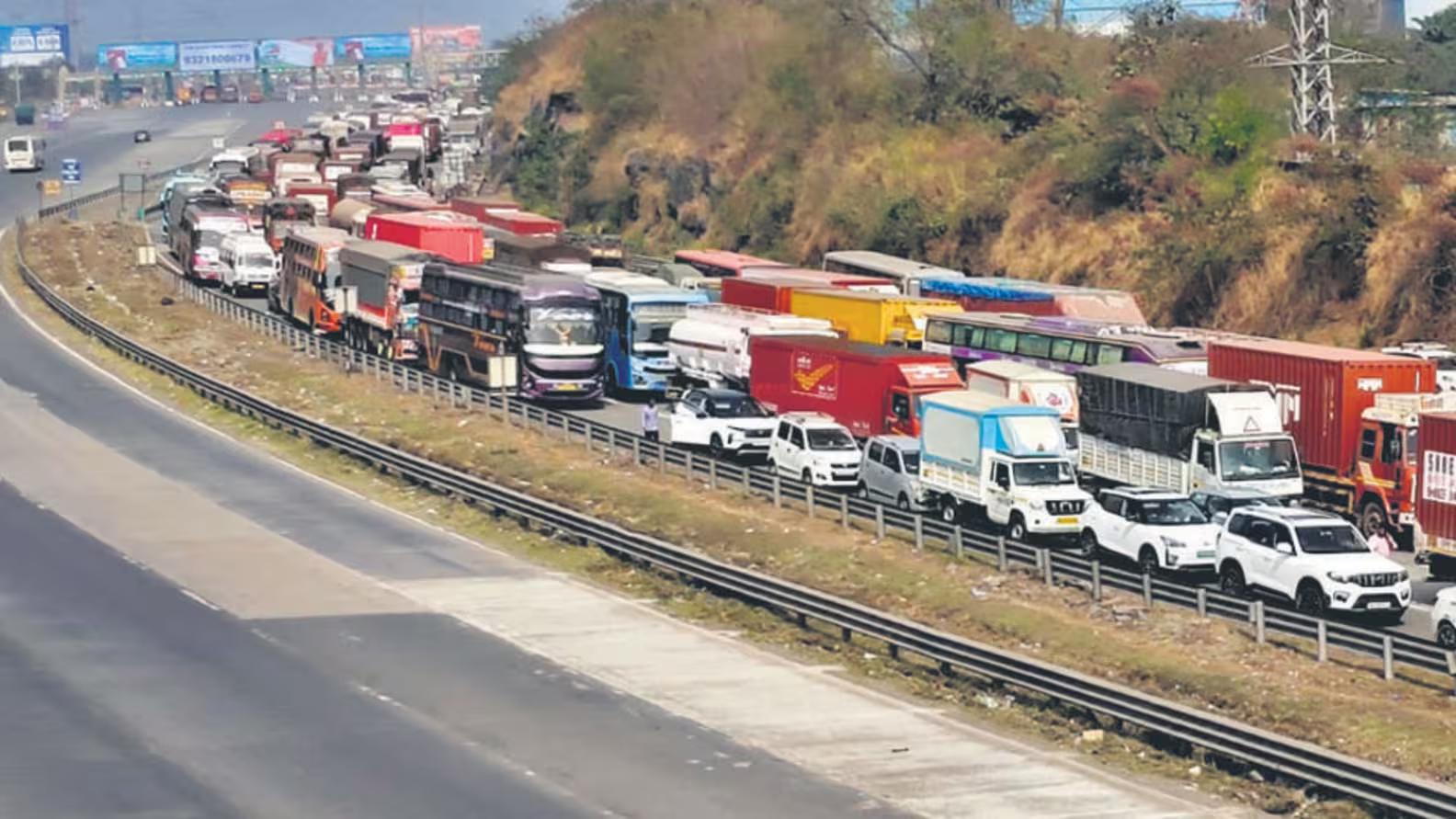
A mass toll reimbursement is underway on the Mumbai–Pune Expressway after a prolonged traffic shutdown earlier this month left thousands of motorists immobilised for more than a day, prompting the Maharashtra State Road Development Corporation to initiate a centralised refund process estimated at over ₹5 crore. The disruption followed a hazardous material tanker accident near a tunnel stretch on the Mumbai-bound carriageway, triggering an extended closure and cascading congestion across connecting highways.
Vehicles were stranded for hours across multiple corridors linking Mumbai and Pune, exposing the vulnerability of one of western India’s most critical economic arteries. The Maharashtra State Road Development Corporation (MSRDC), which oversees the corridor, has now moved to reimburse approximately 120,000 FASTag users whose electronic toll payments were deducted during the disruption window. Instead of requiring motorists to submit individual claims, the authority has opted for a bulk settlement mechanism in coordination with toll operators and issuing banks.
Senior officials indicated that transaction logs from RFID-based FASTag systems are being audited to identify eligible vehicles and reconcile traffic movement patterns during the shutdown. Refunds are expected to be credited directly to users’ digital toll wallets before the close of the financial year, subject to verification of data sets and eligibility criteria. The Mumbai–Pune Expressway is not only a commuter route but a high-value logistics corridor supporting industrial supply chains, real estate growth nodes, and regional mobility between two major urban economies. Any prolonged paralysis has ripple effects on freight delivery schedules, labour movement, fuel consumption and productivity.
Transport economists point out that electronic tolling has improved revenue transparency and reduced congestion at plazas, but it also demands robust contingency protocols during force majeure events. Automatic deductions, even when lanes are later declared toll-free, can create trust deficits if not corrected swiftly. Urban mobility experts say the episode highlights the need for resilient highway management systems, including real-time traffic diversion strategies, emergency response infrastructure, and better communication with road users. Climate variability and hazardous cargo movement are expected to increase operational risks on high-speed corridors, making predictive planning essential.
The Maharashtra State Road Development Corporation’s decision to process refunds without requiring motorists to file claims signals a shift towards citizen-centric digital governance. By leveraging transaction databases instead of dispute-led reimbursements, authorities aim to reduce friction and administrative burden.
However, the event also raises broader questions about corridor redundancy. With limited alternative high-capacity routes between Mumbai and Pune, even a single incident can stall regional connectivity for extended periods. As data reconciliation progresses, transport planners and policymakers may use the incident to reassess emergency preparedness, digital toll governance and corridor resilience. For a region investing heavily in infrastructure-led growth, ensuring that expressways remain both efficient and accountable will be central to sustaining economic momentum.
Mumbai Pune Expressway Toll Refund By March