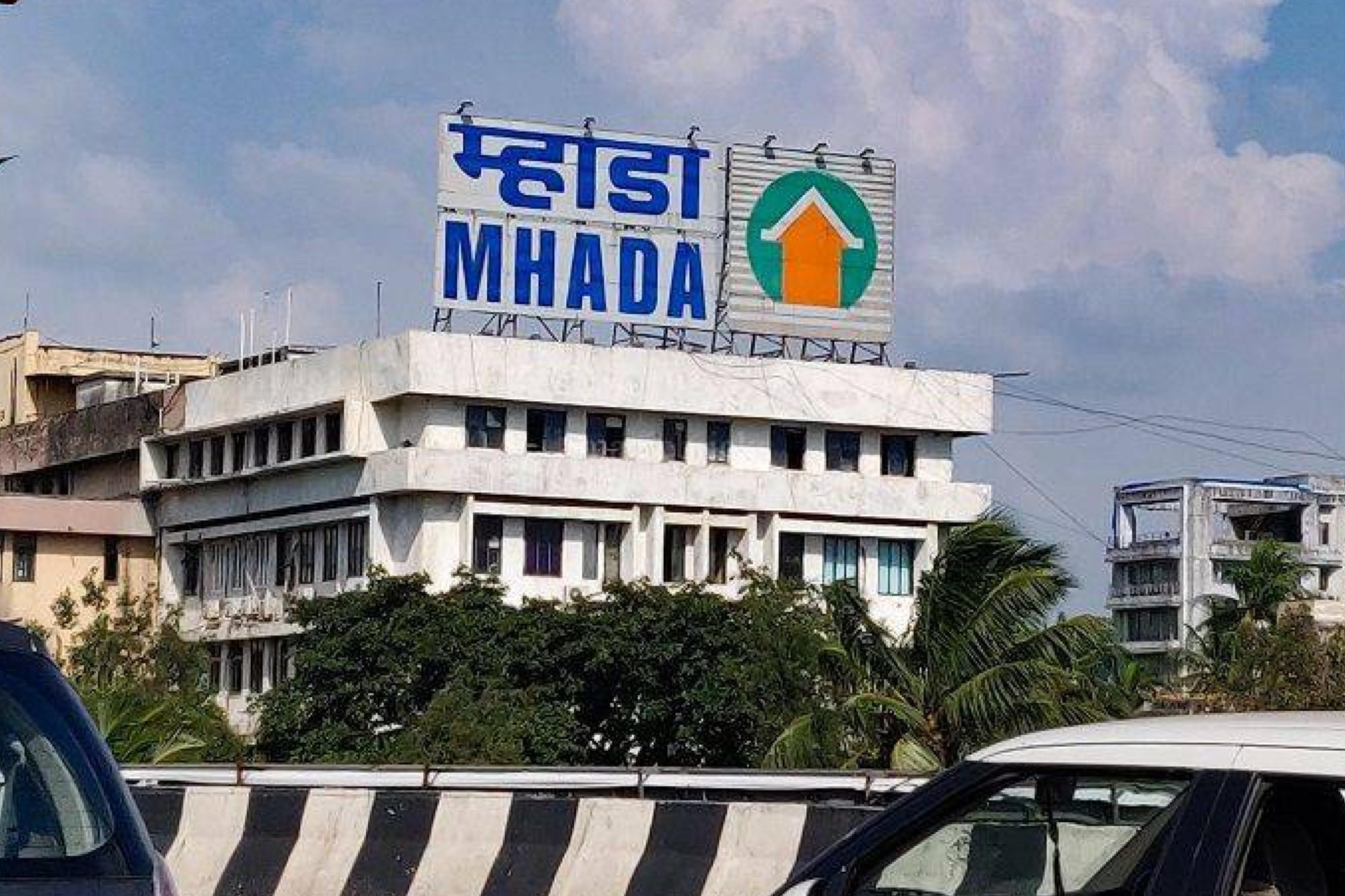
Mumbai is set to see a paradigm shift in its housing strategy as the Maharashtra Housing and Area Development Authority (MHADA) pivots towards cluster-based redevelopment to tackle long-standing affordability and land scarcity challenges. With nearly 90% of the city’s developable land already utilised, MHADA officials have indicated that conventional, building-level interventions are increasingly insufficient to meet the growing urban housing demand.
According to senior MHADA officials, the city’s affordability index currently stands at around 50%, signalling that the average household dedicates approximately half of its income to mortgage repayments. In response, the authority is exploring structural policy reforms, including rationalisation of premiums, development charges, and other levies applicable to affordable housing, which could reduce costs by up to 25% in certain segments. Under the new approach, MHADA aims to consolidate land parcels into integrated clusters spanning 60 to 100 acres, creating township-style developments with improved infrastructure, open spaces, and community amenities. Officials estimate that 800 to 1,000 acres of land could be unlocked for this model, a scale of intervention unprecedented in the city’s redevelopment history. Projects such as GTB Nagar and Abhyudaya Nagar are currently in advanced stages, while several other clusters are in planning phases.
Urban development experts note that this shift from fragmented, piecemeal redevelopment to coordinated clusters can enhance both housing supply and urban livability. By combining multiple parcels, cluster redevelopment allows for planned streetscapes, better density management, and the inclusion of green and communal spaces, aligning with sustainable urbanisation objectives. MHADA also highlighted the broader housing targets under the state’s 2030 roadmap, which seeks 2.8 million affordable homes across the Mumbai Metropolitan Region (MMR). Cluster redevelopment is expected to contribute nearly 0.8 million units, particularly serving economically weaker sections (EWS) and low-income groups (LIG). In the past two-and-a-half years, approximately 50,000 homes have been delivered, with a significant share of future supply projected to originate from approved or pipeline cluster projects.
Officials emphasised that infrastructure development, including metro expansion and the operational Navi Mumbai International Airport, could redistribute housing demand across peripheral corridors, supporting new growth nodes. They also advocated a diversified housing approach encompassing rental housing, student accommodation, and worker-focused hostels, alongside conventional homeownership, to accommodate evolving urban demographics. By integrating affordability, scale, and connectivity, MHADA’s cluster-led model represents a strategic move toward inclusive urban transformation. Industry observers suggest that the approach could serve as a template for other high-density Indian cities seeking to balance housing demand, livability, and equitable urban growth.
MHADA Plans Cluster Redevelopment Unlocking 1000 Acres