A recent Right to Information (RTI) reply reveals that the Government of **Delhi has utilised only about 43 % of the ₹300 crore budget allocated for pollution control and emergency measures in the 2025-26 fiscal year, raising questions about the pace of environmental investment amid continuing air quality challenges.
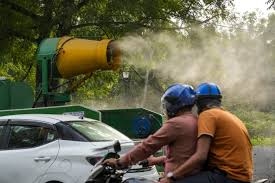
According to the response from the city’s environment department, ₹129.83 crore had been spent by 20 January 2026, primarily on short-term emission reduction initiatives. The bulk of expenditure reported was on measures aimed at immediate mitigation of air pollution across the capital. For example, about ₹23.37 crore went toward installing mist spray systems on electric poles and central road verges to suppress dust and particulate matter, while around ₹58.83 crore funded the hiring of 200 truck-mounted anti-smog guns. Another ₹47.12 crore covered the cost of an earlier batch of similar anti-smog units procured during the previous fiscal year.
Yet much of the broader environmental agenda remains unspent. According to the RTI record, several major allocations showed zero utilisation by late January. These included ₹70 crore for mitigating environmental damage from illegal groundwater extraction under the Delhi Pollution Control Committee, and ₹64.40 crore earmarked for the Municipal Corporation of Delhi to procure mechanical road sweeping machines, water sprinklers and anti-smog guns for wider use. ₹1 crore set aside for an e-waste eco-park project, and other allocations for air quality studies, technical equipment, sewage treatment and smog towers likewise remained untouched. Scheme-wise analysis highlights uneven implementation. For instance, the Mahatma Gandhi Institute for Climate Change and Communication used about ₹5.91 crore of its ₹9.34 crore allocation, while activities like environment data generation and school eco-club awareness programmes saw only modest spending. Expenditure on specialised projects such as a cloud-seeding pilot with Indian Institute of Technology Kanpur accounted for just ₹38 lakh of the ₹3.80 crore provision.
The partial utilisation comes amid ongoing concerns about air quality in Delhi-NCR, where seasonal smog, vehicular emissions, construction dust and crop residue burning regularly push air quality into unhealthy categories. Experts argue that while rapid-response tools like mist sprays and anti-smog guns offer short-term relief, long-term solutions require investment in structural interventions — such as pollution monitoring networks, cleaner transport systems, industrial emission controls and sustainable waste management. The under-utilisation of allocated funds may slow progress toward those deeper, systemic outcomes. Environmental analysts note that procedural delays, capacity constraints and coordination challenges across multiple agencies can hamper on-ground spending. In some cases, communities’ input and detailed impact assessments are needed before funds can be deployed effectively for long-term outcomes, which can lengthen planning cycles.
As Delhi’s air quality enters another critical phase ahead of the next winter season, the ministry’s spending patterns will be scrutinised for how well they balance emergency relief with enduring, strategic pollution control. Observers say enhancing execution capacity — including clearer timelines, stronger inter-agency collaboration and better public reporting — can help ensure that allocated resources translate into measurable improvements in environmental health and urban resilience.