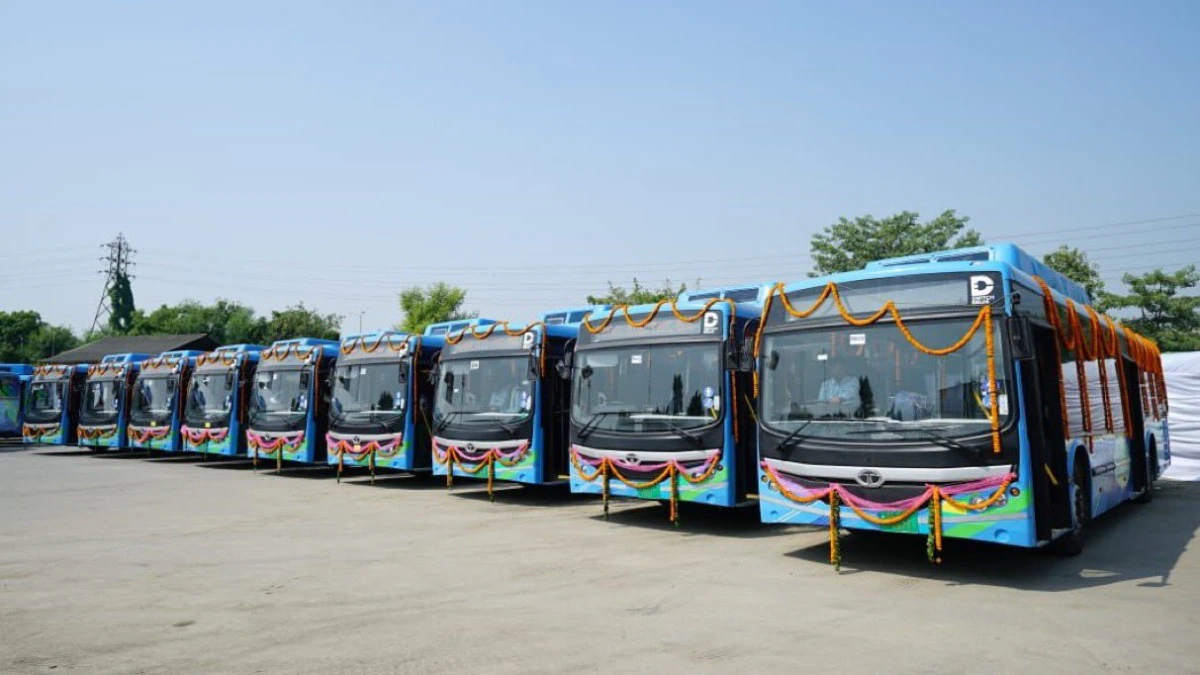
The Government of Delhi has unveiled plans to introduce 500 compact electric buses — smaller than the city’s existing feeder services — to strengthen last-mile connectivity across dense urban neighbourhoods, addressing persistent gaps in accessible public transport.
Officials say this move complements efforts to expand the city’s electric mobility ecosystem under the Centre’s PM E-DRIVE Scheme, with a broader fleet expansion already underway as part of sustainable urban transport planning. Unlike traditional 12-metre feeder buses, the new seven-metre units are designed to navigate narrow streets and inner lanes where larger vehicles struggle, improving access for residents in congested areas and colonies where public transport options remain limited. This follows earlier initiatives that introduced small electric buses — such as the DEVi network — to bridge gaps between metro lines, bus stations and local neighbourhoods. Authorities describe the smaller e-bus cohort as a complementary asset to the city’s larger services, targeted at shorter, first- and last-mile trips that historically have driven commuters toward private vehicles or informal transport like auto-rickshaws. Municipal planners often highlight that a significant share of urban trips — especially within dense residential clusters — are under four kilometres, a distance at which larger buses are often impractical.
Strategically deployed smaller buses can help pull commuters into the broader public transport network, enhancing equitable access and reducing road congestion. The upcoming units will feature standard safety and convenience technologies, including GPS tracking, CCTV cameras, panic buttons and real-time passenger information systems, bolstering service reliability and making them more inclusive for seniors, women and people with disabilities. Officials say deliveries are expected in the 2027–28 period, with the government prepared to fund the initiative even if full central subsidies are delayed. This investment is part of Delhi’s broader ambition to transform its public transport fleet into one of the country’s largest and cleanest. The city currently operates over 5,300 government buses, with more than 4,000 already electric, and aims to scale the fleet significantly under multi-year plans that could see over 13,000 buses by 2028–29. These expanded services aim not only to improve connectivity but also to reduce emissions and traffic congestion — common challenges in India’s megacities.
Urban mobility experts suggest that integrating smaller buses into the wider network could support economic participation by making jobs, education and services more reachable for residents in under-served zones. However, they also caution that success will depend on route planning, frequency of service and coordination with existing metro and bus networks to avoid duplication and ensure efficient use of resources. Critics of similar schemes in other cities note that without robust ridership incentives and seamless fare integration, small vehicles can struggle to attract users, especially when informal alternatives are entrenched. Delhi’s transport planners are reportedly exploring digital ticketing alignment with the One Delhi Card and app-based route info to support seamless transfers.
If effectively implemented, the 500 mini electric buses could become a pivotal piece in Delhi’s effort to make public transport more comprehensive, sustainable and user-friendly — a necessary evolution for a burgeoning urban region seeking both cleaner air and more inclusive mobility.