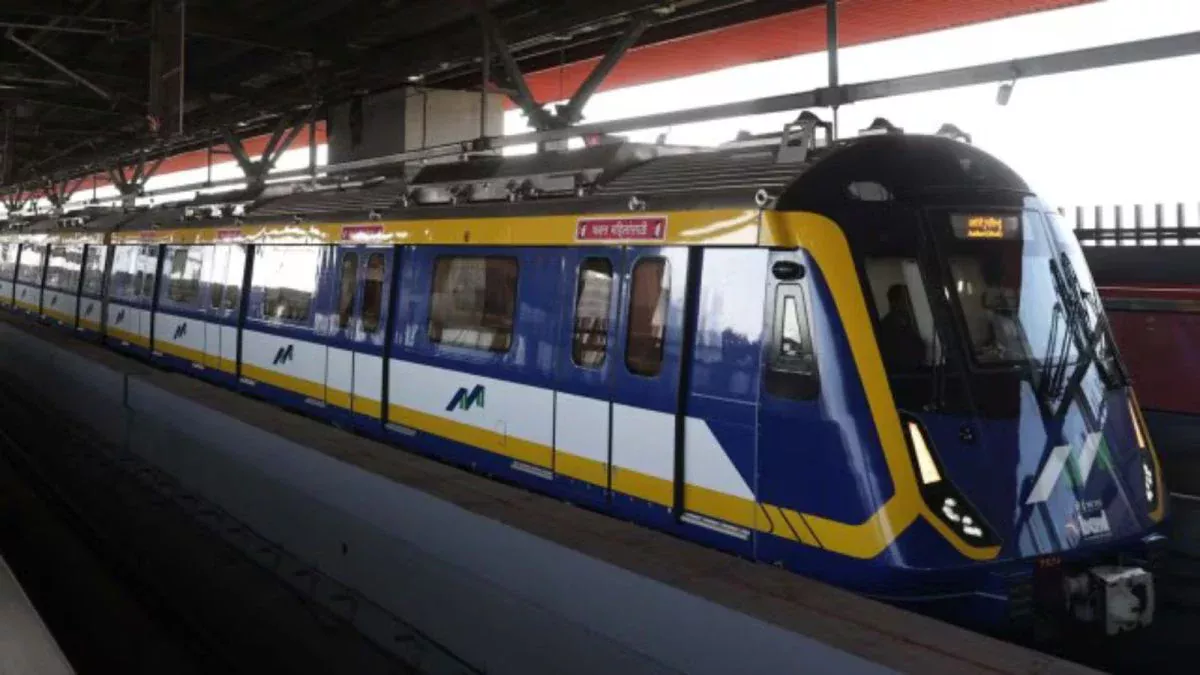
A long-running legal and financial dispute tied to Mumbai’s first metro corridor has entered a decisive phase, with the Bombay High Court partly validating an arbitral award linked to Mumbai Metro Line 1 while substantially trimming the financial exposure of the city’s transport authority. The ruling brings renewed clarity to the risk-sharing framework governing public–private partnerships that underpin urban transit delivery in India’s largest metropolitan regions.
The court’s decision addressed challenges raised by the Mumbai Metropolitan Region Development Authority against an arbitration outcome favouring the project’s concessionaire, Mumbai Metro One Private Limited. The dispute stemmed from the implementation of the Versova–Ghatkopar corridor, a critical east–west transit spine that has reshaped daily mobility for lakhs of commuters while reducing road congestion and vehicular emissions.At the heart of the case was a concession agreement executed under a build-own-operate-transfer framework, a model that places construction and operational responsibility on private partners while retaining long-term public ownership. The concessionaire had argued that delays and project changes attributable to the authority led to cost escalations, triggering compensation claims that were largely accepted by a majority arbitral tribunal in 2023.
In its final ruling, the High Court applied the principle of severability, holding that only claims supported by contractual and legal merit could survive scrutiny. Several large components—covering overheads, financing costs, and opportunity losses—were struck down, significantly lowering the payable amount. At the same time, select claims linked to system works, land-related expenses, and specific construction changes were upheld, reflecting the court’s view that not all cost overruns can be treated uniformly in complex urban infrastructure projects. Urban policy experts say the judgment sends a calibrated message to both public agencies and private developers. While contractual accountability remains essential, the ruling reinforces the need for transparent risk allocation and realistic timelines in mass transit projects that operate within dense, evolving cityscapes. For citizens, the outcome matters because prolonged financial disputes can divert public resources away from network expansion, maintenance, and service quality.
The case also drew in financial institutions after stressed loans linked to the metro project were acquired by the National Asset Reconstruction Company Limited. The court permitted lender interests to be protected by directing deposited sums into a dedicated escrow mechanism, underlining the growing role of structured finance in urban infrastructure sustainability. Importantly, earlier interim directions were revisited following intervention by the Supreme Court of India, which allowed the High Court to proceed with a final determination while safeguarding public funds during the pendency of litigation.
As Mumbai plans its next generation of metro corridors, planners and policymakers view the outcome as a reminder that legal certainty is as vital as engineering precision. Ensuring predictability in concession frameworks will be central to delivering low-carbon, people-first transport systems that cities urgently need.
Mumbai Metro Line 1 Arbitration Reshaped