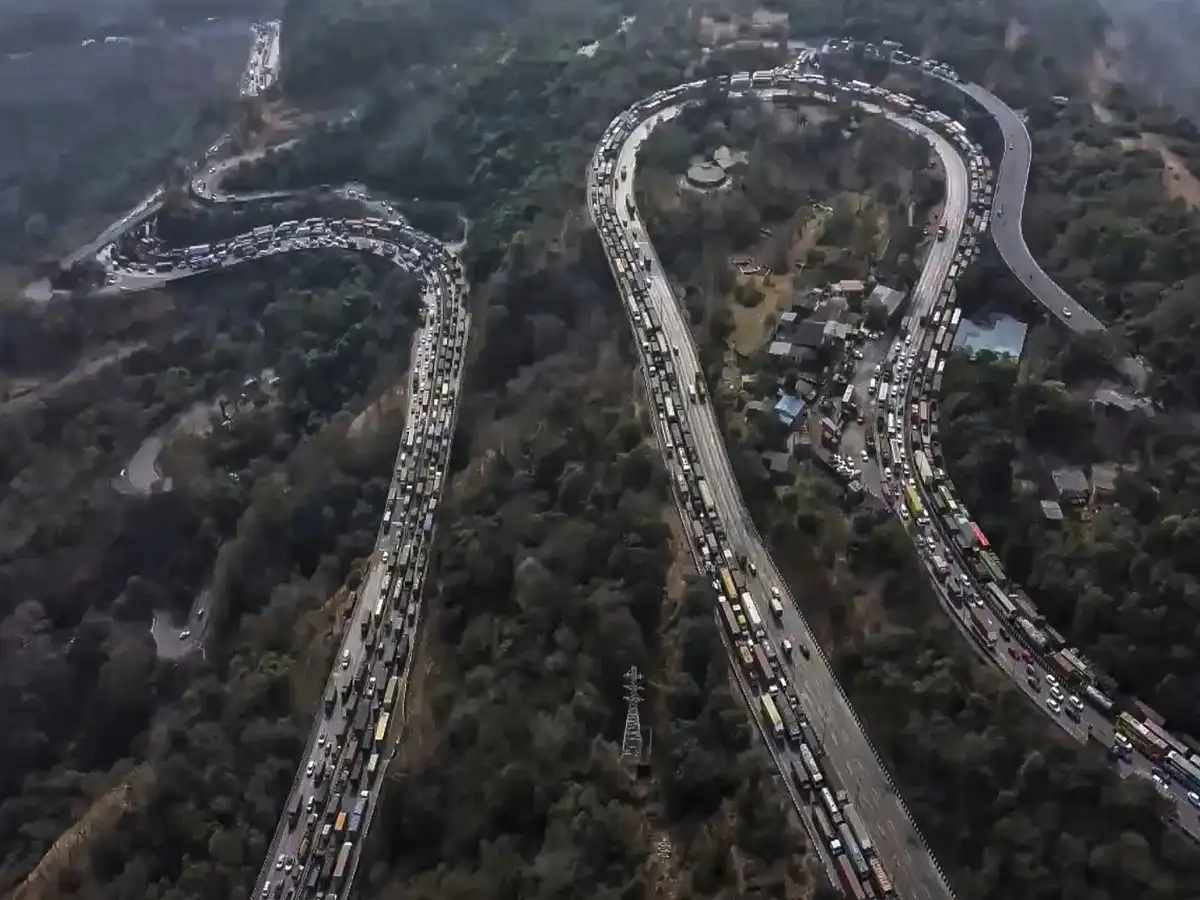
Motorists caught in one of the worst traffic disruptions on the Mumbai–Pune Expressway earlier this month are set to receive financial relief as the Maharashtra State Road Development Corporation (MSRDC) moves to reimburse toll charges deducted during the prolonged logjam. The decision, expected to credit more than ₹5 crore back to commuters’ FASTag accounts, reflects growing recognition of systemic shortcomings in incident management on one of the state’s most critical transport corridors.
On 3 February 2026, a gas tanker overturned near the Khandala Ghat on the expressway, triggering a safety-first closure and leaving traffic at a near-standstill for over 33 hours. Vehicles queued for many kilometres as emergency crews worked to clear the crash site and ensure hazard mitigation. Although toll collection was officially suspended during the disruption, system delays meant FASTag payments continued to be deducted from many travellers’ accounts.In response, MSRDC announced it will refund the ₹5.16 crore collected in tolls during the gridlock without motorists having to file individual claims. The refunds will be automatically credited to the FASTag accounts from which the tolls were deducted — covering transactions on both directions of the expressway. Toll operators have been instructed to provide detailed transaction data to support the process.
Transport economists characterise the refund policy as an important corrective step that recognises the interface between digital tolling systems and real-world disruptions. “Automation in toll collection improves throughput, but it must be calibrated with responsive operational protocols during emergencies,” said an urban transport specialist. Without such safeguards, commuters can face not only time losses but also avoidable financial charges that compound stress during extreme delays.The expressway — a backbone of commerce and mobility linking India’s financial capital with a major industrial and urban node — carries tens of thousands of vehicles daily. Extended disruptions on this corridor reverberate through regional supply chains, labour mobility and logistics networks serving small businesses and urban commuters alike. Time costs translate quickly into economic costs when freight is delayed or workers miss engagements in both Mumbai and Pune.
Infrastructural gaps have long been highlighted by planners as a constraint on corridor resilience. While expansion projects such as the Missing Link tunnels are intended to streamline traffic and reduce vulnerability to stalls, their completion remains pending, leaving the network prone to acute congestion during safety or accident responses.Social equity advocates also see the refund decision as a precedent in redressing user grievances in digital tolled environments. Without automatic reconciliation mechanisms, commuters who already face hardship during traffic stoppages can experience disproportionate financial burdens — particularly informal sector workers and daily travellers reliant on road mobility for income.
For authorities and transport planners, the episode underscores the importance of integrated incident management, digital payment systems that can adapt to emergent conditions, and resilient infrastructure investments that can absorb shock events without long-lasting disruption.