


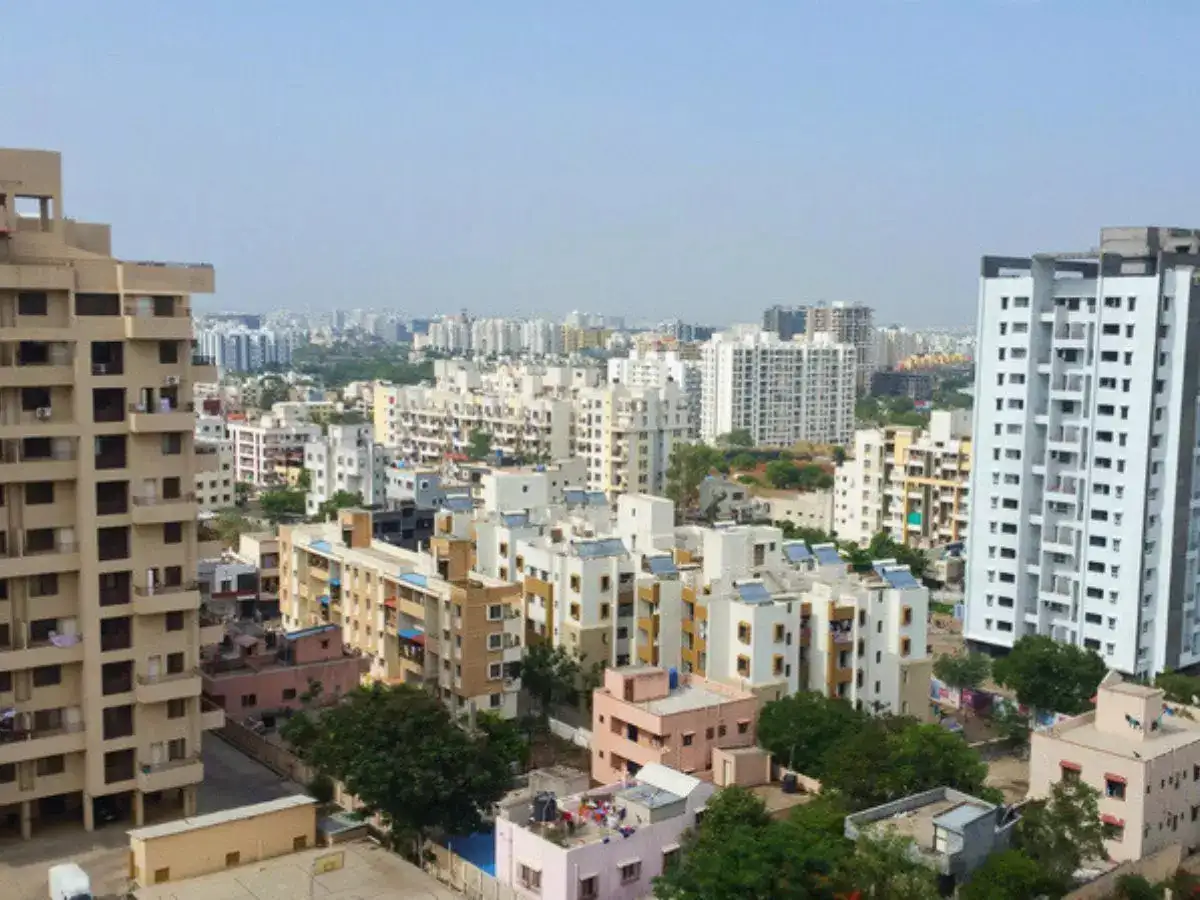
Mumbai’s public housing authority has placed 118 ready-to-move apartments on sale under a first-come, first-served mechanism, with more than two-thirds priced below Rs 2 crore a bracket that dominates the city’s residential registrations.
Data released by Maharashtra Housing and Area Development Authority (MHADA) indicates that around 40 units are tagged below Rs 1 crore, while over 70 homes fall within the Rs 2 crore range. The move is significant in a city where affordability thresholds have steadily shifted upward, and where nearly 70–80 per cent of property registrations are concentrated below the Rs 2 crore mark. The inventory spans neighbourhoods across the island city and suburbs, including Kandivali, Malad, Powai, Byculla, Wadala, Andheri and Tardeo. Officials said these units were part of earlier lottery cycles but remained unsold, and are now being reintroduced through a digital, time-bound allocation process. At the upper end, two apartments in a South Mumbai tower in Tardeo are priced at approximately Rs 8 crore, representing the costliest homes in the current release. These larger-format units, exceeding 1,500 sq ft of carpet area, illustrate how even public agencies are navigating Mumbai’s premium micro-markets where land values remain among the highest in the country. At the opposite end of the spectrum, a compact unit in Mankhurd measuring roughly 225 sq ft of carpet area is available at just over Rs 31 lakh. The wide price dispersion reflects the spatial inequality embedded in Mumbai’s housing geography from dense eastern suburbs to established southern districts.
Urban economists note that MHADA’s first-come, first-served model reduces uncertainty compared to lottery-based allotments and may accelerate absorption of completed stock. Applicants are required to complete digital registration, deposit an earnest amount and pay 10 per cent of the flat value within 48 hours of selection, tightening transaction timelines. Beyond immediate sales, the exercise highlights broader structural questions. While sub-Rs 2 crore homes may appear modest in Mumbai’s context, they remain inaccessible to a large segment of lower-income households. Planners argue that sustained public housing delivery must align with transit access, social infrastructure and climate resilience particularly in flood-prone and high-density zones. Stamp duty collections from such transactions also contribute to state revenues, enabling reinvestment in mobility, drainage and urban renewal. However, experts caution that piecemeal releases of unsold inventory cannot substitute for a steady pipeline of genuinely affordable housing integrated with employment hubs.
With another large lottery round expected later this year, Mumbai’s housing ecosystem is likely to witness continued activity across income segments. For now, the current rollout offers mid-segment buyers an opportunity to enter formal housing supply in a market otherwise characterised by high land costs and constrained new launches.
Also Read: Mumbai luxury housing attracts HNI buyers
