


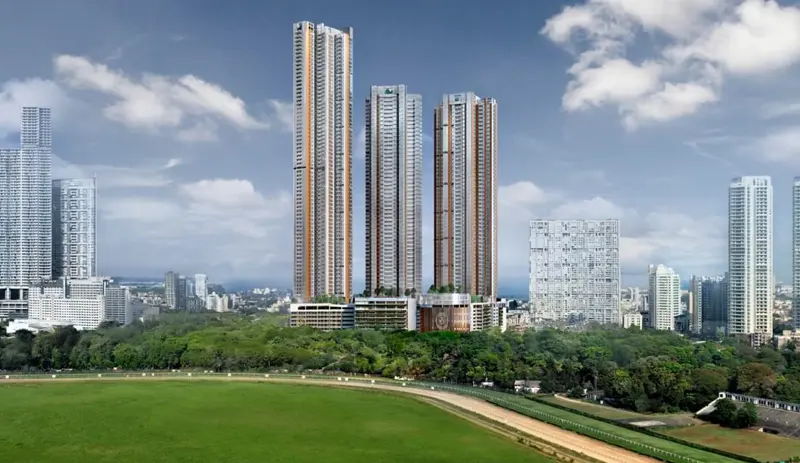
A high-value residential purchase in Mumbai’s Chembur suburb has once again spotlighted the city’s resilient luxury property market, even as broader housing demand shows signs of moderation.
Property registration records accessed by Urban Acres indicate that the spouse of Indian cricketer Suryakumar Yadav acquired an apartment in a premium Chembur development for over Rs 7 crore earlier this month. The unit, spanning roughly 1,400 sq ft of carpet area, includes dedicated parking and attracted stamp duty exceeding Rs 35 lakh, underlining the continuing appetite for Mumbai luxury housing among high-income households. The transaction adds to the family’s existing holdings in the same project, following earlier acquisitions last year. Such repeat investments within a single development are often viewed by market analysts as a signal of long-term confidence in micro-market fundamentals rather than speculative buying. Chembur has steadily repositioned itself from an industrial-adjacent suburb to a preferred residential district. Its access to the Eastern Express Highway, the Sion–Panvel corridor and the Eastern Freeway has reduced travel times to business hubs such as BKC and Lower Parel. Suburban rail connectivity and monorail services further enhance its appeal. Urban planners note that infrastructure-led appreciation has been central to Mumbai luxury housing demand in emerging neighbourhoods where land supply remains relatively constrained.
Recent industry surveys tracking high-net-worth individuals suggest that affluent buyers remain optimistic about India’s economic trajectory over the next two years. A majority expect stable GDP growth and anticipate mid-teen annualised returns from prime residential assets. The buyer profile is also evolving, with new-age entrepreneurs and senior corporate executives entering the luxury segment alongside established business families. However, the tone in 2026 is more measured than the post-pandemic surge years. Consultants tracking Mumbai luxury housing observe that while marquee transactions continue, purchasers are more selective, prioritising quality construction, sustainability features and long-term liveability over purely speculative gains. This shift has implications for developers. Projects integrating energy-efficient systems, water management infrastructure and well-designed common areas are likely to command premium valuations. In land-scarce Mumbai, vertical communities that balance density with open space are increasingly becoming the benchmark for responsible luxury development. There is also a fiscal dimension. High-value transactions contribute significantly to stamp duty revenues, strengthening municipal finances that can be channelled into transport, climate adaptation and public infrastructure. Yet urban economists caution that sustained high-end growth must be accompanied by investment in affordable housing and mobility to prevent deepening spatial divides.
As Mumbai luxury housing enters a phase of consolidation rather than exuberance, individual transactions in connected suburbs such as Chembur illustrate a market that remains structurally strong but increasingly driven by discernment, infrastructure logic and long-term wealth preservation strategies.
Also Read: Gurugram luxury housing sales outpace Mumbai
Mumbai luxury housing attracts HNI buyers
