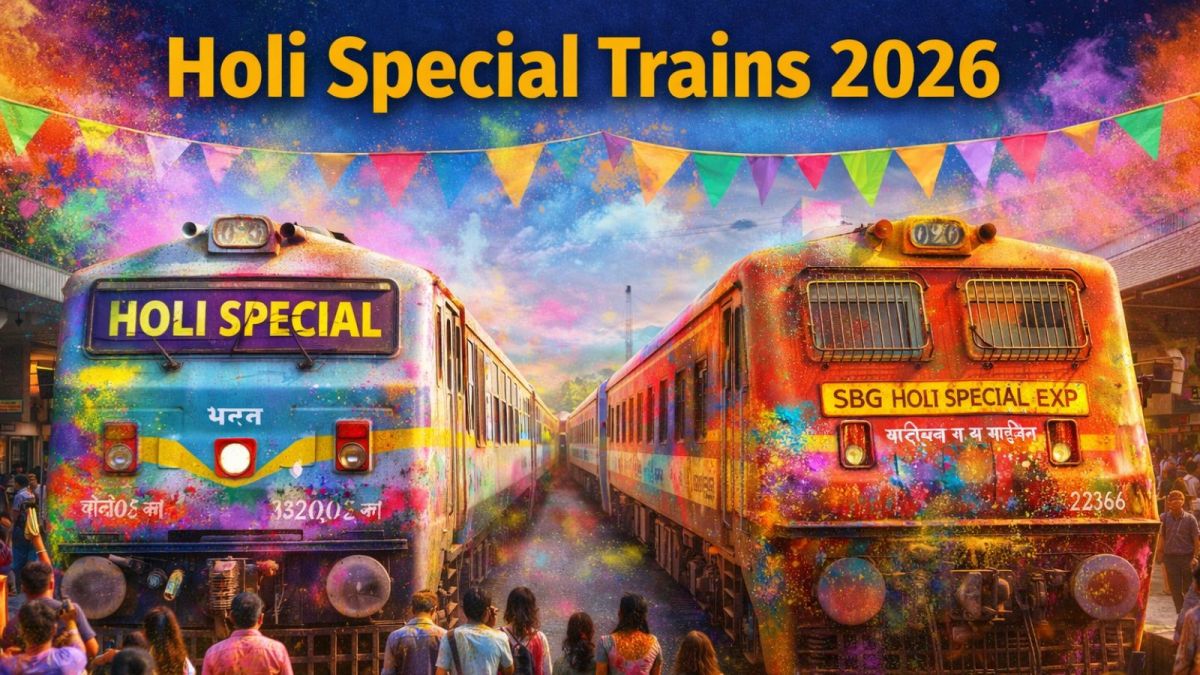
Mumbai: In anticipation of one of India’s busiest annual travel periods, Central Railway has scheduled 186 additional services to manage the Holi migration surge, strengthening links between Mumbai, Pune, Ahmedabad and key destinations in Bihar and eastern Uttar Pradesh. The scale of the deployment underscores the intensity of seasonal mobility across western and northern India. Every year, millions travel from employment hubs such as Mumbai Metropolitan Region and Pune to their hometowns for Holi.
The expanded Central Railway Holi special trains network aims to ease waiting lists, distribute passenger loads more evenly and reduce last-minute overcrowding on long-distance routes. Railway officials indicate that the additional services include both designated festival specials and other temporary trains operating across high-demand corridors. Key routes connect Maharashtra’s urban centres with Patna, Danapur, Samastipur, Gorakhpur and Varanasi, among others. Ahmedabad is also linked to Bihar through special weekly services during the festive window.
For Pune, which has a substantial migrant workforce employed in manufacturing, logistics and technology, the enhanced connectivity is particularly significant. Dedicated trains between Pune and Danapur are expected to serve large numbers of passengers heading towards central and northern Bihar. Similar demand patterns are visible from Mumbai’s Lokmanya Tilak Terminus towards Samastipur and adjoining regions. Transport economists note that festival-driven travel spikes are predictable and, when planned in advance, can be accommodated without severely disrupting regular schedules. The Central Railway Holi special trains programme is structured with staggered departures, overnight journeys and selected daily operations to manage peak congestion days.
Unreserved ticketing options through digital platforms such as UTS and RailOne are also being enabled on certain segments, allowing short-distance travellers to access seats without adding pressure to reserved quotas. Railway planners suggest that diversifying ticket access points reduces crowding at physical reservation counters and supports smoother passenger dispersal. Beyond the operational aspect, the festival rush reveals deeper urban dynamics. Cities such as Mumbai and Pune depend heavily on migrant labour across construction, hospitality and service sectors. Temporary reverse migration during Holi creates short-term labour gaps but also highlights the economic interdependence between metropolitan regions and smaller towns.
From a sustainability perspective, railways remain among the most energy-efficient mass transport modes in India. By expanding rail capacity instead of leaving travellers to rely on private buses or cars, the additional services potentially lower per-capita emissions during peak travel weeks. Urban mobility specialists argue that such seasonal capacity planning forms part of broader climate-resilient transport management.
Bookings for the special services opened earlier this month, and railway authorities are advising passengers to confirm travel in advance to avoid last-minute fare fluctuations in alternative transport modes. As Holi approaches, the effectiveness of the Central Railway Holi special trains strategy will depend on punctual operations, crowd management at major junctions and real-time coordination between divisions. If executed smoothly, the expanded schedule could provide not only festive relief but also a blueprint for managing high-density seasonal travel across India’s growing urban corridors.
Central Railway Holi special trains expanded