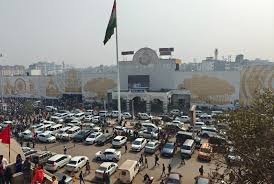
Patna Junction has introduced a new organised parking facility adjacent to the city’s principal railway station, a strategic enhancement that aims to unclog urban traffic, improve commuter experience and support more sustainable transit integration in Bihar’s fast-growing capital.
The development reflects a broader recognition among Indian cities that mobility hubs must be designed not only for train arrivals and departures but also for first- and last-mile connectivity, which significantly shapes traffic patterns and local liveability. The newly commissioned facility — constructed over more than three acres beside the historic railhead — includes dedicated bays for two-wheelers, cars and auto-rickshaws, with entry and exit points designed to reduce roadside chaos that has long plagued the surrounding neighbourhood. Railway officials say the project’s planning phase emphasised streamlined circulation to prevent the intermingling of staged vehicles with through traffic, a common source of congestion near major transport terminals. Urban mobility planners point out that parking infrastructure around transport hubs is critical for equitable city access.
As rail travel expands with higher frequency services and increased passenger volumes, unmanaged roadside parking often spills over into adjacent streets, undermining pedestrian safety and inflating travel times for buses and other public transport. By centralising vehicle storage in a structured facility, Patna’s civic and rail authorities are addressing a chronic pinch point in the urban mobility network. The timing of the project corresponds with rising commuter volumes at Patna Junction, driven by population growth, economic activity and expanded rail connectivity across eastern India. Local transport experts note that improving the railhead’s interface with urban traffic can yield wider benefits: smoother flows help reduce emissions from idling vehicles, encourage the use of public transport and contribute to broader climate-sensitive planning goals. In a region where air quality concerns are acute during winter months, such operational efficiencies can make marginal but meaningful contributions to pollution reduction. The parking hub also features digital payment facilities and separate sections for differently-abled commuters, reflecting an evolving approach to inclusive urban infrastructure.
While surface lots are a common interim solution in many Indian cities, the Patna facility’s layout hints at possible future upgrades towards multi-level structures should land scarcity or demand pressures intensify. For small-scale transport operators — including shared taxi services and auto-rickshaw drivers — the organised bays offer predictable staging spaces, which can reduce roadside conflict and improve turnover. The integration of designated auto-stands also dovetails with broader efforts to rationalise informal transport modes in city centres, enabling safer and more orderly pick-up and drop-off zones. Nevertheless, experts highlight that parking facilities are just one piece of a complex urban transport puzzle. Without concurrent improvements to public transit frequency, pedestrian infrastructure and cycling networks, facility enhancements risk merely relocating congestion rather than eliminating it. Integrated mobility planning, which aligns parking with feeder services such as city buses and app-based shared mobility, remains a frontier for many cities seeking to optimise rail interchanges.
For Patna’s commuters, the immediate benefit is clear: reduced roadside gridlock and a more orderly approach to accessing trains. Over the longer term, however, the facility’s success will depend on how effectively it is linked to wider urban mobility strategies that prioritise accessibility, sustainability and equitable access for all residents.