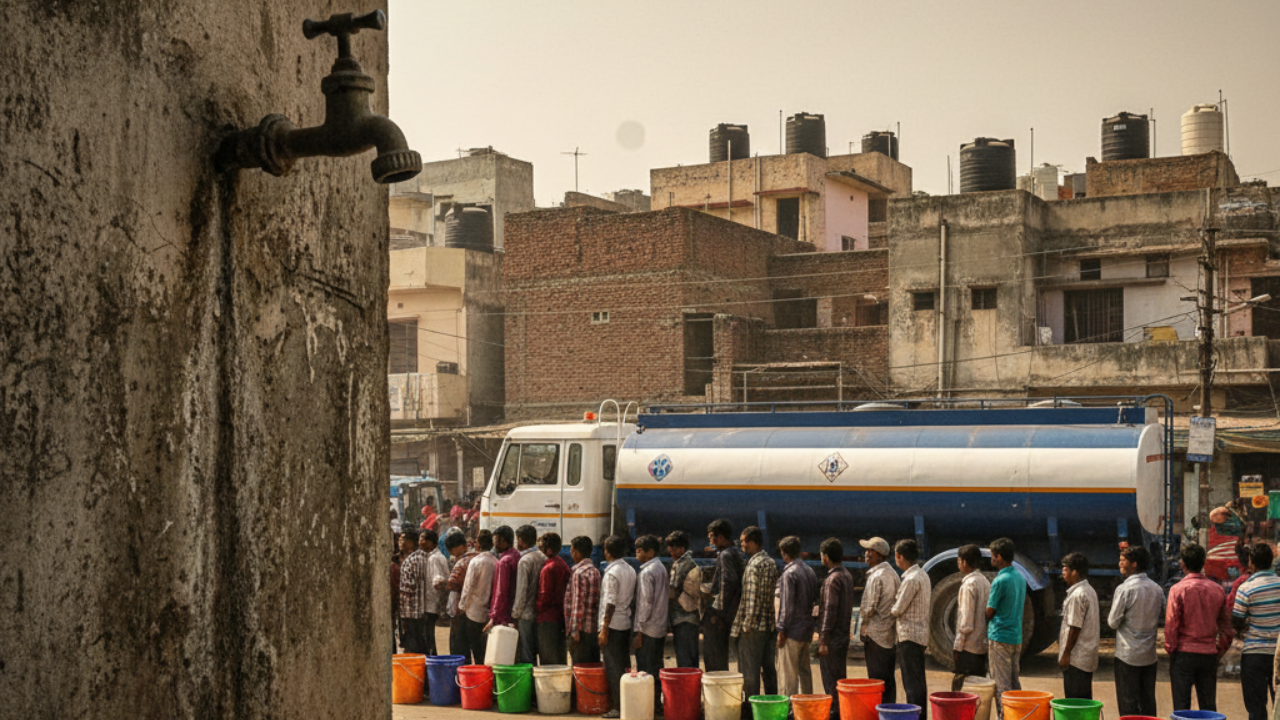
Delhi Residents Brace for 48-Hour Water Cut Notice
Delhi NCR — Residents across multiple neighbourhoods in the Delhi National Capital Region (NCR) are preparing for planned disruptions to piped water supply over a 48-hour period, starting from February 25, as utility authorities undertake essential maintenance and system upgrades.
The temporary cut, which affects several densely populated sectors in the capital, highlights the ongoing infrastructural pressures facing urban water systems in rapidly expanding metropolitan regions — and underscores the need for resilient resource planning as megacities confront ageing networks and fluctuating hydrology. According to advisories issued by the city’s water utility, supply interruptions will be staggered across zones at different times over the two-day period to carry out repairs and upgrades at key pumping stations, reservoirs and distribution mains. These interventions are described as critical for stabilising pressure levels, reducing leakage and improving long-term supply reliability in areas where demand growth has outpaced network capacity. While officials emphasise that the maintenance is planned — not an emergency outage — the scale of the disruption reflects underlying challenges in managing water infrastructure in a dense urban setting.
The announced cuts will affect several neighbourhoods in Central, South and West Delhi, including both residential and mixed-use districts. Timings for supply disruptions vary by locality, and authorities have advised residents to store adequate water for essential use during the affected windows. Civic agencies will deploy tanker contingents in some areas to ease short-term needs, but residents and businesses are being encouraged to adopt demand-management practices — such as reduced non-essential use — to stretch limited supply. Water planners stress that periodic maintenance is an unavoidable aspect of lifecycle management for urban utilities, particularly given Delhi’s ageing distribution network, which dates back several decades. Leaks, pipe bursts and pressure imbalances not only result in service interruptions but also contribute to non-revenue water loss — a key inefficiency in many Indian cities where treated water is lost before reaching consumers. Scheduled work, therefore, seeks to address systemic weaknesses and enhance resilience, even if it temporarily disrupts supply.
However, residents and neighbourhood associations have urged authorities to improve advance communication and coordination, citing past episodes where unscheduled cuts compounded already tight supply. “Advance notice is helpful, but many households still lack clear information on exact timings and alternative arrangements,” said a resident representative from a West Delhi civic forum. Such feedback highlights the growing demand for data-driven service communication in urban utilities, including mobile alerts, zone-wise dashboards and real-time pressure indicators. The timing of the planned maintenance also intersects with broader concerns about water security in the NCR, where climate variability and fluctuating river flows are increasingly stressing surface and groundwater sources alike. In recent years, periodic water shortages have underscored the imperative for cities like Delhi to modernise storage, reduce losses, and diversify supply portfolios — including through groundwater recharge, treated wastewater reuse, and demand-responsive tariff frameworks.
For businesses reliant on continuous supply — from hospitality and manufacturing to healthcare and education — even temporary disruptions can affect operations, forcing contingency planning and short-term investments in storage tanks or booster systems. Some firms have indicated plans to optimise internal water usage during the hiatus and coordinate with building management to prioritise critical functions. Urban water policy specialists argue that short-term disruptions must be coupled with long-term network strengthening and service reliability improvements, particularly in megacities where growth trajectories continue to outpace legacy infrastructure. This includes capital investment in reservoir expansion, zonal metering to detect leaks more effectively, and partnerships with technology providers to enhance distribution monitoring.
As the scheduled 48-hour water cut unfolds, residents, agencies and businesses across the Delhi NCR are navigating the tensions between necessary infrastructure upkeep and everyday service expectations — a balancing act that will come to define modern urban water governance in India’s fastest-growing metropolitan regions.